

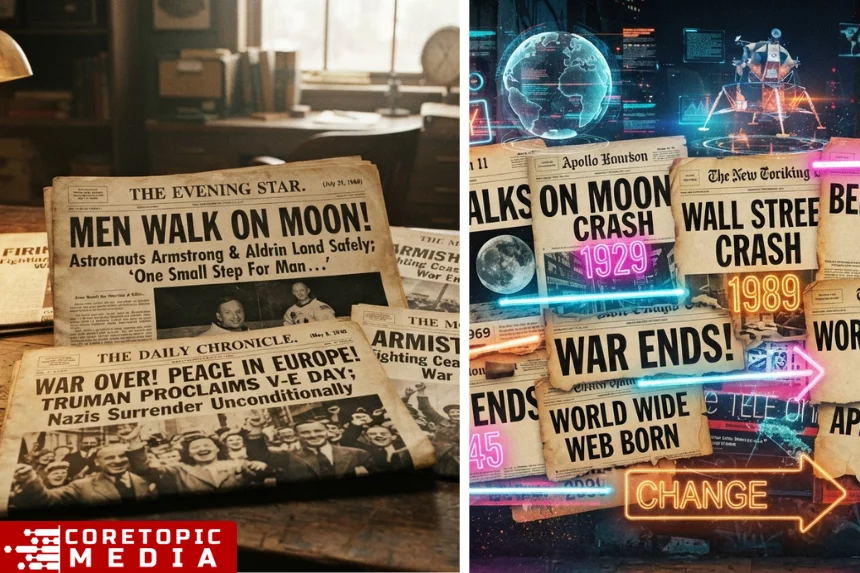
The greatest headlines of all time do more than grab attention. They tell a story, create emotion, and make readers want the next line. Some headlines became famous because they captured huge news moments. Others worked because they sold a product with one sharp idea.
A great headline does not need big words. In fact, many famous examples use short, plain language. They work because they are clear, bold, surprising, or useful. However, not every famous headline is a model to copy. Some became well known because they made a mistake, caused debate, or pushed taste too far.
This guide looks at famous news headlines, ad headlines, and direct-response headlines. It also explains why they worked and what writers can learn from them today.
What Makes the Greatest Headlines of All Time Work?
The greatest headlines of all time usually share a few simple traits. They make the reader feel something fast. Then, they give the reader a reason to continue.
A strong headline often does one or more of these things:
- Says something clearly
- Creates curiosity
- Uses sharp contrast
- Makes a bold promise
- Shows conflict
- Uses rhythm or wordplay
- Fits the moment
- Avoids wasted words
However, a headline must also stay fair. A clever line can damage trust if it misleads readers. For that reason, the best headlines balance attention with truth.
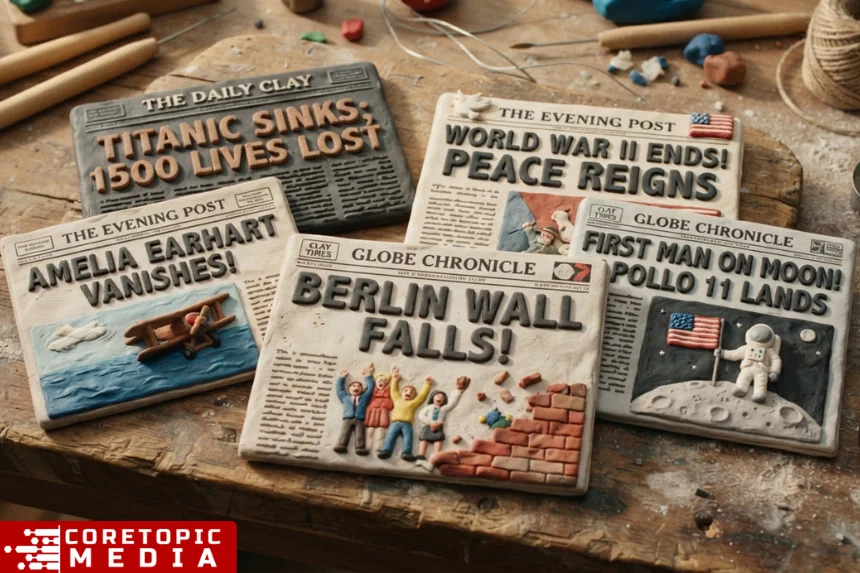
Famous News Headlines That Still Stand Out
News headlines need speed, clarity, and impact. Sometimes, one line can shape how people remember a whole event.
| Headline | Publication or context | Why it stands out |
|---|---|---|
| “Dewey Defeats Truman” | Chicago Daily Tribune, 1948 | It became famous because it got the result wrong. The Truman Library shows the famous photo of President Harry Truman holding the paper after he actually won the election. |
| “Ford to City: Drop Dead” | New York Daily News, 1975 | It summed up New York City’s anger during its financial crisis. The words were not a direct quote from President Gerald Ford, but the line shaped public memory of the moment. |
| “Headless Body in Topless Bar” | New York Post, 1983 | Vincent Musetto wrote one of the most famous tabloid headlines ever. The Guardian later called him the man behind the “timeless” Post headline. |
| “Mush from the Wimp” | The Boston Globe, 1979 | The line began as an internal joke but reached print. Boston.com reported that the headline appeared on 161,000 copies before later editions changed it. |
| “Gotcha” | The Sun, 1982 | This one-word headline followed the sinking of the General Belgrano during the Falklands War. It became famous, but also controversial, because many readers saw it as too harsh for a deadly event. |
These examples show why news headlines carry power. A few words can inform, mock, shock, or even mislead. Therefore, headline writers need care as well as skill.
Greatest Headlines of All Time From Advertising
Advertising headlines work differently from news headlines. They must make people stop, care, and consider a product. Also, they need to make a promise without sounding fake.
| Headline | Brand or campaign | Why it worked |
|---|---|---|
| “At 60 miles an hour the loudest noise in this new Rolls-Royce comes from the electric clock.” | Rolls-Royce | David Ogilvy made this line famous because it turned quietness into luxury. Swiped notes that Ogilvy drew the idea from a British motor magazine quote. |
| “They Laughed When I Sat Down at the Piano…” | U.S. School of Music | John Caples used story, doubt, and payoff in one line. Campaign Live calls it one of the best-known direct marketing ads of all time. |
| “Lemon.” | Volkswagen | The one-word headline looked negative at first. However, the ad used it to show Volkswagen’s strict quality checks. Adweek notes that the rejected car had a small blemish, which supported the point. |
| “Think Small.” | Volkswagen | This line worked because it went against the big-car style of the time. Instead of hiding the Beetle’s size, the ad made smallness the reason to care. |
| “Got milk?” | California Milk Processor Board | The short question became part of popular culture. The Advertising Educational Foundation describes the campaign’s goal as increasing milk use and making milk feel missed when absent. |
These ad headlines still matter because they do not try to say everything. Instead, each one picks one clear idea and makes it memorable.
Direct-Response Headlines That Sold
Direct-response writing has one main goal: get the reader to act. That action might be buying, subscribing, calling, or requesting more information.
One famous example is the Wall Street Journal “Two Young Men” letter. Many marketers call it one of the most successful sales letters ever. SOFII explains that the letter worked as a control mailing during the late 1970s and early 1980s and came from copywriter Martin Conroy.
The lesson is simple. Stories sell because people compare outcomes. In that letter, two men start from a similar place but end in different positions. As a result, the reader wants to know what made the difference.
Another famous line is John Caples’ piano headline. It works because it gives readers a small story in one sentence. First, people laugh. Then, the person proves them wrong. That emotional turn makes the reader want the full ad.
Funny Headlines That People Remember
Funny headlines often use puns, rhythm, or surprise. They work best when the joke helps the story instead of hiding it.
The Guardian marked its 200th anniversary by collecting some of its best and funniest headlines. The list shows how wordplay can make even serious or dry topics more memorable. For example, the paper used playful lines for stories about fundraising, politics, social life, and culture.
However, humour can also age badly. A headline that feels clever in the newsroom may feel cold, rude, or unfair to readers. So, writers should use humour with care, especially in stories about death, crime, illness, or private people.
What Writers Can Learn From Famous Headlines
The greatest headlines of all time offer useful lessons for bloggers, journalists, marketers, and business owners. Still, the lesson is not “be louder.” The real lesson is “be clearer and more interesting.”
1. Make one strong promise
A headline should not carry five ideas. Choose one clear point. For example, the Rolls-Royce headline focuses on quietness, not every feature of the car.
2. Use plain words
Simple words often work best. “Got milk?” uses only two words, yet most people understand it right away.
3. Add contrast
Contrast creates interest. “They laughed” and “I played” creates a before-and-after story. Likewise, “Think Small” stood out because car ads often praised size and power.
4. Respect the facts
A headline can become famous for the wrong reason. “Dewey Defeats Truman” still gets attention because it was wrong. Therefore, speed should never beat accuracy.
5. Match the tone to the topic
A playful headline may work for culture, sport, or lifestyle. However, it can feel cruel in stories about tragedy. Writers should always consider the people behind the story.
Simple Formula Behind Great Headlines
Many great headlines follow simple patterns. You can use these patterns without copying the original lines.
| Formula | Example style | Best for |
|---|---|---|
| Clear benefit | “How to save time on…” | Guides and tutorials |
| Curiosity | “The mistake that changed…” | Stories and case studies |
| Contrast | “Small change, big result” | Ads and business writing |
| Question | “Do you know why…” | Explainers and product pages |
| Bold fact | “The quietest car at…” | Ads, reviews, and comparisons |
| Story setup | “They laughed when…” | Personal stories and direct response |
These formulas work because they help readers decide quickly. If the headline gives a clear reason to read, people are more likely to continue.
Common Mistakes to Avoid
Even strong writers can weaken a headline by trying too hard. Therefore, avoid these mistakes.
Making the headline too vague
A vague headline may sound stylish, but it gives readers no reason to click or continue. Clarity comes first.
Overpromising
Do not promise results the article cannot deliver. Overpromising may bring attention once, but it hurts trust later.
Using hard words
Large words can slow readers down. In most cases, short words create more power.
Copying famous headlines too closely
You can learn from classic examples, but you should not copy them word for word. Instead, copy the method: clear idea, strong contrast, and simple language.
Forgetting the reader
A headline is not only a writing exercise. It should help the reader understand why the page matters.
Best Headline Types for Modern Content
Modern writers use headlines across blogs, ads, emails, videos, newsletters, and social media. Because each platform works differently, the best headline depends on the goal.
| Content type | Headline style that works well |
|---|---|
| Blog post | Clear benefit or useful question |
| News article | Accurate summary with strong detail |
| Email subject | Short promise or curiosity |
| Product page | Main benefit plus proof |
| YouTube video | Clear topic plus tension |
| Social media post | Simple hook with emotional pull |
| Case study | Problem, action, and result |
Still, every format shares the same rule: the headline should make the next step feel worth it.
FAQs
What are the greatest headlines of all time?
The greatest headlines of all time include famous news lines like “Dewey Defeats Truman,” “Ford to City: Drop Dead,” and “Headless Body in Topless Bar,” plus ad headlines like “Think Small,” “Got milk?” and the classic Rolls-Royce electric clock headline.
What makes a headline great?
A great headline is clear, useful, emotional, and easy to understand. It gives readers a reason to continue without misleading them.
Are funny headlines better?
Funny headlines can work well when the topic allows humour. However, they can feel wrong in serious stories. So, the tone must fit the subject.
What is the best headline formula?
The best formula depends on the goal. For guides, use a clear benefit. For stories, use curiosity. For ads, use one strong promise with proof.
Can I copy famous headlines?
You should not copy famous headlines directly. Instead, study why they worked and use the same idea in a fresh way.
Why do short headlines work so well?
Short headlines work because readers understand them fast. A short line also feels stronger when every word matters.
Conclusion
The greatest headlines of all time became famous for different reasons. Some were clear and useful. Others were bold, funny, shocking, or even wrong. However, the best examples all teach the same lesson: a headline should make one idea easy to feel and easy to understand.
If you want to write better headlines, start with the reader. Say what matters, remove extra words, and make the next line worth reading.
Discover more on our website about cailin lowry