



Charles Patton is most often remembered under a slightly different spelling of his name: Charley Patton, the Mississippi guitarist and singer many historians call the Father of the Delta Blues. Born around 1891 and active mainly on and around Dockery Plantation, he recorded dozens of songs in the late 1920s and early 1930s that went on to shape nearly every blues and rock musician who followed him. He died in 1934, but in 2021 the Rock & Roll Hall of Fame formally recognized his influence with a posthumous induction.
This guide covers his life, his music, his death, and his lasting legacy — and clears up why so many searches for “Charles Patton” lead to a page spelled “Charley.”
Charles Patton or Charley Patton? Clearing Up the Name
Here is the short version: they are the same person. During his own lifetime, Patton spelled his first name “Charlie.” However, record labels, his own gravestone, and most later reference sources — including the Rock & Roll Hall of Fame — settled on “Charley,” and that is the spelling most commonly used today.
Because “Charles” is the more familiar full form of “Charlie” in everyday English, many people naturally search for “Charles Patton” when they mean the blues musician. This article uses “Charles Patton” as a search-friendly reference to the same historical figure widely known as Charley Patton, and uses “Charley” or “Charlie” throughout when describing him directly, matching the spelling used by his biographers and by the institutions that have honored him.
Early Life: From Mississippi Cotton Country to Dockery Plantation
Charley Patton was likely born in April 1891 in Hinds County, Mississippi, near the town of Edwards, though a handful of researchers have proposed other birth years, including 1881, 1885, and 1887. His parents were Bill and Annie Patton, though locally he was said to have been fathered by a former enslaved man named Henderson Chatmon, whose other children also became well-known Delta musicians.
Patton’s ancestry has long been a subject of historical debate. He was considered African American but had a light complexion that led to persistent speculation about mixed heritage. Historians generally agree he had Black, white, and Native American ancestry, though the exact details — including specific claims about Choctaw or Cherokee lineage — remain unresolved rather than firmly documented.
In 1897, when Patton was still a boy, his family moved about 100 miles north to the roughly 10,000-acre Dockery Plantation near Ruleville, Mississippi. That move proved decisive. At Dockery, Patton came under the influence of a musician named Henry Sloan, who played an early, unusual style that historians now consider a root form of the blues.
How Charley Patton Became the “Father of the Delta Blues”
Patton spent much of his adult life performing at Dockery and the surrounding plantations, developing both his sound and his stage presence. Unlike many blues musicians of his era, who wandered from town to town, Patton actually played scheduled engagements at plantations and taverns, building a loyal following across the region.
He became known for energetic showmanship — playing his guitar behind his head, behind his back, or down on his knees — years before similar tricks became rock and roll staples. Music historian Robert Palmer described him as a “jack-of-all-trades bluesman” equally comfortable with deep blues, hillbilly songs, and nineteenth-century ballads.
Patton also mentored a remarkable circle of younger musicians who lived and performed in the same area, including Willie Brown, Tommy Johnson, Fiddlin’ Joe Martin, Robert Johnson, and Chester Burnett — who later became famous as Howlin’ Wolf. That web of direct mentorship is a major reason historians trace so much of the Delta blues tradition back to a single source: Patton himself.
Charles Patton’s Recording Career
The Paramount Records Years
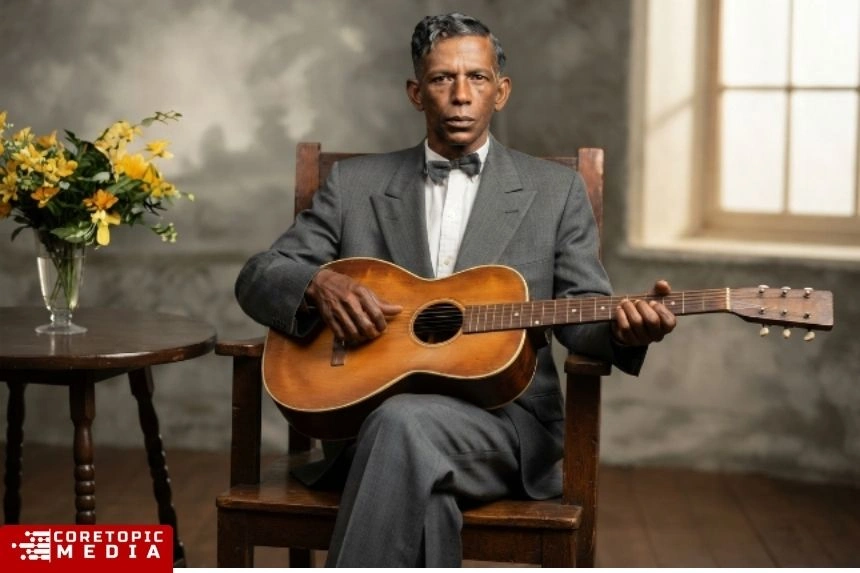
Patton’s formal recording career began with Paramount Records starting in 1929. Over roughly two years, he recorded dozens of sides in Mississippi, Wisconsin, and elsewhere, capturing the guitar work and vocal style that would influence generations of musicians. Some of these original pressings are now extremely rare; only a single known copy of one 1929 release is thought to survive today, and even that copy is in poor condition.
Final Sessions with Vocalion Records
In early 1934, Patton and his common-law wife, Bertha Lee, were jailed in Belzoni, Mississippi, after a heated argument. A representative from Vocalion Records bailed them out and brought them to New York City for what turned out to be Patton’s final recording sessions, held on January 30 and February 1, 1934. Those sessions produced songs including “34 Blues,” “Poor Me,” and “Revenue Man Blues,” along with two duets recorded with Bertha Lee.
Musical Style and Signature Songs
Patton stood only about 5 feet 5 inches tall, yet his gravelly voice was reportedly loud enough to carry roughly 500 yards without any amplification. That combination of a small frame and an enormous vocal presence became part of his legend, and it directly shaped the singing style of Howlin’ Wolf, one of his most famous musical descendants.
His best-known and most influential recording is “Pony Blues,” paired on its original release with “Banty Rooster Blues.” Another song, “High Water Everywhere,” is often considered his masterpiece: a vivid, two-part account of the devastating 1927 Mississippi flood. Patton frequently wrote about real events, real places, and even real people from the Delta, giving his catalog a documentary quality that few of his contemporaries matched.
Personal Life and Final Years
Patton’s personal life was famously turbulent, marked by numerous relationships over the years. By 1933, he had settled in Holly Ridge, Mississippi, with Bertha Lee, his final common-law wife and recording partner. Their relationship had its share of conflict, including the early-1934 jailhouse incident that immediately preceded his last recording sessions.
Beyond music, Patton also preached in local churches and recorded religious material alongside his blues songs, folk ballads, and dance tunes — a range that reflected just how central he was to the everyday musical life of his community, not just its nightlife.
Charley Patton’s Death and Burial
Charles Patton died on April 28, 1934, on the Heathman-Dedham plantation near Indianola, Mississippi, at around age 43. His official death certificate lists the cause of death as a mitral valve disorder, a heart condition. Notably, his death was not reported in newspapers at the time, and Bertha Lee is not mentioned on the certificate at all; the only listed informant was a man named Willie Calvin.
He was buried in Holly Ridge, in Sunflower County. For decades his grave went largely unmarked. In July 1990, musician John Fogerty funded a proper memorial headstone through the Mount Zion Memorial Fund, and blues historian Jim O’Neal, who wrote the epitaph, chose the now-standard “Charley” spelling for the stone.
Legacy: Grammys, the Rock & Roll Hall of Fame, and Lasting Influence
Patton’s influence has only grown since his death. In 2001, a box set called Screamin’ and Hollerin’ the Blues: The Worlds of Charley Patton collected his surviving recordings alongside work by his friends and collaborators. It won three Grammy Awards in 2003, for Best Historical Album, Best Boxed or Special Limited Edition Package, and Best Album Notes.
In 2006, the Library of Congress added “Pony Blues” to the National Recording Registry, an honor reserved for recordings judged culturally, historically, or aesthetically significant. Patton’s story later reached a new audience through the 2017 documentary series American Epic, which featured newly restored recordings and previously unseen footage of his contemporaries.
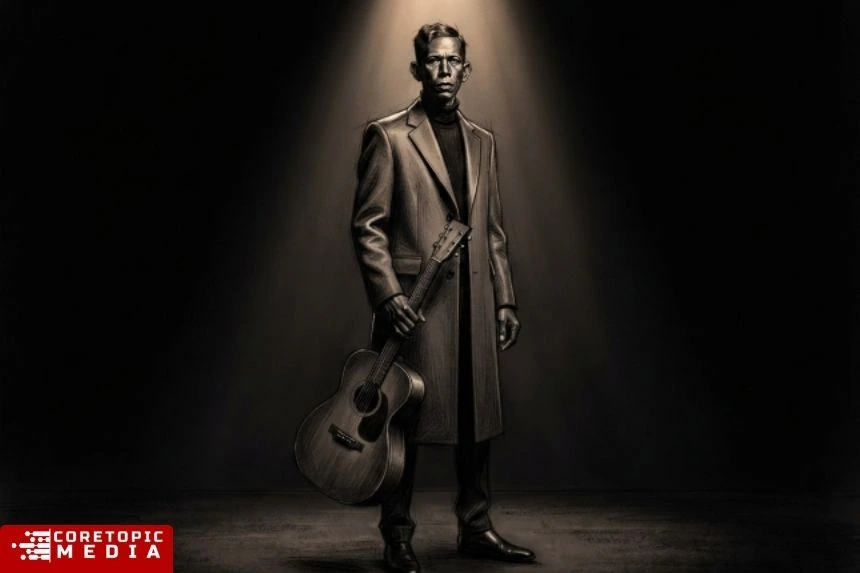
Then, in May 2021, the Rock & Roll Hall of Fame inducted Patton into its 2021 class as an Early Influence — alongside artists such as Kraftwerk and Gil Scott-Heron — formally recognizing what blues fans had argued for decades: that rock and roll, and much of American popular music more broadly, would not exist in its current form without him. Today, the Mississippi Blues Trail marks both his grave in Holly Ridge and a related site in Boyle, Mississippi, ensuring his story remains part of the physical landscape of the Delta.
Other People Named Charles Patton
Searches for “Charles Patton” sometimes turn up people who have nothing to do with the blues musician described above. If you were looking for one of these instead, here’s a quick pointer:
- Charles Robert Patton Jr. — a Los Angeles criminal defense attorney and the father of actress Paula Patton.
- Charles Patton — an American Electric Power executive who served as Executive Vice President of External Affairs.
- Charles Patton — an author of thriller, strategy, and AI-themed books.
These are entirely separate individuals from Charley Patton, the Delta blues musician, and this article does not cover their biographical details.

FAQs About Charles Patton
1. Who was Charles Patton?
Charles Patton, almost always spelled Charley Patton, was an American Delta blues musician and songwriter who lived from around 1891 to 1934. He is widely credited as one of the most important early influences on Delta blues.
2. Why is Charles Patton also called Charley Patton?
Patton spelled his own name “Charlie” during his lifetime, but record labels, his gravestone, and most historians later settled on “Charley,” which is now the standard spelling used by institutions like the Rock & Roll Hall of Fame.
3. When and where was Charles Patton born?
He was most likely born in April 1891 in Hinds County, Mississippi, near the town of Edwards, though a few researchers have proposed alternate birth years.
4. What is Charles Patton’s most famous song?
“Pony Blues,” originally released paired with “Banty Rooster Blues,” is generally considered his most influential recording, and it was added to the Library of Congress National Recording Registry in 2006.
5. How did Charles Patton die?
He died on April 28, 1934, near Indianola, Mississippi, at about age 43. His death certificate lists the cause as a mitral valve disorder, a heart condition.
6. Was Charles Patton inducted into the Rock & Roll Hall of Fame?
Yes. He was posthumously inducted in May 2021 as part of the Rock & Roll Hall of Fame’s Early Influence category.
7. Who did Charles Patton influence?
He directly influenced and mentored musicians including Son House, Howlin’ Wolf, Willie Brown, Tommy Johnson, and Robert Johnson, all of whom helped carry the Delta blues tradition forward.
8. Is Charles Patton related to Paula Patton?
No. Paula Patton’s father was a different person entirely, Charles Robert Patton Jr., an attorney with no known connection to the blues musician.
9. What record labels did Charles Patton record for?
He recorded primarily for Paramount Records starting in 1929, and later for Vocalion Records during his final sessions in New York City in early 1934.
10. Where is Charles Patton buried?
He is buried in Holly Ridge, Mississippi, in Sunflower County. A memorial headstone, funded by musician John Fogerty, was placed on the grave in 1990.
Final Thoughts on Charles Patton’s Legacy
Whether you arrived searching for “Charles Patton” or already knew him as Charley Patton, the story is the same: a Mississippi guitarist whose recordings in the late 1920s and early 1930s laid much of the groundwork for the blues, and by extension for rock and roll. From his early years at Dockery Plantation to his 2021 Rock & Roll Hall of Fame induction, his influence has only become clearer with time, even though he never lived to see most of it recognized.
Read More At Core Topic Media