


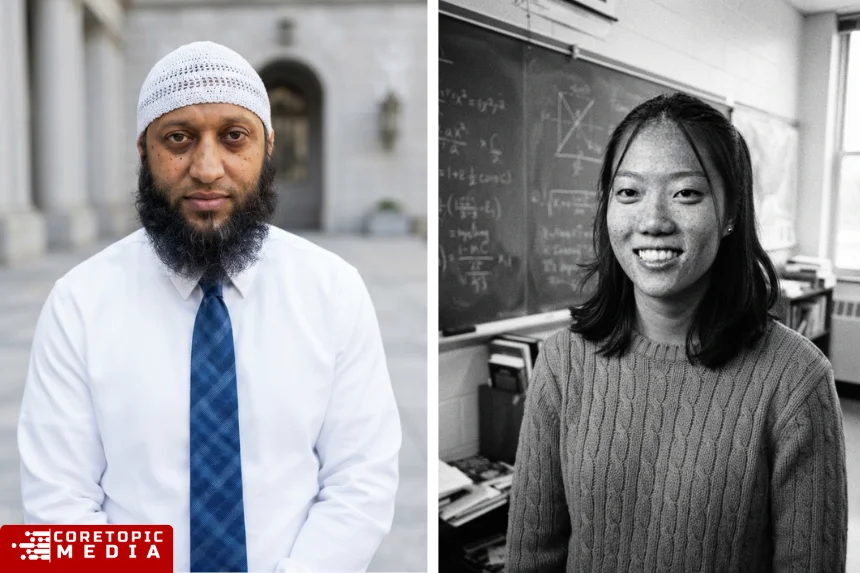
The murder of Hae Min Lee began with the 18-year-old student’s disappearance from the Baltimore area on January 13, 1999. Her body was found in Leakin Park on February 9. A jury convicted her former boyfriend and Woodlawn High School classmate, Adnan Syed, in 2000.
The case’s legal status later changed more than once. A judge vacated Syed’s convictions in 2022, but Maryland’s highest court reinstated them in 2024 after finding violations of Hae’s brother’s rights in that process. Then, in March 2025, a judge reduced Syed’s sentence to time served and ordered five years of supervised probation. Syed is out of prison, but his convictions remain in force.
Quick Answer
| Question | Answer |
|---|---|
| What was the murder of Hae Min Lee? | Hae disappeared on January 13, 1999. Her body was found in Baltimore’s Leakin Park on February 9, 1999. |
| Who was convicted? | Adnan Syed was convicted in 2000 of first-degree murder and related offenses. |
| Were his convictions vacated? | Yes. A judge vacated them in September 2022, but appellate proceedings later restored them. |
| Was Syed exonerated? | No. “Exonerated” does not describe his current legal status. |
| Is Syed in prison now? | No. A court reduced his sentence to time served in March 2025. |
| Is he still convicted? | Yes. The convictions remain in effect, and Syed is serving five years of supervised probation. |
Key Facts
| Detail | Verified information |
| Victim | Hae Min Lee |
| Age | 18 |
| School | Woodlawn High School in Baltimore County, Maryland |
| Disappearance | January 13, 1999 |
| Body discovered | February 9, 1999 |
| Cause of death | Manual strangulation |
| Person convicted | Adnan Syed |
| Verdict | February 25, 2000 |
| Original sentence | Life plus 30 years |
| 2022 result | Convictions vacated; charges later dropped |
| 2024 result | Maryland’s highest court reinstated the convictions |
| 2025 result | Sentence reduced to time served, with five years of supervised probation |
| Current status | Syed remains convicted but is not incarcerated |
Who Was Hae Min Lee?
Hae Min Lee was a senior at Woodlawn High School. She was born in South Korea and moved to the United States with her family as a child. At school, she played field hockey and lacrosse and managed the wrestling team.
Friends and relatives described a teenager balancing school, sports, family responsibilities, and a part-time job. She had also started a new relationship after ending her relationship with Syed. That past relationship later became central to the prosecution’s theory.
Coverage often shifts quickly from Hae to the debate about Syed. However, she was a daughter, sister, student, teammate, and friend whose family has lived with decades of public litigation. A general case overview on Wikipedia can help with orientation, but court records provide stronger authority for disputed claims.

What Happened to Hae Min Lee in 1999?
January 13: Hae disappeared
Hae attended school on Wednesday, January 13, 1999. She was expected to collect a younger cousin after school and later report to her job. Yet she did not arrive for the pickup, and her family reported her missing that day.
The early search treated Hae as a missing teenager. Police spoke with people who knew her, including Syed. Investigators also examined her relationships and movements after school. Still, no verified public account establishes every step she took after leaving class.
February 9: Her body was found
Nearly four weeks later, a man discovered Hae’s body in a wooded area of Leakin Park in Baltimore. Authorities determined that she had died from manual strangulation. Her car was still missing when police recovered her body.
The investigation then became a homicide case. Police increasingly focused on Syed after interviews, an anonymous tip, and information from Jay Wilds, one of Syed’s acquaintances.
How Did the Investigation Focus on Adnan Syed?
Syed and Hae had dated during high school, although they had broken up before her death. Prosecutors later argued that Syed felt angry and humiliated about the breakup. That alleged motive formed one part of the State’s case, but motive alone did not establish guilt.
The investigation changed significantly when detectives questioned Wilds. Wilds told police that Syed had shown him Hae’s body and that he later helped Syed bury her in Leakin Park. Moreover, Wilds took police to Hae’s car, which investigators had not yet found.
Wilds’s account connected the killing, burial, and Syed’s cellphone. Police obtained phone records and arrested Syed on February 28, 1999.
However, Wilds gave more than one account, and important details changed. Those differences later became a major reason for public and legal scrutiny. Therefore, a careful account must describe his statements as testimony and allegations rather than treat every detail as an independently verified timeline.
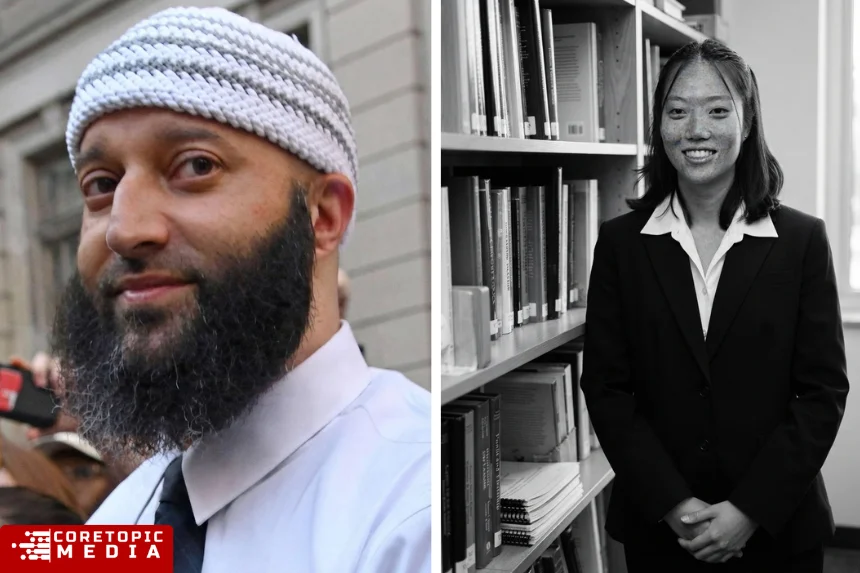
What Evidence Was Used in the Murder of Hae Min Lee Trial?
The prosecution combined witness testimony, phone records, physical evidence, and a motive theory. The jury considered the evidence as a whole.
Jay Wilds’s testimony
Wilds served as the prosecution’s central witness. At trial, he testified that Syed had killed Hae and later enlisted his help to bury her. He also described using Syed’s phone and car during parts of the day.
The location of Hae’s car gave his account additional weight. Wilds led detectives to it, and police treated that knowledge as corroboration. On the other hand, his versions differed about when he first saw Hae’s body, where certain conversations occurred, and the sequence of that day.
The jury heard Wilds and convicted Syed. Likewise, the verdict does not make every version of his account consistent.
Cellphone records
Prosecutors used call logs and cell-site information to support parts of Wilds’s story. In particular, the State highlighted incoming calls associated with a tower that served the Leakin Park area around the period when Wilds said the burial occurred.
However, a fax cover sheet supplied with the phone records warned that incoming calls were not reliable for location. Later defense litigation argued that trial counsel should have challenged the State’s use of that data more effectively. In addition, 1999 cell-site information was not GPS and could not place a phone at an exact spot.
The records therefore require restrained wording. They were evidence the State presented as corroboration, while the defense later disputed the reliability of using certain incoming calls to prove location.
The map book and relationship evidence
Police found Syed’s palm print on the back cover of a map book inside Hae’s car. A page containing the Leakin Park area had been removed, and police found that page in the car. Still, the print did not establish when Syed touched the book. Because Hae and Syed had dated, he had previously been inside her car.
Prosecutors also introduced evidence about the former couple’s relationship and breakup. The State framed the killing as intimate-partner violence driven by rejection. Syed denied killing Hae and has continued to maintain his innocence.
Why Did the Evidence Become Disputed?
Three issues drove much of the later debate: Wilds’s changing accounts, the interpretation of cellphone records, and trial counsel’s failure to contact potential alibi witness Asia McClain.
McClain said she saw Syed at a public library after school on January 13. Because the State’s trial presentation placed key events in that general period, Syed argued that his lawyer should have investigated her. A post-conviction court agreed that he should receive a new trial, although Maryland’s highest court later reversed that result.
The debate expanded beyond issues courts ultimately accepted. Podcast listeners, lawyers, and online communities proposed theories of varying quality. Yet public doubt is not a court ruling, and an online accusation is not evidence against an uncharged person.
What Happened at Adnan Syed’s Trials?
Syed’s first trial began in December 1999. It ended in a mistrial before the jury reached a verdict. A second jury then heard the case in early 2000.
On February 25, 2000, that jury convicted Syed of first-degree murder, kidnapping, robbery, and false imprisonment. The court later imposed a total sentence of life plus 30 years. The Supreme Court of Maryland’s 2024 opinion summarizes the trial evidence and the long procedural history.
Syed was 17 when Hae was killed and 18 when police arrested him. He spent more than 23 years in prison before his release in 2022.
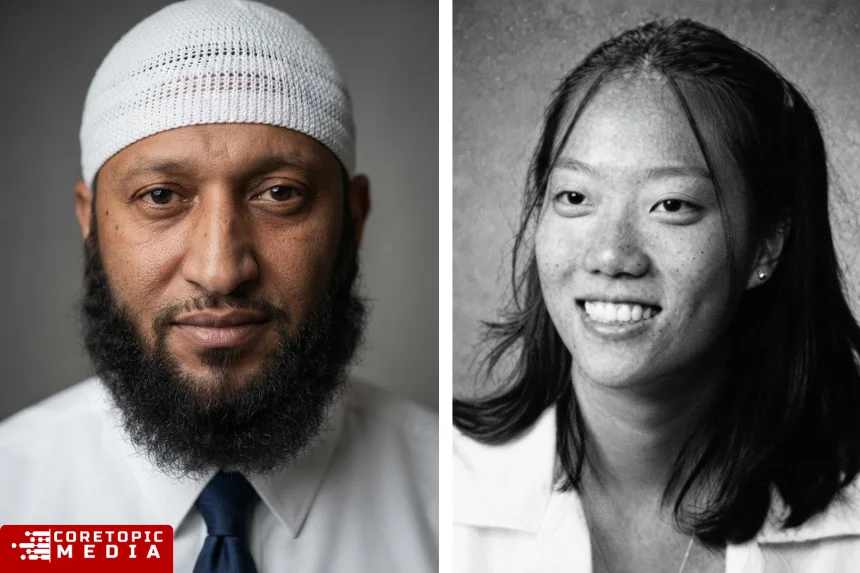
How Did Serial Change Public Attention?
In 2014, journalist Sarah Koenig examined the case in the first season of Serial. The series revisited the trial record, interviewed Syed, explored inconsistencies, and asked whether the evidence justified confidence in the verdict. Consequently, millions of listeners encountered the case for the first time.
The series became a podcasting landmark. The Peabody Awards’ entry for Serial describes its influence on nonfiction audio and debate about criminal trials. However, Serial did not conduct a trial, issue a legal judgment, or identify another killer.
The attention also had a human cost. Hae’s relatives repeatedly watched private grief become public entertainment and legal controversy. Therefore, responsible coverage should recognize the podcast’s impact without allowing its fame to eclipse the victim.
What Happened in the Appeals Before 2022?
Maryland’s intermediate appellate court affirmed Syed’s convictions on direct appeal in 2003. Years later, Syed pursued post-conviction relief and claimed that his trial lawyer had provided ineffective assistance.
In 2016, a post-conviction judge ordered a new trial. The court based relief on trial counsel’s handling of the cellphone evidence. In 2018, the intermediate appellate court also concluded that counsel’s failure to investigate McClain justified a new trial.
Nevertheless, Maryland’s highest court reversed in 2019. It held that Syed had not met the legal standard required for a new trial. The U.S. Supreme Court then denied his petition for review on November 25, 2019. As a result, the 2000 convictions remained intact at that point.
Why Were Syed’s Convictions Vacated in 2022?
In September 2022, the Baltimore City State’s Attorney filed a joint motion with the defense asking a judge to vacate the convictions. A vacatur sets a judgment aside. The State’s 2022 motion cited concerns about the investigation, information involving two alternative suspects, and possible failures to disclose favorable information to the defense.
On September 19, a judge granted the motion and released Syed. Prosecutors then had to choose whether to retry him or end the prosecution. On October 11, the State entered a nolle prosequi, meaning it declined to continue the charges then pending.
Prosecutors also cited new DNA testing. Mixed profiles recovered from certain tested items excluded Syed as a contributor. However, the testing did not identify Hae’s killer, and it did not establish that the person who killed her necessarily left DNA on those items.
For a time, Syed had no standing conviction in the case. Still, the 2022 outcome did not remain final because Hae’s brother challenged the procedure used at the vacatur hearing.
Why Were the Convictions Reinstated?
Young Lee participated as Hae’s victim representative. Prosecutors gave him less than one business day’s notice of the September 2022 hearing, even though he lived in California. The judge denied his request for a short postponement, so he attended remotely.
Young Lee appealed. In 2023, Maryland’s intermediate appellate court ruled that he had not received reasonable notice or a proper opportunity to attend in person. It reversed the vacatur order and directed the lower court to hold a new hearing.
Then, on August 30, 2024, the Supreme Court of Maryland agreed that the process had violated Young Lee’s statutory rights. It restored the convictions and ordered proceedings before a different judge. The ruling addressed victims’ rights and the validity of the hearing; it was not a new jury determination of Syed’s guilt.
What Is the Current Status of the Murder of Hae Min Lee Case?
The final major changes came in 2025. First, Baltimore City State’s Attorney Ivan Bates withdrew the earlier motion to vacate on February 25, 2025. His office said it could not continue to support that motion. At the same time, it supported consideration of a reduced sentence under Maryland’s Juvenile Restoration Act.
That law allows certain people who committed offenses as minors and served at least 20 years to seek a sentence reduction. It does not require a court to erase a conviction. Instead, a judge reviews factors that include age at the time of the offense, rehabilitation, prison record, and public safety.
In March 2025, a judge granted Syed relief under that law. The Circuit Court for Baltimore City’s sentencing opinion left the convictions in place but reduced the punishment. The court suspended the remaining imprisonment, treated his prison time as time served, and imposed five years of supervised probation.
The court formally imposed the modified sentence on March 14, 2025. An Associated Press report on the sentencing also confirms that the convictions stand.
Therefore, as of July 29, 2026, Syed is not incarcerated, but he remains convicted of the murder of Hae Min Lee and related offenses. He is serving supervised probation under the modified sentence. No other person has been charged with Hae’s murder, and Syed continues to say he is innocent.

Complete Case Timeline
| Date | Event |
| January 13, 1999 | Hae Min Lee disappears after attending Woodlawn High School. |
| February 9, 1999 | Her body is found in Leakin Park. |
| February 28, 1999 | Police arrest Adnan Syed. |
| December 1999 | Syed’s first trial ends in a mistrial. |
| February 25, 2000 | A second jury convicts Syed of first-degree murder and related offenses. |
| June 2000 | The court sentences him to life plus 30 years. |
| March 2003 | Maryland’s intermediate appellate court affirms the convictions. |
| 2014 | Serial brings global attention to the case. |
| June 2016 | A post-conviction court grants Syed a new trial. |
| March 2018 | Maryland’s intermediate appellate court upholds the new-trial result on a different ineffective-assistance ground. |
| March 2019 | Maryland’s highest court reverses and denies a new trial. |
| November 25, 2019 | The U.S. Supreme Court declines to review the case. |
| September 14, 2022 | Prosecutors file a motion to vacate Syed’s convictions. |
| September 19, 2022 | A judge vacates the convictions and releases Syed. |
| October 11, 2022 | Prosecutors drop the charges then pending. |
| March 28, 2023 | An appellate court reverses the vacatur over violations of Young Lee’s rights. |
| August 30, 2024 | The Supreme Court of Maryland reinstates the convictions and orders further proceedings. |
| February 25, 2025 | The State’s Attorney withdraws the motion to vacate. |
| March 6, 2025 | A judge issues an opinion reducing Syed’s sentence under the Juvenile Restoration Act. |
| March 14, 2025 | The court formally imposes time served, suspended remaining imprisonment, and five years of supervised probation. |
Frequently Asked Questions
1. Who was Hae Min Lee?
Hae Min Lee was an 18-year-old senior at Woodlawn High School in Baltimore County. She was a student athlete, wrestling-team manager, daughter, sister, and friend. She disappeared on January 13, 1999.
2. When did Hae Min Lee disappear?
Hae disappeared after school on January 13, 1999. She missed a planned pickup of a younger cousin, and her family reported her missing that day.
3. How did Hae Min Lee die?
Authorities determined that Hae died from manual strangulation. Her body was discovered in Leakin Park on February 9, 1999.
4. Who was convicted of the murder of Hae Min Lee?
Adnan Syed, Hae’s former boyfriend and classmate, was convicted in February 2000. The jury found him guilty of first-degree murder, kidnapping, robbery, and false imprisonment.
5. What evidence was used against Adnan Syed?
The State relied mainly on Jay Wilds’s testimony, cellphone records, evidence from Hae’s car, and a motive theory tied to the former couple’s breakup. Later challenges questioned parts of Wilds’s accounts and the use of incoming-call data for location.
6. Why did Serial focus on the case?
The podcast examined whether the investigation, defense work, and trial evidence supported confidence in the verdict. Its 2014 first season made the case internationally known, although the podcast itself had no legal authority.
7. Was Adnan Syed exonerated in 2022?
No. A judge vacated his convictions, and prosecutors later dropped the charges. However, appellate courts reversed the vacatur after finding that Hae’s brother had been denied required rights in the process. The convictions now stand.
8. Why was Syed’s conviction reinstated?
Maryland appellate courts held that Young Lee did not receive adequate notice and a legally sufficient opportunity to participate in the 2022 vacatur hearing. The remedy restored the convictions and required new proceedings. It did not amount to a new trial on the evidence.
9. What did the DNA testing show?
Mixed DNA profiles on certain tested items excluded Syed as a contributor. However, the testing did not identify the killer or prove that the killer had left DNA on those items. No one else was charged based on those results.
10. What is Adnan Syed’s legal status now?
As of July 29, 2026, Syed remains convicted. He is out of prison because a judge reduced his sentence to time served in March 2025, suspended the remaining prison terms, and imposed five years of supervised probation.
Conclusion
The murder of Hae Min Lee remains one of the most examined American criminal cases of the podcast era. Yet its current legal position is more definite than many older summaries suggest: Syed’s 2000 convictions stand, while his 2025 sentence allows him to live outside prison under supervision.
The legal history also carries an important distinction. The 2022 vacatur, the 2024 reinstatement, and the 2025 resentencing addressed different questions. None changes the central human fact that Hae Min Lee was killed at 18 and that her family has endured the consequences, publicity, and repeated proceedings for more than 27 years.