

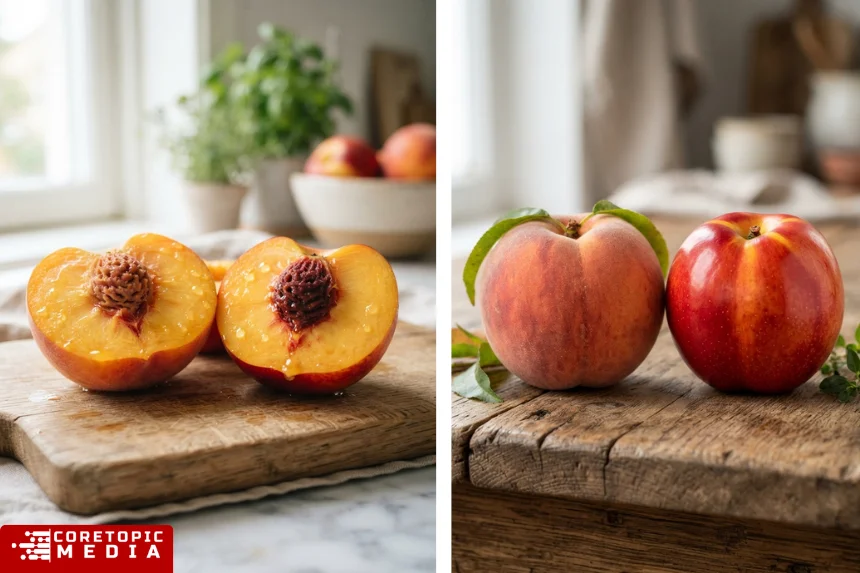
When comparing nectarines vs peaches, the biggest difference is their skin: peaches have fuzz, while nectarines have smooth skin. Botanically, however, they belong to the same species, Prunus persica, and share far more similarities than differences.
Nectarines usually feel slightly firmer and may taste more aromatic or tangy, while ripe peaches often have softer, juicier flesh. However, variety and ripeness can influence flavor more than the peach-versus-nectarine label itself. Nutrition also remains remarkably similar between the two.
Quick Answer: Nectarines vs Peaches
| Question | Nectarines | Peaches |
|---|---|---|
| Nectarines vs peaches: main difference? | Smooth skin | Fuzzy skin |
| Species | Prunus persica | Prunus persica |
| Typical texture | Slightly firmer | Often softer and juicier |
| Typical flavor | Aromatic, sweet-tart | Sweet, juicy, sometimes more mellow |
| Flesh colors | Yellow or white | Yellow or white |
| Pit types | Freestone or clingstone | Freestone or clingstone |
| Nutrition | Very similar to peaches | Very similar to nectarines |
| Best for eating fresh | Excellent | Excellent |
| Best for baking | Excellent | Excellent |
| Best for grilling | Excellent | Excellent |
The practical takeaway is simple: choose whichever fruit smells fragrant, feels ripe, and suits the texture you want. You can substitute one for the other in most recipes.
Key Facts About Nectarines and Peaches
| Fact | Answer |
|---|---|
| Botanical species | Prunus persica |
| Plant family | Rosaceae, the rose family |
| Fruit type | Stone fruit |
| Main visible difference | Nectarines lack peach fuzz |
| Why nectarines are smooth | A recessive genetic trait |
| Peach-plum hybrid? | No |
| Common flesh colors | White and yellow |
| Common pit types | Freestone and clingstone |
| Typical U.S. season | Primarily spring through summer, depending on region and cultivar |
| Nutritional winner | Neither has a meaningful overall advantage |
The University of California describes the nectarine as a “fuzzless” peach and attributes its smooth skin to a recessive gene. University of Missouri horticulture guidance says essentially the same thing.
Are Nectarines and Peaches the Same Fruit?
In the nectarines vs peaches comparison, nectarines are actually a type of peach. Botanists place both fruits in the species Prunus persica, while their most obvious difference comes from the skin.
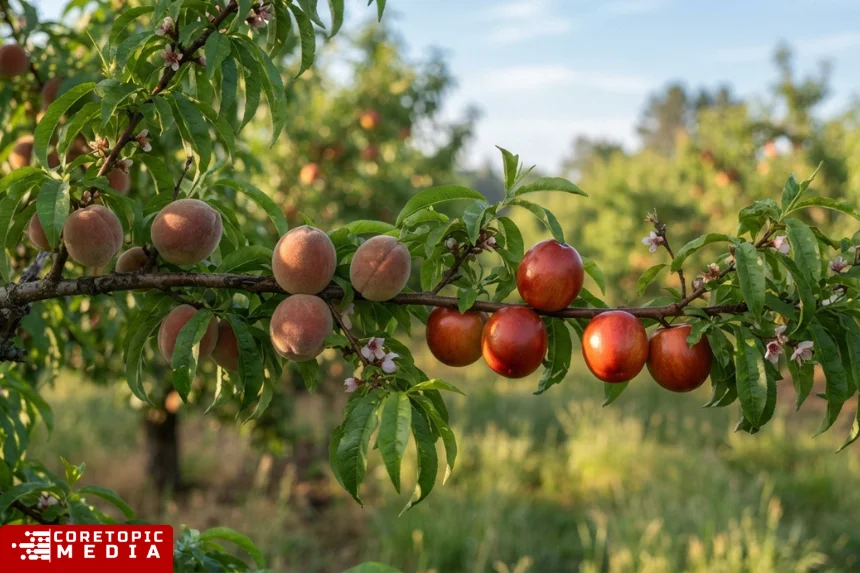
A peach develops fine hairs called trichomes. By contrast, the genetic combination that produces a nectarine prevents those hairs from developing.
For more botanical background, the University of Missouri explains the relationship in its Nectarine: The Fuzzless Peach guide. The university describes nectarine trees as essentially identical to peach trees in their leaves, buds, and branches.
Are Nectarines a Cross Between Peaches and Plums?
No. This popular claim is a myth.
A nectarine does not need plum ancestry to explain its smooth skin. Instead, genetics within the peach species produce the trait naturally.
The University of Florida also identifies peaches and nectarines as the same species and distinguishes nectarines by their lack of peach fuzz.
Therefore, calling a nectarine a “smooth peach” gives you a more accurate picture than calling it a hybrid.
Why Do Peaches Have Fuzz but Nectarines Do Not?
Genetics creates the difference.
Peaches carry a dominant trait associated with fuzzy skin. Nectarines carry the recessive form that results in smooth fruit. In practical terms, this small genetic difference changes the surface dramatically without turning the nectarine into a separate species.
The University of California Fruit & Nut Research Center also attributes nectarine skin to a recessive gene.
Does Peach Fuzz Affect More Than Appearance?
It can.
The smooth skin on nectarines tends to feel thinner and may show blemishes more readily. Moreover, horticultural sources report that many nectarine cultivars face greater challenges from bacterial spot and cold than peaches.
However, those growing differences do not mean a supermarket nectarine is inferior. They mainly matter to orchard managers and plant breeders.
What Do Nectarines and Peaches Taste Like?
Both can taste sweet, juicy, floral, tart, or richly aromatic. Variety, ripeness, growing conditions, and flesh color all influence flavor.
As a general tendency, nectarines often deliver firmer flesh with a stronger aromatic or tangy-sweet character. Peaches often feel softer and may taste sweeter or more luscious when fully ripe. University of Missouri horticulture guidance describes a similar pattern.
Nevertheless, these descriptions are tendencies rather than rules.
Are Nectarines Sweeter Than Peaches?
Not necessarily.
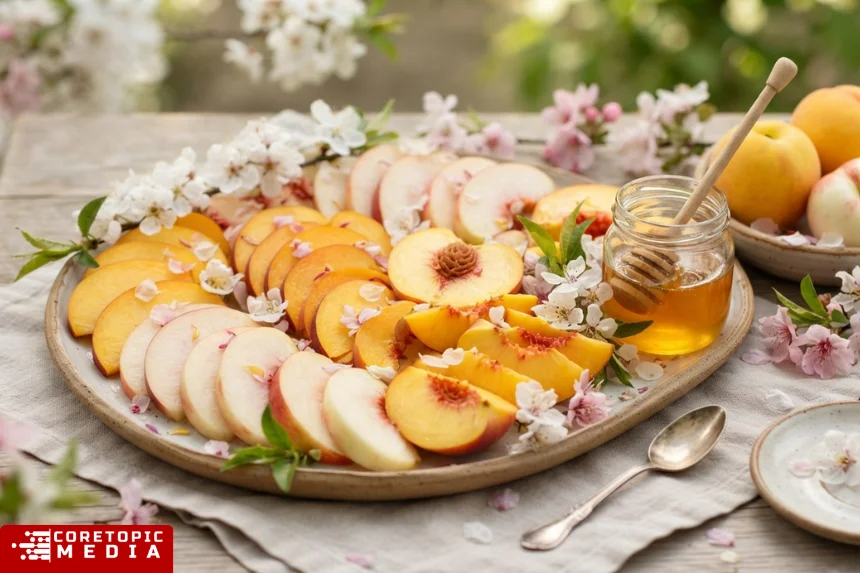
A ripe nectarine can taste sweeter than a peach because aroma, acidity, and texture shape how we perceive sweetness. However, you cannot reliably predict sugar content from the fruit name alone.
Moreover, published nutrition databases show only small differences in total sugars. Variety and maturity can easily matter more than those average values.
Therefore, the better question at the produce aisle is not “nectarine or peach?” but “which one is ripe and flavorful today?”
White vs Yellow Peaches and Nectarines
Flesh color can provide a useful flavor clue.
White peaches and white nectarines generally have lower acidity and often taste honeyed, floral, and distinctly sweet. Yellow varieties usually bring more acidity, which creates a stronger sweet-tart balance. Cornell expertise cited by Martha Stewart and specialists interviewed by Serious Eats describe this distinction.
Consequently, a white nectarine may taste sweeter than a yellow peach even when their sugar content looks similar.
Nectarines vs Peaches Nutrition: Which Is Healthier?
Neither fruit has a clear overall nutritional advantage. Both provide water, carbohydrates, fiber, and modest amounts of several vitamins and minerals while remaining relatively low in calories.
That similarity makes sense because the fruits share the same species.
The USDA FoodData Central database serves as the U.S. government’s main food-composition resource. USDA currently maintains several data types, so numbers can differ slightly depending on the specific record and analytical dataset.
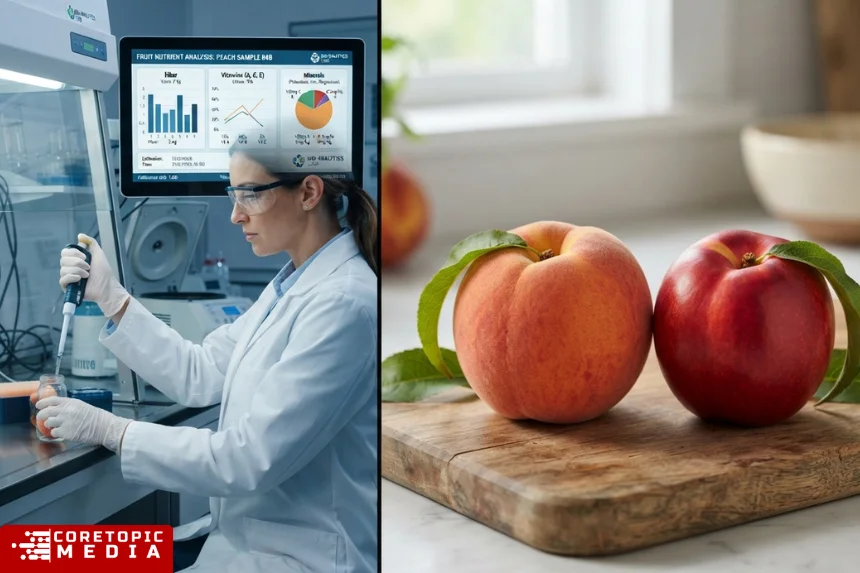
Nutrition Comparison Per 100 Grams
Approximate USDA-linked values illustrate how close the fruits are:
| Nutrient | Raw nectarine | Raw yellow peach |
|---|---|---|
| Calories | 44 | 42 |
| Protein | 1.1 g | 0.9 g |
| Carbohydrates | 10.6 g | 10.1 g |
| Fiber | 1.7 g | 1.5 g |
| Fat | 0.3 g | 0.3 g |
Current USDA-linked records support these figures, although the agency maintains different record types and updates some foods independently. Therefore, treat tiny numerical differences as data points, not evidence that one fruit is universally healthier.
What About Vitamin C, Vitamin A, and Potassium?
The same caution applies to micronutrients.
For example, one USDA-linked nectarine record lists 201 mg potassium and 17 micrograms RAE of vitamin A per 100 g. A newer Foundation peach record lists 122 mg potassium and 24 micrograms RAE of vitamin A per 100 g. The records also differ for vitamin C.
However, comparing different USDA data types does not prove a universal biological advantage. Cultivar, maturity, growing conditions, sampling, and analytical updates can affect reported values.
Therefore, claims that nectarines categorically contain “twice as much vitamin A” or always provide more vitamin C deserve caution.
Which Has More Calories: Peaches or Nectarines?
The difference is too small to matter for most people.
On a 100-gram basis, USDA-linked records put both fruits in roughly the low-40-calorie range. Meanwhile, comparisons based on “one whole fruit” can reverse the apparent winner because peaches and nectarines often differ in size.
For example, a large peach can naturally contain more calories than a smaller nectarine simply because you eat more fruit.
Therefore, compare equal weights when nutritional precision matters.
Are Peaches or Nectarines Better for Fiber?
They are very close.
The USDA-linked records above show about 1.5 grams of fiber per 100 grams of peach and 1.7 grams per 100 grams of nectarine. That 0.2-gram difference offers little reason to choose one fruit over the other.
Instead, choose the fruit you enjoy and eat the edible skin when you like its texture.
What Is the Texture Difference?
Peaches usually feel softer and fuzzier, while nectarines often feel smoother and somewhat firmer.
However, ripeness changes texture dramatically. A ripe peach can become exceptionally soft and juicy, while an underripe nectarine can remain quite firm.
Cultivar also matters. Both fruits come in types that breeders select for shipping, fresh eating, processing, or specific textures.
Freestone vs Clingstone
The words freestone and clingstone describe how the flesh interacts with the pit.
With freestone fruit, the flesh separates relatively easily from the stone. With clingstone fruit, the flesh holds tightly to the pit.
Both peaches and nectarines can fall into either category. Therefore, a nectarine does not automatically have one type of pit, and a peach does not automatically have the other. UC Agriculture and Natural Resources confirms that both fruits include these categories.
For eating fresh or slicing neatly, many people find freestone fruit more convenient.
Can You Substitute Nectarines for Peaches?
Yes, in most recipes you can swap peaches and nectarines one for one by weight or volume.
Their flavors and moisture levels overlap enough for pies, cobblers, crisps, salads, salsas, jams, sauces, cakes, and grilled dishes.
Ripeness matters more than the name on the fruit. Martha Stewart’s Cornell expert specifically recommends choosing whichever option looks ripest and most fragrant.
When Might the Difference Matter?
Texture can influence the final dish.
A firm nectarine may hold its shape especially well on a grill or in a salad. Meanwhile, a very ripe peach can provide a softer, juicier texture in cobbler, compote, or sauce.
However, do not turn that tendency into a rigid cooking rule. A firm peach can grill beautifully, while a ripe nectarine can make an excellent pie.
Therefore, judge the individual fruit first.
Which Is Better for Baking?
Both work well.
For pies, cobblers, galettes, cakes, and crisps, yellow-fleshed varieties often work especially well because their acidity can balance sugar. However, white peaches and nectarines can also produce excellent desserts when you adjust sweetness to taste.
A nectarine’s smooth skin also offers one practical advantage: cooks who dislike peach fuzz can often leave nectarine skin on without thinking twice.
Meanwhile, you can peel peaches when a recipe or personal preference calls for it.
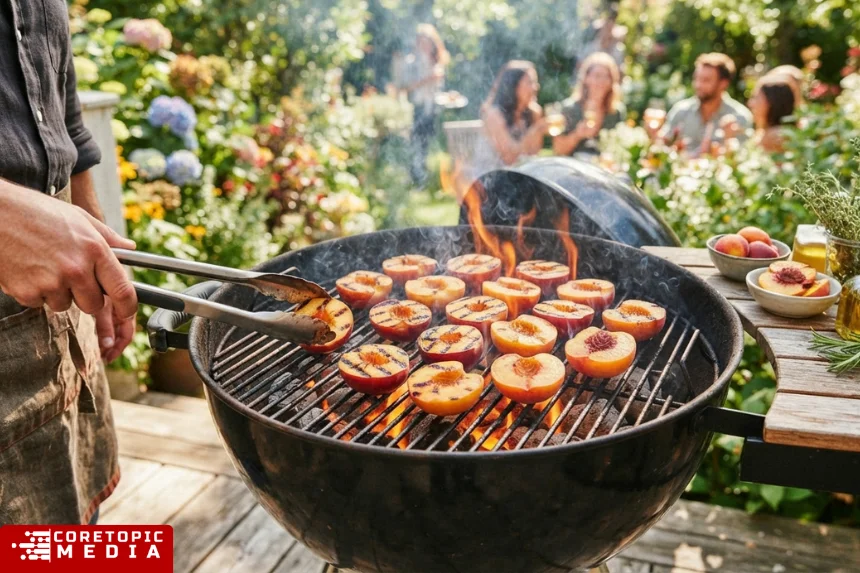
Which Is Better for Grilling?
Both peaches and nectarines grill successfully.
Choose fruit that feels ripe but still firm enough to hold together over heat. Extremely soft fruit may collapse or stick regardless of whether it has fuzz.
Nectarines often start slightly firmer, so they can feel convenient for grilling. Nevertheless, variety and ripeness matter more than species label.
How Can You Pick a Ripe Peach or Nectarine?
Use aroma, background color, and gentle firmness rather than red blush alone.
A ripe peach or nectarine should usually smell fruity near the stem and yield slightly to gentle pressure. Avoid squeezing hard because both fruits bruise easily.
Also, look beyond the red color. Many cultivars develop red blush before they reach ideal eating ripeness.
What Does Green Skin Mean?
A strong green background can signal that the fruit needs more time or that growers harvested it before ideal maturity.
By contrast, yellow-fleshed varieties generally develop warmer yellow or golden background tones as they mature.
However, color varies by cultivar. Therefore, combine appearance with fragrance and touch instead of relying on one signal.
How Should You Ripen and Store Peaches and Nectarines?
Let firm fruit continue ripening at room temperature.
Once it reaches the texture you like, refrigeration can slow further ripening. UC Davis reports that temperature strongly affects peach and nectarine postharvest life, although its commercial storage recommendations use conditions much colder and more controlled than a home kitchen.
For detailed postharvest science, see the UC Davis Nectarine & Peach guide.
Should You Wash Them Before Storing?
For ordinary home use, wash fresh fruit before eating or preparing it.
The FDA recommends rinsing produce under running water rather than using soap, detergent, or commercial produce wash. It also advises cutting away damaged areas and keeping perishable cut produce refrigerated.
You can read the full FDA produce-safety guidance for general handling recommendations.
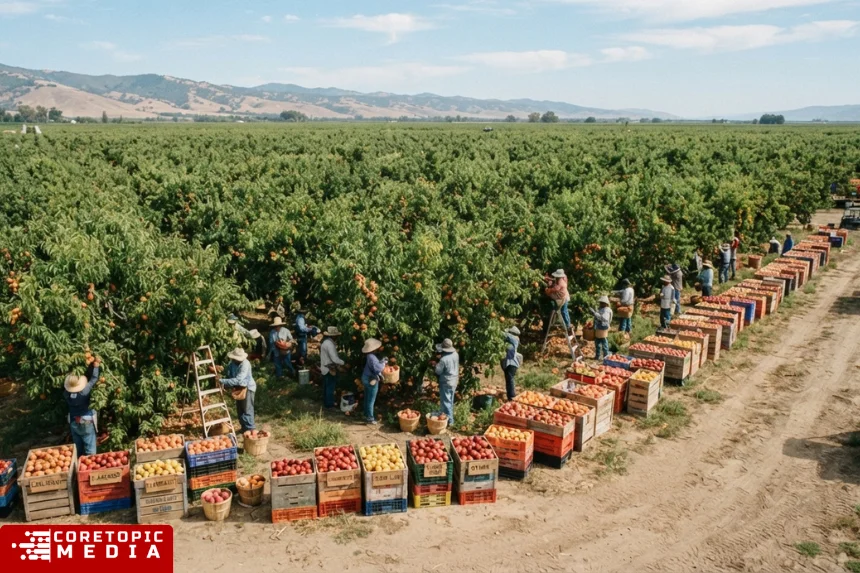
When Are Peaches and Nectarines in Season?
For U.S. shoppers, both fruits strongly associate with summer, although the exact season changes by region and cultivar.
Florida’s low-chill cultivars can ripen as early as April and May, before crops from many other U.S. growing areas reach the market. Meanwhile, California growers offer numerous cultivars across an extended season.
Therefore, a nationwide statement such as “peaches are in season only in July and August” oversimplifies the market.
July and August often bring abundant summer fruit, but American availability can extend from spring into early fall.
Do Peaches and Nectarines Grow on the Same Kind of Tree?
Yes, they grow on extremely similar trees because they belong to the same species.
Their trees share comparable leaves, buds, branches, cultural needs, and chilling requirements. Moreover, both fruits generally need similar orchard management.
However, individual cultivars differ in cold tolerance, disease susceptibility, ripening date, and climate needs.
The broader botanical relationship also appears on the Wikipedia page for the peach species, which covers peaches and nectarines under Prunus persica.
Nectarines vs Peaches: Which Should You Buy?
Buy the better fruit in front of you.
Choose a peach when you want the classic fuzzy skin, very soft ripe flesh, or the aroma of a variety you already love. Choose a nectarine when you prefer smooth skin or find a ripe cultivar with appealing firmness and fragrance.
However, freshness should usually break the tie.
A fragrant, ripe nectarine will beat a hard, flavorless peach. Similarly, a peak-season peach will usually beat a poor nectarine.
Best Choice by Use
| Use | Better choice |
|---|---|
| Fresh snacking | Tie |
| Smooth skin preference | Nectarine |
| Very soft, juicy texture | Often peach |
| Firm slices for salad | Often nectarine |
| Pie or cobbler | Either |
| Grilling | Either; choose firm-ripe fruit |
| Jam or preserves | Either |
| Salsa | Either |
| Smoothies | Either |
| Nutritional value | Tie |
Ultimately, cultivar quality and ripeness matter more than a broad peach-versus-nectarine rule.
FAQs About Nectarines vs Peaches
1. What is the main difference between nectarines and peaches?
The main visible difference is the skin. Peaches have fine fuzz, while nectarines have smooth skin because of a recessive genetic trait; otherwise, both belong to Prunus persica.
2. Are nectarines just peaches without fuzz?
Essentially, yes. Horticultural sources commonly describe nectarines as fuzzless peaches because they belong to the same species and share almost all major botanical characteristics.
3. Are nectarines a peach-plum hybrid?
No. Nectarines developed within the peach species, so they do not require a peach-plum cross to explain their smooth skin. Therefore, the hybrid explanation is a misconception.
4. Which is sweeter, a peach or a nectarine?
Neither always wins. Nectarines can taste intensely sweet or aromatic, while peaches can taste softer and sweeter; however, cultivar, acidity, flesh color, and ripeness often make a bigger difference.
5. Which is healthier, peaches or nectarines?
Neither has a meaningful overall nutritional advantage. Both offer similar calories, carbohydrates, fiber, and micronutrients, while published values vary somewhat by cultivar and USDA dataset.
6. Can I replace peaches with nectarines in a recipe?
Yes. You can substitute nectarines for peaches in most recipes using roughly the same amount; however, consider ripeness and firmness because those qualities affect moisture and texture more than the name of the fruit.
7. Do you need to peel nectarines?
No. Nectarine skin is edible, so you can wash the fruit and eat it with the skin intact. Similarly, peach skin is edible, although some people peel peaches because they dislike the fuzz.
8. Which is better for pie, peaches or nectarines?
Both make good pies. Yellow peaches or nectarines can provide useful acidity, while white varieties usually taste sweeter and less tart; therefore, choose ripe fruit and adjust the recipe rather than relying on the fruit name alone.
9. How do you know when a nectarine or peach is ripe?
Look for fragrance and a slight yield when you press the fruit gently. Moreover, warm background color generally tells you more than red blush alone, although exact color varies among cultivars.
10. Should peaches and nectarines go in the refrigerator?
Let firm fruit ripen at room temperature first, then refrigerate ripe fruit when you need to slow further softening. Because cold-storage response varies by cultivar and temperature, home refrigeration works best as a way to extend the life of fruit that has already reached good eating ripeness.
Conclusion
In the nectarines vs peaches comparison, the two fruits have far more in common than their appearance suggests. A nectarine is a smooth-skinned type of peach, and both belong to the same species, Prunus persica.
Peaches typically bring fuzzy skin and often softer, juicier flesh. Nectarines have smooth skin and often feel slightly firmer or more aromatic. However, cultivar, flesh color, maturity, and freshness can create bigger flavor differences than the fruit category itself.
Nutritionally, neither fruit clearly wins. Both provide a low-calorie way to eat fresh fruit, and minor nutrient differences vary across databases and samples.
Therefore, the best choice is usually the simplest one: buy the ripest, most fragrant peach or nectarine you can find and use it wherever you would enjoy the other.