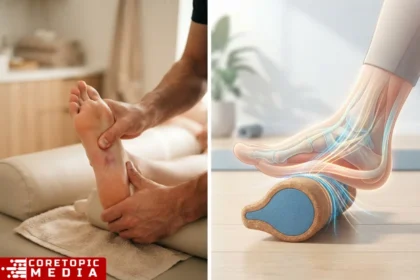


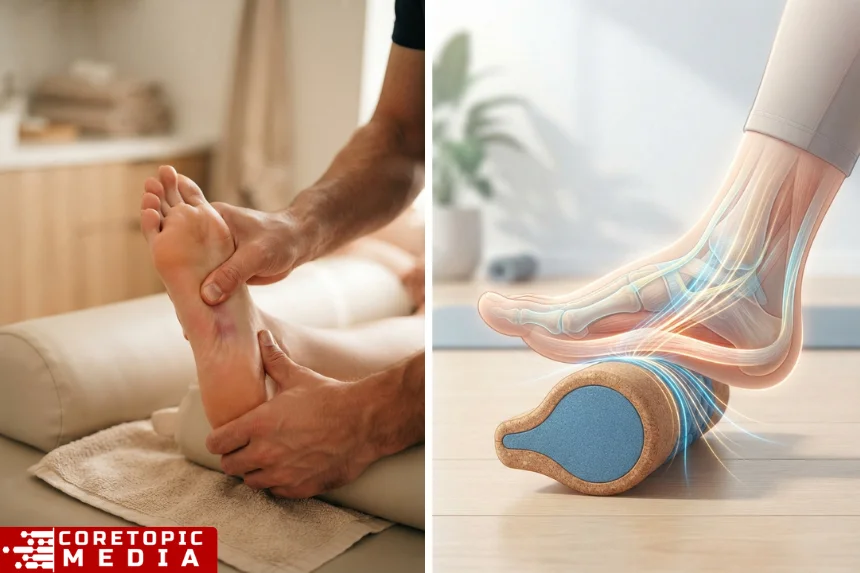
Plantar fasciitis massage may provide temporary relief from the stiffness and heel pain caused by irritation of the plantar fascia—the strong band of tissue running from your heel to your toes. It can be particularly useful when the foot feels stiff after sleeping, sitting or spending a long time standing.
Massage is not a complete treatment by itself. The strongest rehabilitation plans usually combine symptom relief with supportive footwear, appropriate activity changes, stretching and gradual strengthening. Current clinical guidance supports manual therapy for plantar heel pain when it addresses relevant joint and soft-tissue restrictions, but this does not mean that pressing harder or massaging for longer will produce better results.
The techniques below are intended for uncomplicated plantar fasciitis. Stop and seek professional advice if you are uncertain about the cause of your foot pain.
Medical note: This guide provides general information and is not a diagnosis or a personalised treatment plan. Speak to a GP, physiotherapist, podiatrist or pharmacist if you have severe, persistent or unusual symptoms.
What Does Plantar Fasciitis Feel Like?
The plantar fascia supports the arch of the foot and helps the foot handle load while you stand, walk and run. Plantar fasciitis—also called plantar heel pain or plantar fasciopathy—develops when this tissue becomes irritated and less able to tolerate its usual load.
Typical symptoms include:
- Pain underneath the heel or along the arch
- Pain during the first few steps after getting out of bed
- Pain after sitting or resting for a while
- Symptoms that initially ease with movement but worsen after prolonged standing, walking or running
- Tenderness when pressing near the inside of the heel
A sudden increase in walking, running or standing can contribute to symptoms. Unsupportive footwear, reduced ankle movement, tight calf muscles and increased load on the foot may also play a part.
Not every case of heel pain is plantar fasciitis. Nerve irritation, stress fractures, Achilles tendon problems and changes in the heel’s protective fat pad can cause similar symptoms.
Does Massage Help Plantar Fasciitis?
Massage may reduce pain or stiffness for a short period, making it easier to move the foot and perform rehabilitation exercises. NHS physiotherapy guidance describes gentle self-massage with the hands, a tennis ball or a cold bottle as a way to relieve some discomfort temporarily.
Research into broader manual therapy—which can include massage, myofascial release and joint mobilisation—is reasonably encouraging but not definitive. The 2023 clinical practice guideline for plantar heel pain recommends manual therapy directed at relevant joints and soft tissues to reduce pain and improve function. A systematic review also found that manual therapy was associated with improved function and may help reduce pain, particularly when combined with stretching and strengthening.
However, several limitations are important:
- Many studies examine therapist-delivered treatment rather than simple home massage.
- Manual therapy is often combined with other treatments, making its individual effect difficult to measure.
- The ideal pressure, duration and frequency have not been firmly established.
- Massage may ease symptoms without correcting the factors that made the fascia sensitive in the first place.
It is therefore better to treat massage as one useful part of a wider recovery plan rather than as a cure.
How to Massage Plantar Fasciitis Safely
Massage should feel comfortable or mildly tender. It should not produce sharp pain, burning, electric sensations, numbness or tingling.
Start with light pressure. A sensitive foot generally responds better to a short, gentle session than to aggressive pressure directly against the heel.
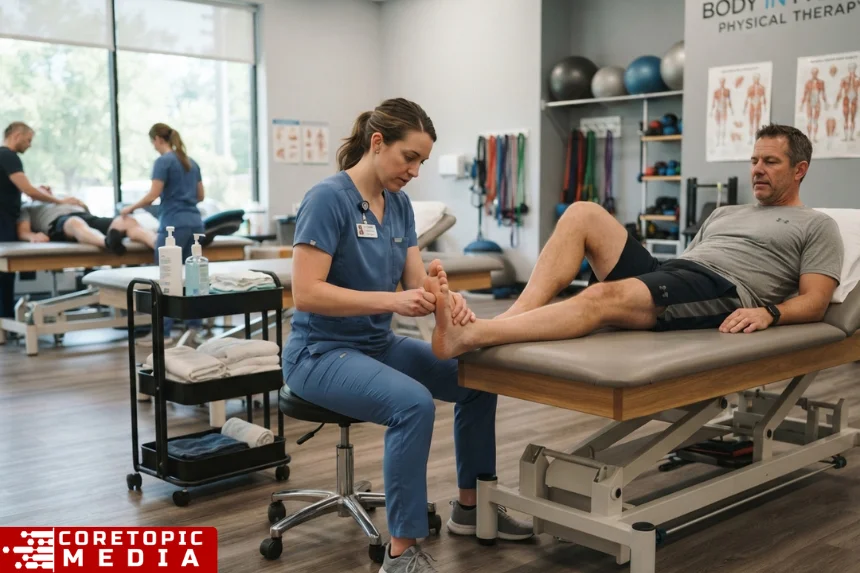
1. Hand Massage for the Sole of the Foot
This method gives you the most control over pressure and is a good place to start during a painful flare-up.
- Sit in a stable chair and rest the affected foot across the opposite thigh.
- Support the heel with one hand.
- Use the thumb or heel of the other hand to make slow strokes along the arch.
- Work from the heel towards the toes, then return with lighter pressure.
- Massage the broader arch rather than repeatedly digging into the most painful point.
- Continue for one to two minutes.
You can gently pull your toes towards your shin while massaging. This places the plantar fascia in a lightly stretched position, but the stretch should not be forced. Some NHS physiotherapy guidance suggests working towards two or three minutes when the pressure is comfortable.
2. Tennis Ball Massage
A tennis ball spreads pressure across a larger surface and is usually easier to control than a golf ball or hard massage ball.
- Sit with both feet supported.
- Place a tennis ball beneath the middle of the affected arch.
- Roll it slowly from the ball of the foot towards the heel.
- Move slightly from side to side to cover the arch.
- Continue for one to two minutes with light or moderate pressure.
Begin while seated rather than standing. Putting your full body weight onto a small, hard ball can bruise an already sensitive foot.
Stop if the ball causes stinging, tingling or shooting sensations. These symptoms can indicate that you are irritating a nerve rather than comfortably mobilising the surrounding tissue.
3. Frozen Water Bottle Massage
A chilled bottle combines gentle rolling pressure with cold therapy and may be useful after a long day on your feet.
- Freeze a small plastic bottle of water.
- Wear a thin sock or place a cloth between your skin and the bottle.
- Sit down and position the bottle beneath the arch.
- Roll it slowly from the heel towards the front of the foot.
- Continue for approximately five to ten minutes.
Do not press heavily against the bottle. Avoid cold treatment if you have reduced sensation or circulation unless a healthcare professional has confirmed that it is appropriate for you. NHS podiatry guidance commonly recommends five to ten minutes for this technique.
4. Gentle Calf Massage
The calf muscles connect to the heel through the Achilles tendon. Treating calf tightness may therefore complement massage under the foot, although you do not need to massage every muscle in the leg to benefit.
- Sit with the lower leg supported.
- Place both hands around the calf.
- Use broad squeezing and kneading movements through the muscle.
- Work slowly from above the ankle towards the knee.
- Avoid pressing directly behind the knee or forcefully into the Achilles tendon.
- Continue for one or two minutes.
A pilot randomised trial found better functional results when deep posterior-calf massage and neural mobilisation were combined with stretching than when ultrasound and the same stretching programme were used. Because this involved professional treatment and several interventions, it should not be interpreted as proof that forceful home massage is necessary.
Which Massage Method Should You Choose?
| Method | Most useful when | Suggested starting time | Main precaution |
|---|---|---|---|
| Hand massage | The foot is sensitive or you need precise pressure control | 1–2 minutes | Avoid digging into the painful heel |
| Tennis ball | You want an easy daily self-massage | 1–2 minutes | Stay seated and use light pressure |
| Frozen bottle | The foot aches after activity | 5–10 minutes | Protect the skin and avoid if sensation is reduced |
| Calf massage | The calf feels tight as well as the foot | 1–2 minutes | Do not massage unexplained calf swelling or redness |
The most appropriate technique is the one that leaves the foot feeling the same or better afterwards. A method that repeatedly increases pain is not more effective simply because it feels deeper.
How Often Should You Massage Plantar Fasciitis?
There is no firmly established dosage that works for everyone. A sensible starting point is one short session each day, using one or two techniques.
For example:
- One to two minutes of hand or ball massage in the morning
- Five minutes with a cold bottle after a demanding day
- One to two minutes of calf massage before stretching
You may use gentle hand massage before taking your first steps in the morning, as plantar fasciitis is commonly most painful after sleep or rest. This is a practical way to reduce stiffness, not a requirement for recovery.
Judge the amount by your response over the following hours and the next morning. Reduce the pressure, duration or frequency if:
- Your pain becomes sharper during the session
- The area feels bruised afterwards
- Morning pain is noticeably worse the next day
- You develop tingling, burning or numbness
What to Do After Massage
Massage may make the foot feel better temporarily, but the plantar fascia still needs to regain its ability to tolerate everyday load.
Stretch the Plantar Fascia
Sit with the affected foot across the opposite knee. Hold the toes and gently pull them towards your shin until you feel a stretch through the sole. Hold for about 10 seconds, relax and repeat several times.
Stretch the Calf
Face a wall and place the painful foot behind you. Keep the toes pointing forwards and the heel on the floor. Lean forwards until you feel a gentle calf stretch. NHS guidance commonly recommends holding for around 30 seconds and repeating the stretch.
Gradually Strengthen the Foot and Calf
Calf raises and other progressive strengthening exercises help the foot handle standing, walking and running. Start at an appropriate level and build gradually rather than attempting heavy exercises during an irritable flare-up. Current guidance supports both plantar fascia-specific stretching and gastrocnemius–soleus stretching for short- and longer-term improvements.
Review Your Daily Load
Temporarily reduce activities that clearly aggravate the pain, but complete inactivity is rarely necessary. Lower-impact options such as cycling or swimming may help you remain active while symptoms settle.
Supportive, cushioned shoes are generally preferable to walking barefoot on hard floors, flip-flops or unsupportive slippers.
Common Massage Mistakes
Pressing Directly Into the Most Painful Spot
Repeatedly digging into the heel can aggravate sensitive tissue. Use broad, slow movements around the arch and gradually approach tender areas.
Assuming More Pain Means Better Results
Effective massage does not need to be extremely painful. Sharp or electrical pain is a reason to stop.
Using a Hard Golf Ball Too Soon
A golf ball concentrates pressure into a small area. Begin with your hands or a tennis ball and only consider a firmer tool after the foot is less sensitive.
Relying on Massage Alone
Massage can reduce symptoms without improving the foot’s capacity for walking, standing or running. Include appropriate strengthening and gradual activity progression.
Continuing Despite a Next-Day Flare-Up
The foot’s response after treatment matters more than how it feels for the first few minutes. Scale back if symptoms are consistently worse the following morning.
When Should You Avoid Massage?
Do not massage the foot or calf without professional advice when you have:
- An open wound, blister, ulcer or skin infection
- A hot, red or significantly swollen foot
- A recent injury involving a snap, pop or sudden severe pain
- An inability to bear weight
- Unexplained numbness or loss of sensation
- Diabetes with a new or unexplained foot problem
- Known circulation problems
- A suspected stress fracture
- Recent surgery in the area
Do not massage a calf that has unexplained one-sided pain and swelling, particularly when the skin is warm, red or darker than usual. These can be symptoms of a deep-vein thrombosis. Seek urgent medical advice; call 999 if leg symptoms occur with chest pain or shortness of breath.
When to See a GP, Physiotherapist or Podiatrist
Arrange an assessment if:
- The pain is severe or prevents normal activities
- Symptoms are getting worse or repeatedly returning
- Home treatment has not helped after approximately two weeks
- You have tingling, weakness or reduced feeling
- You have diabetes and develop foot pain
- You are unsure whether plantar fasciitis is the correct diagnosis
Contact NHS 111 after a significant injury if you cannot walk, the foot has changed shape or you heard a snap, grinding or popping sound.
A physiotherapist or podiatrist can assess foot and ankle movement, muscle strength, footwear, training load and other possible causes of heel pain. Professional manual therapy may be included where relevant, but it will usually form part of a broader rehabilitation programme.
Frequently Asked Questions
Can massage cure plantar fasciitis?
Massage is unlikely to cure plantar fasciitis by itself. It may reduce pain and stiffness temporarily, while stretching, strengthening, footwear changes and gradual load management address the foot’s longer-term needs.
Can massage make plantar fasciitis worse?
Yes. Excessive pressure, prolonged sessions or repeated work directly over a highly sensitive heel can increase pain. Stop if you experience sharp, burning, tingling or electrical sensations.
Is a tennis ball or golf ball better?
A tennis ball is usually the safer starting option because it distributes pressure more evenly. A golf ball is much firmer and may irritate or bruise a sensitive foot.
Is it better to massage in the morning or at night?
Either can be useful. Gentle morning massage may reduce stiffness before your first steps, while a cold-bottle massage may feel soothing after a day involving prolonged standing or walking.
Can I use a massage gun?
A massage gun is not necessary for plantar fasciitis. Avoid using one directly on the heel bone, sensitive arch or Achilles tendon. A low setting may be used over the muscular part of the calf if it feels comfortable and you have none of the contraindications described above.
Should plantar fasciitis massage hurt?
It may feel mildly tender, but it should not be sharply painful. Comfortable pressure is generally preferable to forcing the foot through pain.
Conclusion
Plantar fasciitis massage can be a useful way to manage temporary heel pain and stiffness, especially when performed gently with the hands, a tennis ball or a cold bottle. It works best as part of a wider plan that includes supportive footwear, sensible activity changes, stretching and gradual strengthening.
Use pain as feedback rather than trying to overpower it. Persistent, severe or unusual symptoms deserve a professional assessment to confirm the diagnosis and rule out other causes of heel pain.
Discover more on our website about why is my lip twitching