


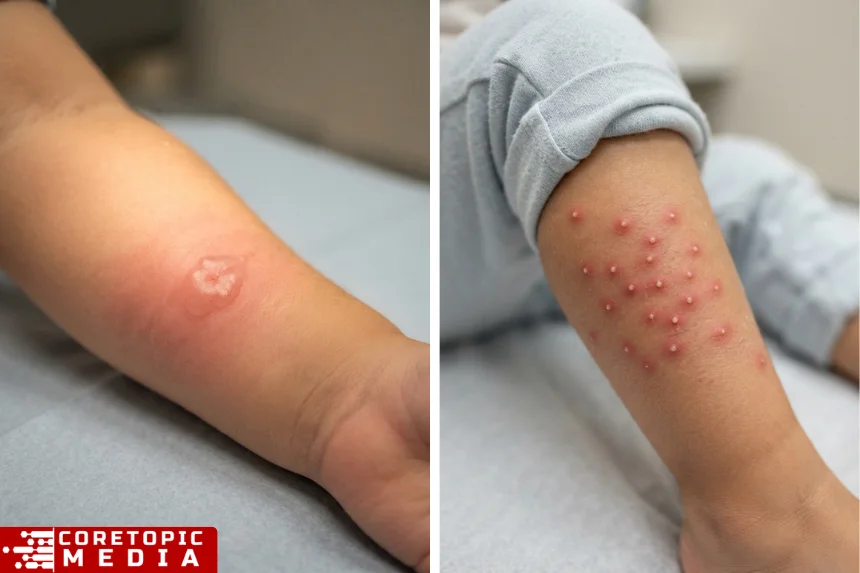
Ant bites on kids are usually minor, but they can be painful, itchy, and upsetting for both children and parents. Most ant bites cause small red bumps, mild swelling, and itching that improves within a few days. Fire ants are different because they can sting as well as bite, causing sudden burning pain followed by itchy bumps or pus-filled blisters. Cleveland Clinic notes that fire ant stings often improve within 3 to 7 days, but symptoms that do not improve after about a week to 10 days should be checked by a healthcare professional.
The main goal is to keep your child comfortable, prevent scratching, and watch for signs of infection or allergy. Most mild reactions can be cared for at home with washing, cold compresses, age-appropriate itch relief, and careful monitoring. Severe allergic symptoms, spreading redness, fever, or multiple fire ant stings in a baby need medical attention.
This article is for general education only. It is not a diagnosis or a substitute for medical care. For babies, children with allergies, or symptoms that seem severe, contact your child’s doctor or local urgent care service.
What Do Ant Bites on Kids Look Like?
Ant bites on kids can look like small red or pink bumps, raised itchy spots, mild swelling, or clusters of irritated skin. Children may complain that the area burns, stings, itches, or feels sore. The marks often appear on feet, ankles, legs, hands, or anywhere ants got trapped under clothing.
Fire ant stings have a more recognizable pattern. DermNet describes fire ant reactions as immediate pain and a red spot, followed hours later by a tender, itchy pustule that can last for several days or even weeks. Bites and stings may appear in clusters, especially under clothing.
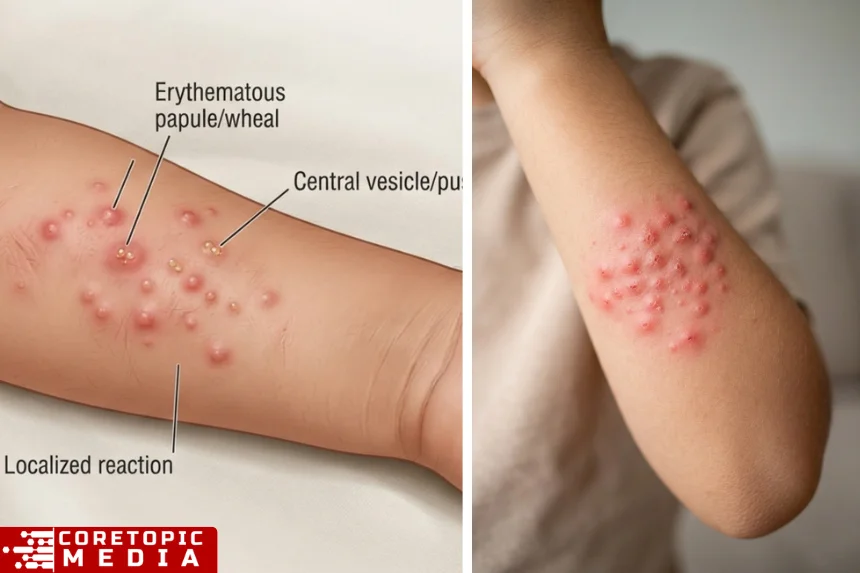
A typical fire ant sting may change over time:
| Time after sting | What you may see |
|---|---|
| Immediately | Burning pain, redness, or a raised bump |
| Within the first hour | Itchy welt or hive-like bump |
| After a few hours | Blister or pus-filled spot |
| Over the next few days | Itching, scabbing, and gradual healing |
A pus-filled blister from a fire ant sting does not always mean infection. It can be part of the normal sting reaction. Infection is more likely if redness spreads, the area becomes increasingly warm and painful, pus worsens, fever develops, or your child seems unwell.
Ant Bite vs. Fire Ant Sting
Parents often say “ant bite,” but fire ants usually bite first to hold onto the skin and then sting. That sting injects venom, which is why fire ant reactions can burn, blister, and itch intensely.
| Feature | Common ant bite | Fire ant sting |
|---|---|---|
| Pain | Mild to moderate | Often sudden burning pain |
| Itching | Common | Very common and can be intense |
| Skin change | Small red bump or swelling | Red bump, blister, or pustule |
| Pattern | One or a few spots | Often several clustered spots |
| Healing time | Often a few days | Commonly 3 to 7 days, sometimes longer |
Cleveland Clinic says mild fire ant bites can often be treated at home by brushing ants off the skin, washing with soap and cold water, using antihistamines or hydrocortisone for itch, and applying cold compresses for pain and swelling.
How to Treat Ant Bites on Kids at Home
Most mild ant bites on kids can be managed with simple first aid. The steps below focus on comfort and reducing the risk of infection.
1. Move Your Child Away From the Ants
First, get your child away from the ant nest or area where the bites happened. If ants are still on the skin or clothing, brush them off quickly. Fire ants can sting more than once, so removing them matters.
2. Wash the Skin
Clean the affected skin with soap and water. This helps remove dirt and lowers the chance of bacteria entering scratched or irritated skin. Mayo Clinic recommends gently washing insect bites or stings with soap and water as part of basic first aid.
3. Use a Cold Compress
Apply a cold, wet cloth or wrapped ice pack to the bite area for 10 to 20 minutes. This can reduce pain, swelling, and itching. Mayo Clinic also recommends raising the arm or leg if the bite is on a limb.
4. Help Control the Itch
Itching is one of the hardest parts for children because scratching can break the skin. Depending on your child’s age and health history, a pharmacist or doctor may suggest an oral antihistamine, hydrocortisone cream, calamine lotion, or another anti-itch product. The Royal Children’s Hospital advises that oral antihistamines or steroid cream may help itching, and a cool wet towel can reduce pain and swelling.
Always follow the product label for your child’s age. For babies, toddlers, or children with medical conditions, ask a healthcare professional before using medicated creams or oral allergy medicines.
5. Do Not Pop Fire Ant Blisters
Fire ant blisters can be tempting to pick, but breaking them can increase the chance of infection. Cleveland Clinic warns that scratching or opening the blister can put the skin at risk of infection. Keep the area clean, trim your child’s nails, and cover the spot with a light bandage if scratching is a problem.
6. Use Pain Relief Safely if Needed
If your child is uncomfortable, ask your doctor or pharmacist whether acetaminophen/paracetamol or ibuprofen is appropriate. Raising Children Network lists paracetamol or ibuprofen in recommended doses as options to ease pain and swelling after ant bites and stings.
Do not give aspirin to children unless a doctor specifically tells you to.
When to Call a Doctor
Call your child’s doctor or seek medical advice if:
- Pain is severe or does not improve after a few hours.
- Redness, warmth, swelling, or pain keeps spreading.
- The bite looks infected after 24 hours.
- Your child has fever, pus, or increasing tenderness.
- Your child has widespread hives or swelling.
- Your child was bitten or stung near the eye, mouth, or throat.
- Your child is limping or cannot use the affected arm or leg normally.
- Symptoms are not improving after several days.
- Your child has a known insect sting allergy.
The Royal Children’s Hospital advises medical care if a bite or sting becomes increasingly warm, red, and painful because scratching can allow bacteria into the skin and lead to cellulitis.
Seattle Children’s also recommends urgent care for hives or swelling all over the body, fever with an infected-looking bite, a child who looks very sick, or more than 20 fire ant stings in a child younger than 1 year old.
Signs of an Allergic Reaction to Ant Bites
A mild local reaction is common. This means redness, itching, swelling, or pain stays near the bite or sting. A large local reaction can cause more swelling, but it is still different from a body-wide allergic reaction.
Get emergency help right away if your child has signs of anaphylaxis, such as:
- Trouble breathing
- Wheezing
- Swelling of the lips, tongue, throat, or face
- Hives away from the bite area
- Dizziness or fainting
- Repeated vomiting, stomach cramps, or diarrhea
- Pale, clammy skin
- Sudden weakness or confusion
Seattle Children’s describes anaphylaxis after fire ant stings as a severe life-threatening allergic reaction, usually involving hives with trouble breathing or swallowing within 2 hours of the sting. It also notes that severe reactions happen in about 1% to 2% of children.
If your child has a prescribed epinephrine auto-injector, use it as directed and call emergency services immediately. Do not wait to see whether symptoms improve.
How Long Do Ant Bites Last on Kids?
Mild ant bites often improve within a few days. Fire ant stings can take longer because of the venom reaction and blistering. Cleveland Clinic states that fire ant stings commonly take 3 to 7 days to improve, and medical care is recommended if symptoms do not improve after a week to 10 days.
Healing may take longer if your child scratches the bites, the skin becomes infected, or there are many stings. Keeping the area clean and reducing itching can make recovery easier.
How to Stop Kids From Scratching Ant Bites
Scratching is the main reason simple bites become more irritated or infected. Younger children may scratch without realizing it, especially at night.
Helpful steps include:
- Keep fingernails short and clean.
- Use a cold compress before bedtime.
- Cover bites with breathable clothing or a light bandage.
- Ask a pharmacist about age-appropriate itch relief.
- Distract younger children with games, stories, or activities.
- Avoid harsh home remedies that can irritate the skin.
Raising Children Network recommends keeping children’s fingernails short to help prevent infection when they are scratching a lot.
How to Prevent Ant Bites on Kids
Prevention is especially important in areas where fire ants are common. Children are more likely to disturb ant nests while playing, walking barefoot, sitting in grass, or digging in soil.
To lower the risk:
- Teach kids not to touch ant hills or nests.
- Check play areas, lawns, and sandboxes before outdoor play.
- Have children wear shoes outside, especially in grass or soil.
- Use socks, long pants, and closed-toe shoes when hiking or gardening.
- Shake out shoes, towels, and outdoor clothing before use.
- Keep food and sweet drinks covered outside.
- Use insect repellent according to the product label and your child’s age.
- Contact a pest control professional if fire ants are nesting near your home.
Raising Children Network recommends staying away from nests, using insect repellent, wearing appropriate outdoor clothing, and using gloves while gardening to help prevent ant bites and stings.
Common Mistakes Parents Should Avoid
Using Strong Chemicals on the Skin
Avoid applying bleach, alcohol, gasoline, harsh essential oils, or strong cleaning products to bites. These can irritate or burn a child’s skin.
Popping Blisters
Fire ant pustules may look like pimples, but squeezing or popping them can open the skin and increase infection risk.
Ignoring Spreading Redness
A small red bump is expected. Redness that spreads, feels hot, becomes more painful, or comes with fever needs medical advice.
Giving Adult Medicines Without Checking
Children need age-appropriate products and doses. Always read labels carefully and ask a healthcare professional if you are unsure.
Assuming Every Reaction Is an Allergy
Most ant bites cause local irritation, not a serious allergy. The warning signs are symptoms beyond the bite area, especially breathing problems, throat swelling, widespread hives, dizziness, or repeated vomiting.
FAQs
Are ant bites on kids dangerous?
Most ant bites on kids are not dangerous and can be treated at home. Fire ant stings are more painful and can blister. Rarely, children can have a serious allergic reaction that needs emergency care.
What is the fastest way to soothe ant bites on a child?
Wash the area, apply a cold compress, and reduce scratching. For itching, ask a pharmacist or doctor about age-appropriate antihistamines, hydrocortisone cream, calamine lotion, or other child-safe options.
Should I cover ant bites on my child?
You can cover bites with a light, breathable bandage if your child keeps scratching them. Change the bandage daily and watch for spreading redness, warmth, pain, or pus.
Is pus after a fire ant sting normal?
A small white or yellow pustule can be part of the normal fire ant sting reaction. It is more concerning if redness spreads, the skin becomes hotter and more painful, fever develops, or your child seems unwell.
Can kids be allergic to ant bites?
Yes. Fire ant stings can trigger allergic reactions in some children. Emergency signs include trouble breathing, throat or tongue swelling, widespread hives, dizziness, fainting, or repeated vomiting.
When should I take my child to urgent care for ant bites?
Seek urgent care if your child has body-wide hives or swelling, trouble breathing, fever with an infected-looking bite, severe pain, bites near the mouth or throat, or more than 20 fire ant stings in a baby younger than 1 year.
Conclusion
Ant bites on kids are usually uncomfortable rather than serious. Clean the skin, use cold compresses, control itching, and stop scratching as much as possible. Fire ant stings can blister and take several days to heal, so watch them closely. Get medical help for allergy symptoms, spreading redness, fever, severe pain, or any reaction that feels unusual for your child.
Discover more on our website about uterine lining shedding