


Introduction
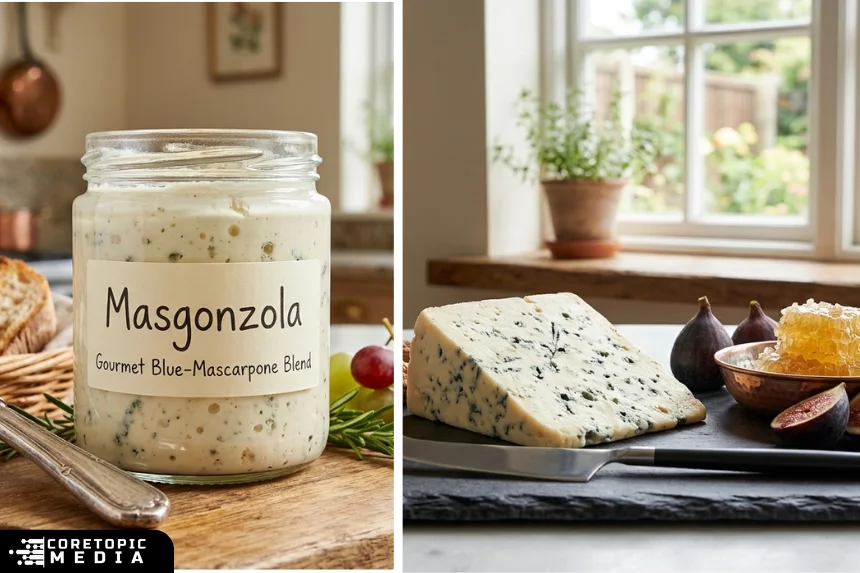
Masgonzola usually refers to a creamy cheese idea or product style that combines mascarpone with Gorgonzola-style blue cheese. The name appears to blend “mas” from mascarpone with “gonzola” from Gorgonzola.
That does not mean it has the same formal status as Gorgonzola PDO. The official protected cheese has defined production rules and a recognized geographic link in northern Italy. By comparison, this newer term works better as a descriptive name for a soft, rich blend rather than a protected traditional category.
This guide explains what the name likely means, how the cheese style tastes, how it compares with straight blue cheese, how to use it in food, and why you should check product labels before trusting nutrition or origin claims.
What Does the Name Mean?
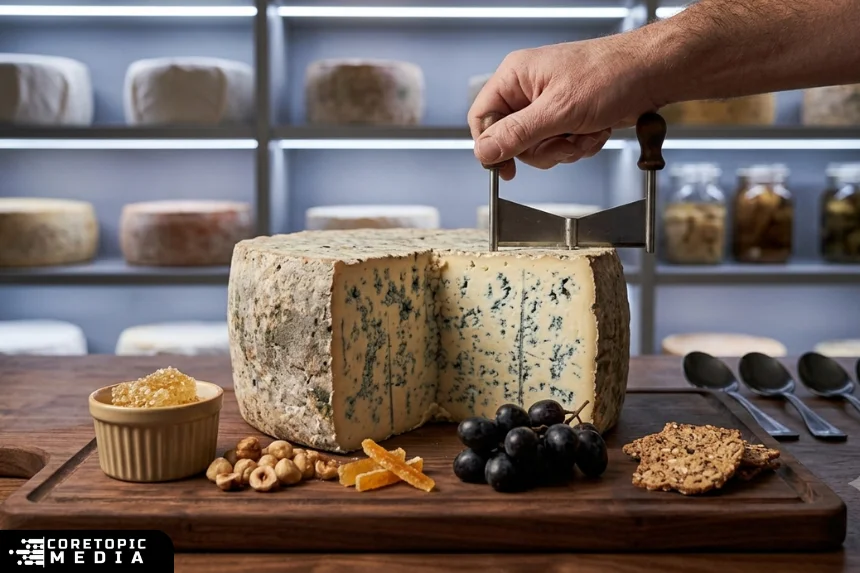
The name points to a mix of mascarpone and Gorgonzola-style cheese. Mascarpone brings sweetness, creaminess, and a buttery dairy flavor. Gorgonzola adds tang, salt, blue veining, and savory depth.
Food writers and online guides often use the term to describe a soft, spreadable blend. Some real products use alternating layers of mascarpone and mild blue cheese, while others mix the two into a smoother spread.
The safest way to describe it is simple: it is a mascarpone-and-blue-cheese style blend. That wording avoids making it sound like an official protected cheese category.
Plain-language summary: The term works best as a descriptive name for a creamy cheese blend, not as a protected cheese designation.
Real Product or Online Term?
The exact name has limited authoritative documentation, but the product style clearly exists. Italian producers sell cheeses that layer or combine mascarpone with mild Gorgonzola.
CasArrigoni describes its version as alternating layers of mascarpone and mild Gorgonzola. IGOR lists a product made with 60% mascarpone and 40% Gorgonzola. TasteAtlas also describes an IGOR product that combines layers of mild mascarpone and sweet blue cheese.
That evidence supports the style, but it does not prove that every online page using the name refers to the same standardized product. When you buy it, check the label for ingredients, producer, country of origin, storage guidance, and nutrition.
Plain-language summary: The blend is real, but the exact name is not as standardized as Gorgonzola PDO.
Flavor and Texture
This cheese style usually tastes creamy, buttery, tangy, mildly salty, and slightly sweet. Mascarpone softens the sharper blue-cheese bite, so the result feels more approachable than many strong blue cheeses.
The texture depends on the product. A layered version may show white mascarpone bands with blue-veined cheese sections. A mixed version may look smoother and spread more like a thick dip. Both formats usually feel soft, rich, and easy to smear on bread or crackers.
Serve it slightly cool rather than ice-cold. Cold temperatures can dull aroma and make the texture feel firmer. Letting it sit briefly before serving can bring out more flavor, but do not leave soft dairy products out for long periods.
Plain-language summary: Expect a mild, creamy blue-cheese flavor rather than a sharp, crumbly bite.
How It Compares With Gorgonzola
A mascarpone-blue blend usually tastes softer and sweeter than straight Gorgonzola. The added mascarpone rounds off the salty, tangy edge and creates a smoother texture.
| Feature | Creamy Blend | Gorgonzola PDO |
|---|---|---|
| Main Style | Mascarpone with blue cheese | Protected Italian blue cheese |
| Flavor | Milder, creamier, sweeter | Tangier and more clearly blue |
| Texture | Soft, spreadable, layered or mixed | Creamy to crumbly, depending on type |
| Intensity | Lower | Medium to strong |
| Best Use | Spreads, sauces, boards, crostini | Boards, sauces, pasta, risotto |
| Official Status | Informal or product-specific style | Protected designation with rules |
Gorgonzola PDO has a defined production identity and geographic connection. A mascarpone blend borrows flavor from that tradition but usually aims for a gentler, creamier eating experience.
Plain-language summary: The blend is usually softer and milder than straight blue cheese.
Nutrition and Portion Size
Nutrition depends on the producer, recipe, and ratio of mascarpone to blue cheese. This style is usually calorie-dense because mascarpone contains a lot of cream, and blue cheese adds fat, protein, and salt.
Use the product label first. Generic online nutrition numbers can mislead readers because different brands use different ratios. For example, one producer lists 394 calories, 38 g fat, 26 g saturated fat, 12 g protein, and 0.6 g salt per 100 g. IGOR’s listed product shows 401 calories, 39 g fat, 27.1 g saturated fat, 11.57 g protein, and 0.89 g salt per 100 g.
| Nutrient Point | Practical Meaning |
| Calories | Usually high for a small serving |
| Fat | Often high because of mascarpone |
| Saturated Fat | Can be significant |
| Protein | Comes mainly from cheese solids |
| Calcium | May contribute to daily intake |
| Salt | Varies by blue-cheese content |
| Carbs | Usually low, but labels vary |
A practical serving is about 1 oz or 28 g. That amount gives enough flavor for bread, fruit, or a small sauce without turning the dish into a very heavy portion.
Plain-language summary: Treat it as an indulgent cheese, not a health food.
Best Ways to Serve It
This creamy blend works well when you want blue-cheese flavor without too much sharpness. It spreads easily, melts into sauces, and pairs nicely with sweet or crisp ingredients.
Good uses include:
| Use | Why It Works |
| Crostini | The soft texture spreads easily on toasted bread. |
| Cheese boards | The mild tang balances fruit, nuts, and crackers. |
| Pasta sauce | It melts into a rich, creamy coating. |
| Pizza topping | A small amount adds depth without overpowering the pizza. |
| Burger spread | It gives a savory, creamy finish. |
| Stuffed dates | Sweet dates balance the salty tang. |
| Roasted vegetables | A small spoonful adds richness after cooking. |
| Steak sauce | It melts into pan juices or cream-based sauces. |
Use a small amount first. The flavor can become heavy if you add too much, especially in pasta, pizza, or cream sauces.
Plain-language summary: Use it where creamy texture and mild blue flavor both add value.
Pairing Ideas
Sweet, crisp, nutty, and acidic foods balance the richness best. Pair it with ingredients that cut through the cream or highlight the tang.
| Category | Good Options |
| Fruit | Pears, figs, grapes, apples |
| Nuts | Walnuts, hazelnuts, pistachios |
| Sweet Additions | Honey, fig jam, dates, fruit preserves |
| Bread | Crostini, sourdough, seeded crackers |
| Vegetables | Mushrooms, roasted squash, endive, celery |
| Drinks | Sparkling water, black tea, light red wine, dessert wine |
For a simple board, serve the cheese with pear slices, toasted walnuts, honey, and crusty bread. That combination gives sweetness, crunch, acidity, and creaminess in one plate.
Plain-language summary: Pair it with sweet, crisp, or acidic foods to balance its richness.
Simple Recipe Ideas
Creamy pasta sauce
Warm a spoonful with a splash of pasta water and a little black pepper. Toss with hot pasta until the sauce coats the noodles. Add toasted walnuts or mushrooms for texture.
Pear and honey crostini
Toast slices of bread, spread a thin layer of the cheese, add pear slices, and finish with honey. This works as a quick appetizer.
Warm mushroom toast
Cook mushrooms with olive oil, garlic, and thyme. Spoon them over toasted sourdough, then add a small amount of the cheese so it softens from the heat.
Plain-language summary: Small amounts add a lot of flavor, so recipes do not need heavy portions.
Storage and Safety
Store this type of cheese in the refrigerator and follow the package date. Because it contains soft dairy and moisture, it can spoil faster than hard aged cheese.
Use clean utensils every time. Wrap the remaining portion well or keep it in an airtight container. Avoid leaving it at room temperature for long periods, especially during warm weather.
Blue veins belong in blue cheese, but unusual mold, sour odors, sliminess, or packaging damage can signal spoilage. When the product smells or looks wrong beyond its normal blue-cheese aroma, discard it.
Pregnant people, older adults, young children, and people with weakened immune systems should use extra caution with soft cheeses. They should follow food-safety guidance and choose pasteurized products when appropriate.
Plain-language summary: Follow the label and treat it like a perishable soft cheese.
Common Mistakes
Calling it an official protected cheese
Gorgonzola has protected status. This blend does not carry the same meaning unless a product label clearly identifies protected ingredients and producer details.
Assuming every version tastes the same
Brand ratios matter. More mascarpone creates a sweeter, softer result. More blue cheese creates a tangier, saltier result.
Using too much in recipes
A small spoonful can flavor pasta, toast, or vegetables. Large amounts can make a dish feel heavy.
Treating it as a health food
The cheese can fit into a balanced diet, but it usually contains a lot of calories, fat, saturated fat, and salt.
Ignoring storage instructions
Soft dairy needs refrigeration, clean utensils, and careful handling.
Plain-language summary: Most mistakes come from treating a flexible cheese style like a fixed traditional cheese.
FAQs
What is Masgonzola?
Masgonzola usually means a creamy cheese style that combines mascarpone with Gorgonzola or a similar blue cheese. It tastes milder and softer than many stronger blue cheeses.
Is it the same as Gorgonzola?
No. Gorgonzola is a protected Italian blue cheese, while this term usually describes a mascarpone-and-blue-cheese blend.
What does it taste like?
It usually tastes creamy, buttery, tangy, mildly salty, and slightly sweet. The mascarpone softens the blue-cheese bite.
Is it healthy?
It can fit into a balanced diet in small portions, but it is usually rich in calories, fat, saturated fat, and salt. Treat it as an indulgent cheese.
How do you eat it?
Serve it on bread, crackers, cheese boards, pasta, pizza, sauces, fruit pairings, or crostini. Start with a small amount because the flavor is rich.
Can I make a similar version at home?
Yes. Mix mascarpone with a small amount of Gorgonzola dolce until you get the flavor strength you like. Chill it before serving if you want a firmer spread.
What pairs well with it?
Pears, figs, honey, walnuts, sourdough, crackers, mushrooms, and sparkling drinks pair well with the creamy, tangy flavor.
How should I store it?
Keep it refrigerated, follow the package instructions, and use clean utensils. Discard it if it develops unusual mold, sour odor, sliminess, or damaged packaging.
Conclusion
Masgonzola is best understood as a modern, creamy blue-cheese blend rather than a formal traditional category. It can taste delicious on boards, toast, pasta, and sauces because mascarpone softens the tang of blue cheese.
Use it for flavor, not health claims. Check the product label, keep portions modest, store it carefully, and remember that different brands may taste and perform differently.
Discover more on our website about celtic salt