


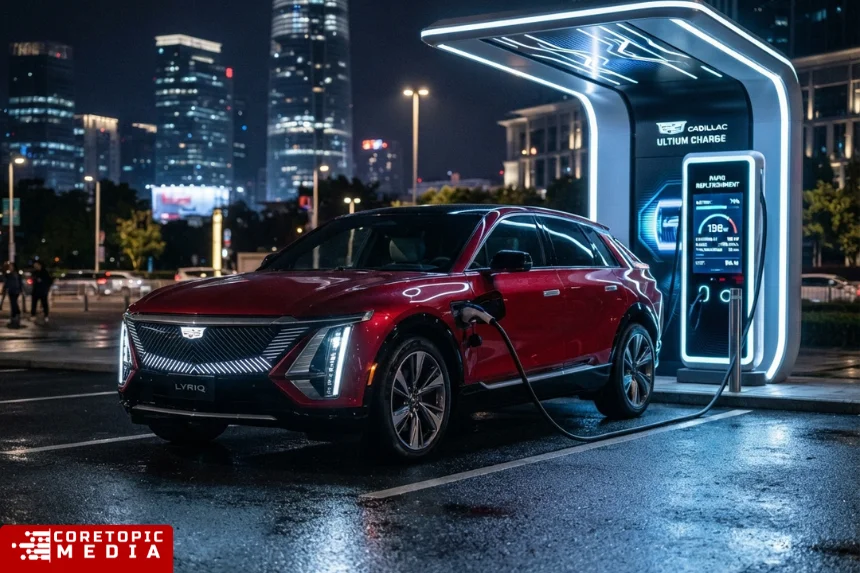
Do the driving modes in Cadillac LYRIQ offer different ranges or battery usages? Yes, they can influence real-world energy use indirectly, but they do not change the battery’s physical capacity or give the same vehicle several fixed official ranges. A mode changes how the LYRIQ responds; speed, acceleration, weather, HVAC use, terrain, tires, and the driver then determine how many miles the stored energy can deliver.
That distinction matters because a sharper pedal can encourage harder acceleration without forcing it. Similarly, a softer pedal can make smooth driving easier without guaranteeing extra miles. Cadillac publishes no universal percentage gain or loss for the four standard modes.
Quick Answer
| Question | Direct answer |
|---|---|
| Do the driving modes in Cadillac LYRIQ offer different ranges or battery usages? | They can change actual energy consumption indirectly, but they do not change battery capacity or create fixed mode-specific EPA ranges. |
| Which mode is the normal baseline? | Tour is Cadillac’s normal city-and-highway setting, balancing comfort and handling. |
| Does Sport use more battery? | It can, especially if its sharper response leads to stronger or more frequent acceleration. However, the mode alone does not guarantee a set penalty. |
| Is Snow/Ice an efficiency mode? | No. It prioritizes traction on slippery roads, so choose it for control rather than extra range. |
| Can My Mode save energy? | A relaxed acceleration setting may support smoother inputs, but results depend on settings and driving behavior. |
| Does a falling range estimate mean battery damage? | Not necessarily. The estimate changes with recent driving, climate settings, temperature, terrain, and other conditions. |
Cadillac LYRIQ Driving-Mode Facts
| Item | Verified explanation |
| Standard modes discussed here | Tour, Sport, Snow/Ice, and My Mode on documented standard LYRIQ configurations |
| Systems modes may affect | Pedal tuning, steering, eAWD behavior, sound, suspension, brake feel, and adaptive cruise behavior, depending on mode and equipment |
| Battery capacity | Drive-mode selection does not change it |
| Official range | Depends on model year, drivetrain, wheels, equipment, and test configuration—not a fixed range assigned to each mode |
| Dashboard range | A forecast based on recent habits, conditions, and HVAC use |
| Regeneration | One-Pedal Driving and Regen on Demand are separate controls; available regen also depends on battery state and temperature |
| Important limitation | Features and mode behavior can vary by model year, trim, region, and equipment |
Cadillac currently describes the 2027 LYRIQ with up to an EPA-estimated 326 miles for specified rear-wheel-drive models. However, that figure belongs to a vehicle configuration, not Tour or Sport mode. Owners should therefore use the manual for their exact model year and build.
Do the Driving Modes in Cadillac LYRIQ Offer Different Ranges or Battery Usages in Real Life?
Yes, but “different range” means a possible difference in real-world miles, not a second battery specification. If two drivers start with the same charge, the one who accelerates harder, drives faster, climbs more elevation, or demands more cabin heat will usually consume more energy. A mode can make some of those behaviors easier or more comfortable, yet it cannot override physics.
Battery usage is best measured in kilowatt-hours per 100 miles, not only by watching the dashboard’s remaining-mile number. For example, a forecast may fall after cold-weather highway driving without indicating lost battery capacity.
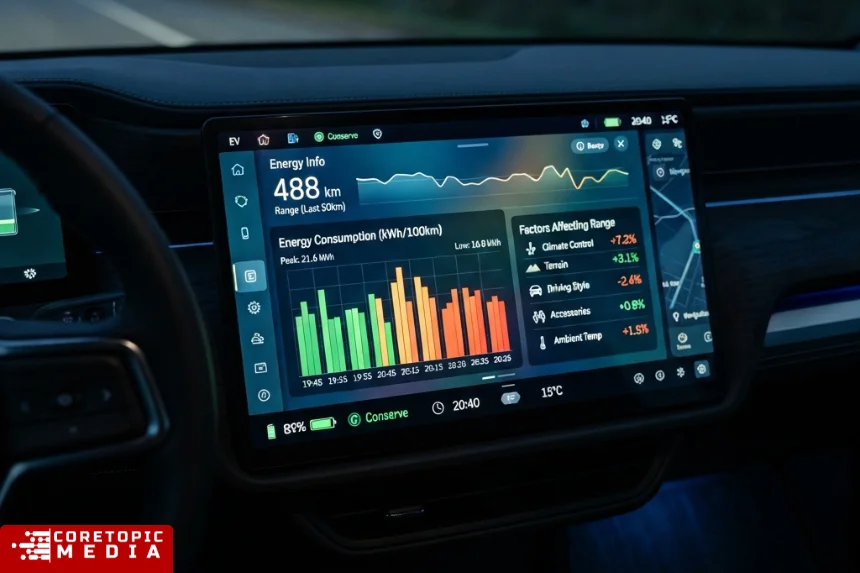
The official 2025 LYRIQ owner manual says recent driving habits, vehicle conditions, ambient conditions, and HVAC use influence the estimate. In addition, it says hard acceleration or braking, heavy climate use, heated or cooled seats, battery preconditioning, and performance modes can affect displayed range.
Consequently, the accurate answer has three layers:
- The battery does not become larger or smaller when you select a mode.
- A mode can influence how readily the vehicle requests power and manages supported chassis or traction systems.
- The driver and conditions decide whether those changes produce a meaningful consumption difference.
What Each Cadillac LYRIQ Driving Mode Actually Changes
The LYRIQ’s documented modes serve different driving needs. Cadillac’s general Driver Mode Control guidance also emphasizes that functions vary by vehicle and equipment. Therefore, a 2025 manual should not replace the manual for a different model year.
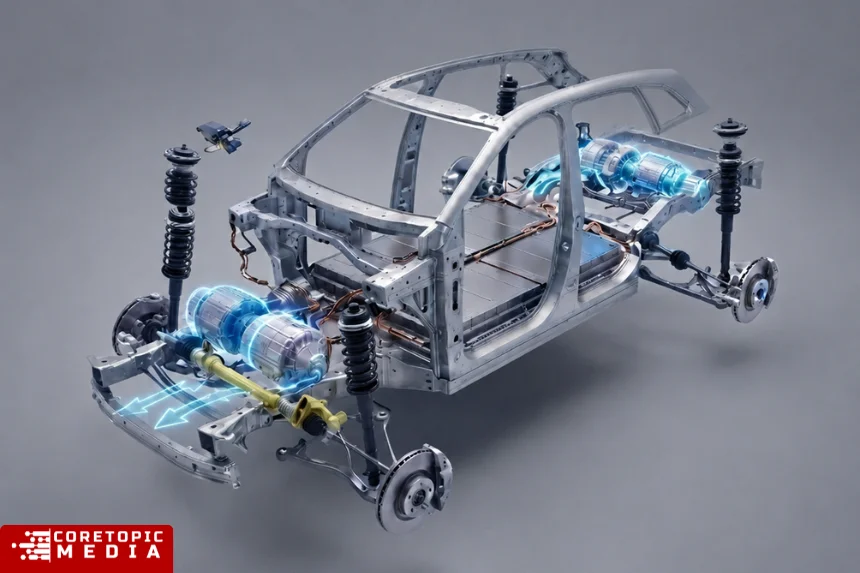
Tour Mode: The Normal-Driving Baseline
Tour is intended for normal city and highway driving. Cadillac describes it as balancing comfort and handling while providing a smooth ride.
Tour makes a sensible comparison baseline because it avoids a deliberately performance-focused response. Nevertheless, Cadillac does not call it an “Eco” mode or promise a specific gain. Rapid launches, high speed, heavy climate use, or steep climbs can still consume substantial energy.
Tour may deliver the most predictable everyday results simply because its response supports smooth operation. However, that is a practical inference, not an official guarantee that Tour always produces the longest range.
Sport Mode: Sharper Response, Not a Fixed Penalty
Sport mode improves handling and acceleration on dry pavement. On the documented 2025 LYRIQ, it can modify pedal tuning, steering effort, enhanced vehicle sound, adaptive cruise behavior, and suspension tuning when equipped.
Because the accelerator responds more assertively, the driver may request more power with the same-feeling foot movement. Repeated strong acceleration then raises energy use. However, Sport does not continuously drain a fixed extra percentage merely because its icon appears on the screen.
At a steady speed on the same flat road, the difference may be much smaller than during stop-and-go driving with repeated acceleration. Therefore, no credible universal statement can say Sport always removes 5%, 10%, or 20% of range. Cadillac has not published such a standard figure for every route, driver, temperature, and configuration.
Snow/Ice Mode: Traction Comes First
Snow/Ice mode adjusts pedal tuning to optimize traction on slippery surfaces. The 2025 manual also says it can modify electric all-wheel drive and steering, and it warns that acceleration can feel compromised on dry asphalt.
This mode does not exist to extend range. Although gentler torque delivery can reduce wheelspin, winter conditions usually add other energy demands. Cold batteries, cabin heat, defrosting, snow-covered pavement, and higher rolling resistance can all reduce available miles.
Most importantly, use Snow/Ice for control when conditions warrant it. Cadillac advises drivers to turn off One-Pedal Driving on slippery roads and avoid using the Regen on Demand paddle there. Predictable braking and traction matter more than recovering a small amount of energy.

My Mode: Results Depend on the Settings
My Mode lets owners personalize everyday driving. Depending on equipment, the 2025 manual lists acceleration feel, brake feel, steering, suspension, and motor sound among the customizable choices.
A relaxed acceleration setting may help a driver apply power smoothly. Conversely, a Sport acceleration setting may encourage stronger power requests. Still, steering weight or cabin motor sound does not automatically translate into a predictable range number.
My Mode also remains active across start cycles on the documented vehicle. Tour and Sport do as well, while other modes may return to Tour after a restart. Therefore, check the selected mode when comparing trips instead of assuming the vehicle reset every preference.
What Drive Modes Do Not Change
Drive modes do not rewrite the battery’s rated capacity, add stored electricity, or create four EPA labels for one unchanged vehicle. They also do not prove battery degradation when the displayed miles move.
Moreover, the reviewed Cadillac documentation does not establish several claims that circulate online. It does not say that standard Sport mode always reduces regenerative braking, that Snow/Ice increases regeneration, or that each mode automatically changes HVAC strategy. Model-specific software can evolve, so use only the features documented for the exact vehicle.
The words “Luxury” and “Sport” can also describe LYRIQ trim families. A Sport trim is not the same thing as selecting Sport driving mode. Range differences between trims may arise from drivetrain, wheels, tires, equipment, or model-year certification rather than the mode selector.
Why the LYRIQ Range Estimate Changes
The range display is a forecast, sometimes called a guess-o-meter. It combines remaining charge with recent energy consumption and current conditions to estimate how far the vehicle may travel.
For example, the estimate may rise after efficient urban driving. Later, freeway speeds, hard acceleration, cold weather, or heater use may lower it. The change reflects a revised prediction rather than miles physically stored in the pack.
Performance modes can influence that forecast because recent consumption can change. However, HVAC energy, ambient temperature, road grade, and speed may explain more of the movement. Consequently, drivers should compare trip efficiency over repeatable routes instead of diagnosing the battery from one dashboard number.
Use the vehicle’s Energy Info or trip-energy display, when available, to review consumption. In addition, note starting and ending state of charge, miles traveled, temperature, climate settings, and average speed. Those details reveal more than a single before-and-after range estimate.
Does Regenerative Braking Depend on Driving Mode?
Regenerative braking affects efficiency, but owners should treat its main controls separately from Tour, Sport, Snow/Ice, and My Mode. Cadillac’s One-Pedal Driving and Regen on Demand guide explains that One-Pedal Driving slows the vehicle as the driver lifts the accelerator, while the steering-wheel paddle requests additional regenerative deceleration.
Regeneration converts some motion back into electrical energy and returns it to the battery. Nevertheless, it cannot recover all the energy previously used to accelerate. Smooth anticipation remains more efficient than repeatedly accelerating and then relying on strong regeneration.
Available regenerative power also changes with battery conditions. Cadillac says a nearly full, very cold, or very hot battery may limit normal operation, and the system can blend friction brakes to maintain a consistent feel. The company’s EV charging guidance recommends an 80% daily charge target to support battery longevity and leave room for optimal regenerative performance.
One-Pedal Driving can help in normal stop-and-go conditions, especially when the driver anticipates traffic. However, Cadillac does not recommend it on wet, snowy, or icy roads. In those conditions, follow the safety instructions for the vehicle instead of chasing maximum energy recovery.
Which Factors Use More Battery Than the Mode Selector?
Several variables often matter more than a brief switch from Tour to Sport. The U.S. Department of Energy’s Alternative Fuels Data Center identifies climate, driving and charging patterns, battery design, and thermal management as important EV considerations.
Speed and acceleration
Highway speed increases aerodynamic drag, while strong acceleration demands high power. Therefore, a steady 75-mph trip in Tour can use more energy than a gentle lower-speed trip in Sport. The label on the mode matters less than the actual power request.
Temperature and climate control
Cold conditions can reduce battery performance and raise heating demand, while hot weather may require additional cooling. Preconditioning while plugged in can shift some cabin-conditioning energy to the grid; however, benefits vary by trip.
Terrain and wind
Climbing requires energy, and descending cannot recover all of it. Similarly, a strong headwind increases aerodynamic demand. A return trip in the opposite direction may therefore show a noticeably different result even with the same mode.
Tires, wheels, and cargo
Low tire pressure raises rolling resistance. Larger wheels, different tires, roof-mounted cargo, and extra weight can also affect consumption. Maintain the pressures listed for the vehicle rather than overinflating tires to chase efficiency.
HVAC and accessory loads
Cabin heat, air conditioning, defrosting, and heated or ventilated features use energy. Cadillac’s manual suggests using heated or ventilated seats when practical because they can require less energy than conditioning the whole cabin. Safety still comes first, so keep windows clear and occupants comfortable.
Which Cadillac LYRIQ Mode Should You Choose?
Choose the mode that fits the road and your goal, then drive smoothly. No mode should replace judgment or the instructions in the model-year-specific manual.
| Situation | Sensible selection | Reason |
| Routine city or highway driving | Tour | It provides the normal balance of comfort and handling. |
| Long trip with range as a priority | Tour or a relaxed My Mode | Either can support smooth accelerator inputs; speed and climate settings still matter more. |
| Dry road with more responsive handling desired | Sport | It sharpens supported responses, although frequent hard acceleration can raise consumption. |
| Snowy or icy road | Snow/Ice | It prioritizes traction through pedal tuning and supported eAWD or steering changes. |
| Personalized daily feel | My Mode | It lets the driver combine available preferences, so energy results vary. |
If the battery is low, switching to Tour cannot manufacture miles. Instead, reduce speed safely, avoid unnecessary acceleration, moderate climate demand without compromising visibility, and navigate to a charger. Similarly, do not select Snow/Ice on dry pavement merely because its softer pedal feels economical.
How to Test Battery Usage Fairly
A controlled personal test gives a better answer than comparing two unrelated commutes. Use the same vehicle and repeat the test only when conditions permit safe, legal driving.
- Choose a repeatable route with similar traffic, distance, and elevation.
- Start at a similar state of charge and battery temperature.
- Set the same cabin temperature, fan behavior, and seat settings.
- Check tire pressure and avoid changing cargo or passengers.
- Use the same One-Pedal Driving setting because regeneration is a separate variable.
- Hold similar speeds and accelerate with comparable restraint.
- Record miles, energy used, kWh/100 miles, average speed, weather, and ending charge.
- Repeat each mode more than once and average the results.
Even then, road traffic and weather introduce noise. A small one-trip difference may not prove that the mode caused it. In contrast, a repeated difference that appears only when the driver uses stronger acceleration says more about the interaction between mode and behavior.
Cadillac LYRIQ Range and Drive-Mode Timeline
| Period | Relevant development |
| 2022–2025 | Production began, and owner materials documented Tour, Sport, Snow/Ice, My Mode, One-Pedal Driving, and Regen on Demand. |
| 2025 manual | Cadillac explicitly described which supported systems each mode can adjust and explained how driving, HVAC, weather, and performance modes affect the range estimate. |
| Current 2027 listing | Cadillac advertises up to an EPA-estimated 326 miles for specified RWD models, but it does not assign separate official mileage ratings to the four standard drive modes. |
For broader model history, the Cadillac Lyriq overview provides useful background. However, owners should rely on Cadillac’s manual and support information for operating instructions.
Frequently Asked Questions
1. Do Cadillac LYRIQ driving modes change battery capacity?
No. Tour, Sport, Snow/Ice, and My Mode do not change how much energy the physical battery can hold. Instead, they change supported vehicle responses that may influence how quickly the stored energy gets used.
2. Do the driving modes in Cadillac LYRIQ offer different ranges or battery usages on the dashboard?
They can influence the displayed estimate indirectly because recent consumption and performance-oriented driving affect the forecast. However, a changed estimate does not create a new battery capacity or a guaranteed mode-specific range.
3. Does Sport mode always reduce LYRIQ range?
No fixed loss applies in every situation. Sport can encourage harder acceleration through sharper response, so enthusiastic driving may use more energy; nevertheless, gentle steady driving can make the difference smaller.
4. Is Tour mode the most efficient LYRIQ mode?
Tour is the normal-driving baseline and often makes smooth inputs easy. However, Cadillac does not promise that it always produces the longest range, because speed, weather, HVAC demand, terrain, and driver behavior remain decisive.
5. Does Snow/Ice mode save battery?
Snow/Ice mode prioritizes traction rather than efficiency. Although its gentler pedal mapping can reduce wheelspin, cold weather, heating, snow, and road resistance may still increase energy use.
6. Can My Mode improve Cadillac LYRIQ range?
A relaxed acceleration setting may support efficient driving. Still, My Mode does not guarantee additional miles, and its result depends on the chosen settings and how the driver uses them.
7. Does One-Pedal Driving increase range?
It can recover energy during appropriate deceleration and may help in stop-and-go traffic. However, regeneration cannot recover every energy loss, and Cadillac advises against One-Pedal Driving on slippery roads.
8. Why did my LYRIQ range drop after switching modes?
The estimate may be reacting to recent acceleration, speed, climate use, temperature, terrain, or a performance mode. Therefore, review trip consumption over several drives before assuming a battery problem.
9. What is the best LYRIQ mode for a road trip?
Tour is a sensible default, while a relaxed My Mode may also work well. More importantly, keep a safe moderate speed, maintain tire pressure, limit unnecessary acceleration, and plan charging stops.
10. Should I use Snow/Ice mode and One-Pedal Driving together?
Follow the exact owner’s manual for your vehicle. Cadillac advises turning off One-Pedal Driving and avoiding Regen on Demand on slippery roads, while Snow/Ice mode helps manage traction.
Conclusion
So, do the driving modes in Cadillac LYRIQ offer different ranges or battery usages? They can produce different real-world consumption because they change pedal response and other supported systems, but they do not change battery capacity or assign fixed official mileage to each mode. Tour suits normal driving, Sport sharpens response, Snow/Ice prioritizes traction, and My Mode reflects its chosen settings.
Ultimately, driving behavior and conditions matter more than the mode name. Use the right mode for the road, watch kWh/100 miles over comparable trips, and treat the dashboard range as an adaptable forecast. Above all, reject unsupported percentage promises and follow the operating guidance for the exact LYRIQ model year and equipment.