

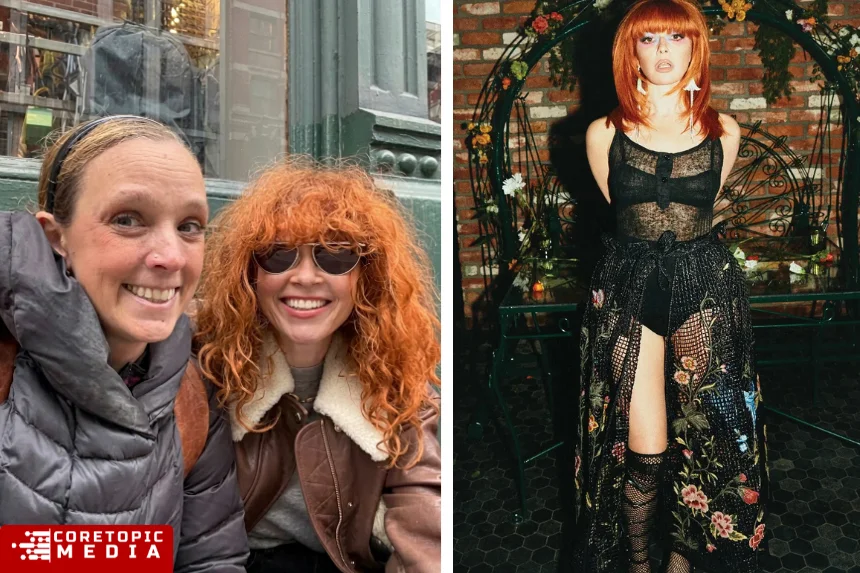
Yvette Braunstein was Natasha Lyonne’s mother and the former wife of Aaron Braunstein. Stronger long-form profiles also identify her as Ivette Buchinger, a gifted young ballerina, professional roller skater, and member of a Hungarian Jewish family shaped by Holocaust survival.
Her public biography is closely tied to Natasha’s early acting career, the family’s move from New York to Israel, the parents’ divorce, and the difficult mother-daughter history that Natasha later transformed into art. However, many online profiles mix Yvette with unrelated women, repeat unsupported claims about her birthplace and profession, or treat the fictional mother in Russian Doll as a literal medical portrait.
The most accurate story requires careful separation. Yvette Braunstein was not the actress credited in Soon by You, and she was not the Teaneck social worker married to Ari Braunstein. She was a private family figure whose life is known mainly through Natasha Lyonne’s interviews and a small number of established profiles.
Quick Facts About Natasha Lyonne’s Mother
| Fact | Carefully supported information |
|---|---|
| Publicly used name | Yvette Braunstein |
| Other documented name | Ivette Buchinger |
| Known for | Mother of Natasha Lyonne |
| Former spouse | Aaron Braunstein |
| Children | Adam Braunstein and Natasha Lyonne |
| Parents | Ella and Morris Buchinger |
| Family background | Hungarian Jewish Holocaust-survivor family |
| Artistic background | Ballerina in youth and later professional roller skater |
| Other work | Worked on and off in the family watch-distribution business |
| Major family locations | Los Angeles, New York, Israel, and Miami |
| Death | Around 2013; exact date and cause are not firmly public |
Who Was Natasha Lyonne’s Mother?
Yvette Braunstein was a private public figure whose name became searchable because her daughter grew into one of the most distinctive performers and creators in American television and film.
Natasha Lyonne is known for Orange Is the New Black, Russian Doll, Poker Face, Slums of Beverly Hills, But I’m a Cheerleader, and the American Pie films. Before that success, however, she was a child model and actor whose parents pushed her toward professional work at a very young age.
Yvette played a practical role in that childhood career. She accompanied Natasha to auditions, encouraged performance, and participated in the family decision to place her in entertainment.
Nevertheless, “Natasha Lyonne’s talent manager” is too formal and specific as a permanent job title. Strong sources document stage-parent activity, not a licensing record, agency position, or established management business.
Yvette Braunstein’s independent life also included dance, roller skating, family business work, marriage, migration, parenting, divorce, and later estrangement from her daughter.

Yvette or Ivette: Why the Name Changes
Public sources do not use one consistent version of the name.
The search-friendly form is Yvette Braunstein. IMDb, family-summary databases, and many biography pages use that spelling.
However, Natasha Lyonne’s New Yorker profile identifies her mother as Ivette Buchinger. The Gentlewoman’s Natasha Lyonne interview uses the same form.
The name variations may reflect:
- Yvette and Ivette as alternate spellings.
- Buchinger as her family surname.
- Braunstein as the surname connected with marriage.
- Lyonne as a name later associated with Natasha and sometimes attached to family profiles.
No accessible legal document reviewed for this article establishes one full official form beyond dispute.
Therefore, this article uses Yvette Braunstein for search clarity while preserving Ivette Buchinger when discussing the wording used by major interview profiles.
Which Person Does This Biography Cover?
Search results combine at least three different women.
| Name or profile | Identifying detail | Same person as Natasha Lyonne’s mother? |
| Yvette Braunstein / Ivette Buchinger | Mother of Natasha and Adam; former wife of Aaron | Yes |
| Yvette Braunstein in Soon by You | Credited as a bridesmaid in a 2017 episode | No |
| Yvette Braunstein married to Ari | Teaneck social worker and community leader | No |
The IMDb competitor page belongs to a performer who appeared in Soon by You in 2017. Natasha’s mother had already died around the time Orange Is the New Black began in 2013.
Likewise, the Jewish Link article describes a living licensed clinical social worker married to Ari Braunstein, with children named Abigail and Charlie. Those family and career details do not match Natasha Lyonne’s mother.
This distinction is more than a minor correction. Some biography sites have used the unrelated IMDb credit to call Yvette Braunstein an actress. That claim should not appear in an accurate article.
Early Family Background
Yvette Braunstein came from a Hungarian Jewish family marked by Holocaust survival.
The New Yorker identifies her parents as Ella and Morris Buchinger. Natasha described both maternal grandparents as Holocaust survivors.
The profile states that Ella survived Auschwitz. It also says Morris lost his first wife in the camps.
For historical context, the United States Holocaust Memorial Museum’s account of the Holocaust in Hungary explains that German and Hungarian authorities murdered about 500,000 Jews from Hungary during the final stage of the Holocaust.
That broader history helps explain why displacement, survival, family property, and inherited trauma later became central themes in Natasha’s creative work.
The Buchinger family eventually entered the watch-distribution business in Los Angeles. The New Yorker describes them as settling in Los Angeles by way of Paris.
Many derivative biography pages turn that migration detail into the firm statement that Yvette was born in Paris. That may be true, but the strongest accessible profiles do not provide a public birth certificate or a clearly stated birth date.
Therefore, Paris should be described cautiously as part of the family’s migration story rather than an unquestioned birthplace.
Ballet and Roller-Skating Background
Yes, established profiles connect her with ballet.
The Gentlewoman describes Ivette Buchinger as a prodigy ballerina in her youth. The New Yorker says she hoped to become a professional dancer but never found a clear route into that career.
These reports support a genuine dance background.
However, public sources do not reliably identify:
- A ballet school.
- Professional company.
- Major production.
- Competition.
- Teacher.
- Award.
- Performance chronology.
Therefore, Yvette Braunstein can accurately be described as a gifted or prodigy ballerina in youth, but not as a documented star of a particular company.
This distinction prevents a common biography problem: expanding one supported sentence into an invented professional résumé.
Professional Roller Skating
The Gentlewoman also describes Yvette as a professional roller skater.
Roller skating offered a performance path that combined athletic skill, choreography, speed, presentation, and entertainment.
Again, the public record remains limited. No strong source reviewed here identifies her skating troupe, employer, touring schedule, or years of professional activity.
Still, the detail matters because it shows that artistic performance did not enter the family only through Natasha. Yvette had her own background in movement and presentation before her daughter became a child actor.
The ballet and skating history also helps explain why Yvette may have viewed professional performance as a realistic path rather than an abstract dream.
The Buchinger Watch Business
Yvette’s parents worked in watch distribution after settling in Los Angeles.
According to The New Yorker, Yvette worked on and off in that family business.
The article also says the business struggled around the period when Natasha was born. As a result, the family faced financial pressure while Aaron pursued changing ambitions in racing, boxing, and radio.
This detail provides more reliable career context than the unsupported “talent manager” label.
Yvette Braunstein’s documented work history therefore includes:
- Artistic training in ballet.
- Professional roller skating.
- Work in the Buchinger family’s watch business.
- Practical involvement in Natasha’s auditions and child career.
These activities do not add up to one simple permanent occupation. They describe different stages of a complicated life.
Marriage to Aaron Braunstein
Yvette married Aaron Braunstein, a colorful New York figure associated with boxing promotion, racing, radio, and occasional acting.
The New Yorker says Ivette met Aaron as a teenager. She later moved to New York to be with him.
Their older child, Adam Braunstein, was born in 1972. Natasha followed in 1979.
Aaron’s 2014 memorial described him as a loving father who brought a boxing match to Israel. Aaron Braunstein’s New York Times obituary also reflects his reputation as an unconventional New York personality.
The marriage itself was unstable according to Natasha’s later account. She described periods of drinking, conflict, separation, financial stress, and rapidly changing family plans.
A responsible biography should present those memories as Natasha’s perspective rather than reconstructing private arguments or making an independent legal judgment.
Her Children: Adam and Natasha
Yvette and Aaron had two children.
Adam Braunstein
Adam was the older child, born in 1972 according to The New Yorker’s family chronology.
He later remained in Israel when his mother and Natasha returned to New York.
Reliable public information about Adam’s adult work, residence, marriage, or private life remains limited. The article should not fill those gaps with claims copied from generic biography sites.
Natasha Lyonne
Natasha was born in New York City in 1979.
She began modeling and acting as a very young child. Her early work included Pee-wee’s Playhouse, followed by film roles and a long career that eventually expanded into writing, directing, producing, and showrunning.
Although Yvette Braunstein is widely described only as “Natasha Lyonne’s mother,” the family story also included Adam and the painful separation between the siblings after the Israel years.
How Natasha Entered Show Business
Natasha has said that both parents put her into entertainment.
She signed with a modeling agency around age four or five and entered acting soon afterward.
Her mother took her to auditions and helped manage the practical demands of a child career. The New Yorker recalls train rides during which Yvette urged Natasha to read stock listings from The Wall Street Journal aloud as a performance exercise.
Natasha later described herself as a working child rather than a conventional child star. Success professionalized her early and reduced the separation between childhood, income, family pressure, and performance.
This background supports calling Yvette a stage parent.
However, it does not prove that she:
- Held a talent-agent license.
- Operated a management company.
- Negotiated every contract.
- Managed other clients.
- Used “talent manager” as a formal occupation.
The strongest wording is that she actively guided and pushed Natasha’s early career.
Family Life in New York
The Braunstein household was connected with Kings Point on Long Island before the move to Israel.
The New Yorker describes the family living in a large but run-down house that the parents incorrectly claimed had once belonged to Herman Melville.
That colorful detail fits the larger family atmosphere Natasha has described: ambitious, theatrical, financially unstable, and frequently unpredictable.
Yvette Braunstein moved between roles as mother, worker, performer, and stage parent. Aaron moved between sports promotion, racing dreams, radio, and other public projects.
For a young child, the household combined excitement with uncertainty.
Natasha later said her parents treated her performances as both entertainment and a possible route to financial opportunity.
The Move to Israel
In 1988, when Natasha was eight, Aaron moved the family to Israel.
His goal included promoting boxing events there. The Gentlewoman says he spent the next few years promoting fights in Israel.
Natasha remembered parts of the period positively. She appeared in an Israeli film and participated in the atmosphere surrounding her father’s boxing promotions.
However, the move did not repair the marriage.
The New Yorker says the family’s finances continued to weaken and Aaron’s drinking became more troubling. Natasha later used sharp language to describe the family’s motives for moving, but that phrasing should remain attributed to her rather than presented as a court finding.
The supported facts are simpler:
- The family moved in 1988.
- Aaron pursued boxing promotion.
- The parents’ marriage deteriorated.
- The household separated.
Divorce and Return to New York
Within a few years of the move, the marriage ended.
Adam stayed in Israel.
Natasha returned to New York with her mother. The New Yorker places that return in 1989, while The Gentlewoman describes it more generally as happening within a few years.
Back in New York, mother and daughter moved through unstable living arrangements.
Yvette’s parents helped with financial support. Natasha attended Ramaz, a Modern Orthodox school, on scholarship before her expulsion.
In 1995, Yvette moved to Miami. Natasha, then a teenager, remained in New York for work and stayed with family friends.
By that period, Natasha’s professional and personal independence had begun to separate her from her mother.
Relationship With Natasha Lyonne
The mother-daughter relationship cannot be described honestly with one emotional label.
Yvette was deeply involved in Natasha’s childhood. She took her to auditions, moved with her, managed daily survival, and shared years of travel and instability.
At the same time, Natasha has described pressure, chaos, blurred boundaries, and a childhood that felt much older than her actual age.
As an adult, Natasha communicated with both parents irregularly. By the time they died, she had mostly cut off contact.
That estrangement does not prove there was no attachment. Likewise, Yvette’s early involvement does not prove the relationship was consistently healthy.
The New Yorker presents Natasha’s mature view as intentionally complex. She resisted reducing the family to simple villains and victims, even while discussing serious harm and emotional danger.
Therefore, the fairest summary is that the relationship mixed dependence, ambition, love, instability, resentment, and unfinished grief.
Mental-Health Statements
Natasha has spoken publicly about mental-health problems in her mother’s life.
In Netflix’s interview about family trauma, she said her mother had untreated mental-health problems and described the shame and helplessness she carried from childhood into adulthood.
That is a direct family recollection.
It is not the same as an independently documented diagnosis.
Several online articles say Yvette Braunstein had schizophrenia because Chloë Sevigny’s Russian Doll character Nora has that diagnosis.
That conclusion is not justified.
The Russian Doll character guide describes Nora as a fictional mother with paranoid schizophrenia. Natasha’s real mother inspired emotional material, but fiction changes names, diagnoses, timelines, behavior, and events.
The article should therefore say “untreated mental-health problems, according to Natasha,” not assign the fictional diagnosis to Yvette.
When Did Natasha Lyonne’s Mother Die?
Yvette Braunstein died in the early 2010s.
The New Yorker asked Natasha when her mother died. Natasha had to think about the timing and said it was around Season 1 of Orange Is the New Black.
The first season premiered in 2013.
Therefore, “around 2013” is a reasonable summary. However, the available evidence does not support a firm exact date.
No authoritative public source reviewed for this article establishes:
- The day.
- Month.
- Place.
- Cause of death.
- Funeral details.
- Burial location.
Competitor pages that state simply “Death: 2013” may be directionally correct but remove the uncertainty present in Natasha’s own recollection.
The accurate answer is that Yvette died around 2013, while the exact details remain private or unavailable.
The Incorrect Acting Credit
No verified evidence establishes an acting career for Natasha Lyonne’s mother.
The confusion comes from the IMDb profile for a Yvette Braunstein credited as a bridesmaid in Soon by You.
That performance occurred in 2017.
Natasha’s mother had died around 2013. Therefore, the performer must be a different person.
This error illustrates why name matching alone is unreliable. A database page with the same first and last name does not automatically belong to the intended subject.
Yvette Braunstein’s supported performance history involves ballet and roller skating, not a documented film or television acting career.
Was She a Talent Manager?
Many profile pages call Yvette a talent manager.
That label overstates the available evidence.
Natasha’s interviews clearly show that her mother took an active stage-parent role. Yvette helped take her to auditions, promoted the idea of performance, and participated in decisions around modeling and acting.
However, no strong public source reviewed here identifies:
- A management company.
- Professional license.
- Client list.
- Agency affiliation.
- Formal title.
- Entertainment-industry biography.
The better wording is:
Yvette helped guide and push Natasha’s early career but is not firmly documented as a professional talent manager.
Age and Birthplace
Yvette Braunstein’s exact birth date and age are not firmly documented.
Many derivative sites say she was born in Paris, France.
The New Yorker provides a more careful family migration account. It says her Hungarian Jewish parents settled in Los Angeles by way of Paris.
That sequence leaves several possibilities:
- Yvette may have been born in Paris.
- She may have lived there as a child.
- Her parents may have passed through Paris before her birth.
- Later websites may have simplified the family story.
Without a direct birth record or clear first-person biography, the article should not present the Paris claim as certain.
Likewise, it should not calculate an age.
Net Worth and Finances
No authoritative source establishes Yvette Braunstein’s personal net worth.
A valid calculation would require information about:
- Earnings.
- Property.
- Debts.
- Investments.
- Business ownership.
- Inheritance.
- Divorce arrangements.
- Estate records.
The public record provides none of this in a reliable, complete form.
Her parents had a watch-distribution business, but that fact does not reveal Yvette’s individual wealth. Natasha’s later success also does not establish her mother’s finances.
Therefore, a responsible article should omit a net-worth number entirely.
Family Heritage and the Holocaust
Yvette’s family history became especially important in Natasha’s later creative work.
The New Yorker describes Ella as an Auschwitz survivor and Morris as a man whose first wife died in the camps.
The Holocaust was therefore not distant historical background for the family. It existed within the memories, losses, coping patterns, and silences passed between generations.
Natasha described her grandparents as responding to trauma with severe stoicism. She connected that environment with the difficulty her mother experienced.
This does not mean one historical event mechanically caused every later family problem. However, it supports discussing intergenerational trauma as part of Natasha’s interpretation of her family.
The Russian Doll Connection
The official Russian Doll page identifies Natasha Lyonne as a creator and star of the series.
Season 1 explores Nadia’s repeated deaths, childhood memories, and unresolved relationship with her late mother.
Season 2 moves deeper into maternal history, including the Holocaust, lost family property, mental illness, memory, and the fantasy of correcting the past.
Natasha told Netflix that the season was, in many ways, a love letter to her mother.
That description is powerful because it does not erase conflict. Instead, the story asks whether a daughter can accept that she cannot travel back and remove her mother’s suffering.
The creative connection therefore includes:
- Grief.
- Anger.
- Mental-health trauma.
- Holocaust inheritance.
- Mother-daughter rupture.
- The desire to repair the past.
- Acceptance that repair has limits.
Is Nora a Literal Portrait?
Nora is partly inspired by Natasha’s experiences with her mother, but she is not a literal biography.
Chloë Sevigny plays Nora as a fictional character.
The series changes:
- Names.
- Events.
- Timelines.
- Diagnoses.
- Relationships.
- Supernatural elements.
- Historical mechanisms.
Natasha has described herself as a deeply personal artist who transforms experiences into fiction after doing private work to process them.
Therefore, readers can recognize emotional inspiration without treating every Nora scene as evidence about Yvette Braunstein.
That distinction protects both factual accuracy and the artistic freedom of the show.
Death, Estrangement, and Grief
Natasha and her mother were largely estranged before Yvette died.
Grief after estrangement can contain conflicting emotions. A person may experience sadness, relief, anger, regret, love, and unresolved questions at the same time.
Natasha’s public comments reflect that complexity.
She has spoken bluntly about feeling safer after both parents were gone because the family conflict no longer felt like a present danger. Yet she also created work that tries to understand, reach, and mourn her mother.
The gold chain Natasha kept from her mother and the family objects integrated into her creative world show that distance did not erase the relationship.
The final article should not force the story into either reconciliation or rejection. The public evidence supports an unfinished bond.
What Online Biographies Commonly Get Wrong
Several repeated errors appear across Yvette Braunstein profiles.
Wrong acting credit
The Soon by You bridesmaid was a different woman.
Wrong professional title
Stage-parent involvement becomes “professional talent manager” without evidence.
Overconfident birthplace
A family migration path through Paris becomes a confirmed Paris birth.
Exact death year without caveat
Natasha said “around” the first season of Orange Is the New Black, not a precise public date.
Fiction treated as biography
Nora’s fictional diagnosis becomes Yvette’s medical record.
Invented personality descriptions
Words such as dignified, reserved, resilient, elegant, or devoted may sound positive but still require evidence.
Net-worth speculation
Private family finances become unsupported estimates.
Same-name community profiles
The Teaneck social worker married to Ari is mistaken for Natasha’s mother.
A stronger article corrects these issues instead of repeating them.
What Can Be Said With Confidence?
The reliable core of Yvette Braunstein’s biography is meaningful even without an exact birthday or net worth.
She:
- Came from a Hungarian Jewish Holocaust-survivor family.
- Was the daughter of Ella and Morris Buchinger.
- Had a background in ballet and professional roller skating.
- Worked in the family watch-distribution business.
- Married Aaron Braunstein.
- Had two children, Adam and Natasha.
- Helped place Natasha into entertainment as a child.
- Moved with the family to Israel.
- Returned to New York with Natasha after the marriage ended.
- Had a complicated and later distant relationship with her daughter.
- Struggled with mental-health problems according to Natasha.
- Died around 2013.
- Became part of the emotional foundation of Russian Doll.
Family Timeline
| Year or period | Publicly supported event |
| Postwar family period | Ella and Morris Buchinger rebuild their lives after surviving the Holocaust |
| Youth | Ivette or Yvette develops talent in ballet and later professional roller skating |
| Teenage years | She meets Aaron Braunstein and later moves to New York |
| 1972 | Son Adam is born |
| 1979 | Daughter Natasha is born |
| Early 1980s | Natasha enters modeling and child acting |
| 1988 | Family moves to Israel |
| Around 1989 | Marriage breaks down; Yvette returns to New York with Natasha |
| 1995 | Yvette moves to Miami while Natasha remains in New York for work |
| Early 2010s | Mother and daughter remain largely out of regular contact |
| Around 2013 | Yvette dies near the first season of Orange Is the New Black |
| 2022 | Russian Doll Season 2 explores maternal and Holocaust-linked family trauma |
Yvette Braunstein FAQ
1. Who was Yvette Braunstein?
Yvette Braunstein, also identified as Ivette Buchinger, was Natasha Lyonne’s mother and Aaron Braunstein’s former wife. Established profiles describe her as a talented ballerina in youth and later a professional roller skater.
2. Are Yvette Braunstein and Ivette Buchinger the same person?
Major profiles use Ivette Buchinger for Natasha Lyonne’s mother, while other databases use Yvette Braunstein. The names refer to the same family figure in this context.
3. Was she Natasha Lyonne’s mother?
Yes. Yvette and Aaron Braunstein had two children, Adam and Natasha.
4. Who was Natasha Lyonne’s mother married to?
She was married to Aaron Braunstein, a boxing promoter, radio personality, racing enthusiast, and colorful New York figure. Their marriage later ended.
5. How many children did she have?
She had two children: Adam Braunstein and Natasha Lyonne.
6. Was Natasha Lyonne’s mother a ballerina?
The Gentlewoman describes her as a prodigy ballerina in youth. The New Yorker says she hoped to become a professional dancer.
7. Did the woman in Soon by You play Natasha’s mother?
No. The performer credited in a 2017 episode of Soon by You is a different woman with the same name.
8. When did Yvette Braunstein die?
Natasha recalled that her mother died around the first season of Orange Is the New Black, approximately 2013. No reliable exact date or cause is publicly established.
9. Did the real-life mother have schizophrenia?
No reliable public source confirms that diagnosis for the real person. Natasha has discussed untreated mental-health problems, while schizophrenia belongs to the fictional Nora storyline in Russian Doll.
10. How did Natasha’s mother influence Russian Doll?
Natasha drew on her relationship with her mother, family mental-health history, Holocaust inheritance, grief, and intergenerational trauma. She described Season 2 as a love letter to her mother, although the series remains fiction.
Conclusion
Yvette Braunstein was more than a name attached to Natasha Lyonne’s biography, but the available evidence still comes mainly through her daughter’s memories.
Also known as Ivette Buchinger, she came from a Hungarian Jewish Holocaust-survivor family, pursued ballet and professional roller skating, worked in the family watch business, married Aaron Braunstein, and had two children.
She actively participated in Natasha’s early entertainment career. Later, the family moved to Israel, the marriage ended, and Yvette returned to New York with Natasha while Adam stayed behind.
The mother-daughter relationship became strained and largely distant. Natasha has spoken about untreated mental-health problems, childhood instability, and unresolved grief without reducing her parents to simple villains.
Yvette died around 2013. Her exact death date, cause, age, birthplace, and net worth remain insufficiently documented.
Finally, the Soon by You actress and the Teaneck social worker married to Ari Braunstein are unrelated women. Correcting that same-name confusion is essential to understanding the real story.