



A stool softener is a type of laxative, but other laxatives work in different ways. Some products soften dry stool, while others retain water, add bulk or increase intestinal movement.
Therefore, the right choice depends on your symptoms rather than the product label alone. A stool softener may suit someone who has hard stool or needs to avoid straining. In contrast, an osmotic or stimulant laxative may help when bowel movements occur infrequently or stool moves too slowly.
Speed also varies considerably. For example, docusate stool softeners usually take one to three days to work, while stimulant laxatives such as senna may produce a bowel movement within six to 12 hours.
This stool softener vs laxative guide explains how the main options work, how quickly they act, what side effects they may cause and when you should contact a healthcare professional.
Medical disclaimer: This guide provides general information, not personal medical advice. Ask a doctor or pharmacist before using a constipation medicine during pregnancy, for a child, or if you have kidney, heart or digestive disease.
Is a Stool Softener the Same as a Laxative?
A stool softener belongs to the wider laxative category. However, not every laxative softens stool in the same way.
The term “laxative” covers several medicines and fiber products that help relieve constipation. According to the National Institute of Diabetes and Digestive and Kidney Diseases, common options include fiber supplements, osmotic agents, stool softeners, lubricants and stimulant laxatives.
Each category uses a different mechanism:
- Stool softeners help liquid mix with stool.
- Bulk-forming laxatives increase stool size and moisture.
- Osmotic laxatives retain water in the bowel.
- Stimulant laxatives increase intestinal activity.
- Lubricant laxatives coat the stool to help it pass more easily.
Consequently, two products described as laxatives may produce different effects and work at different speeds.
Stool Softener vs Laxative at a Glance
| Feature | Stool softener | Other laxatives |
|---|---|---|
| Main purpose | Softens hard or dry stool | Adds bulk, retains water or increases bowel movement |
| Common ingredients | Docusate sodium or docusate calcium | Psyllium, polyethylene glycol, senna or bisacodyl |
| May suit | People with hard stool or those advised to avoid straining | People with infrequent, difficult or slow bowel movements |
| Approximate speed | Docusate usually takes 1–3 days | Several hours to several days, depending on the ingredient |
| Common side effects | Cramps, nausea or throat irritation | Gas, bloating, cramps, diarrhea or urgency |
| Typical use | Usually short term | Short- or longer-term use, depending on the product and medical advice |
These times provide general guidance only. Therefore, check the active ingredient and follow the directions on the product label.
How Does a Stool Softener Work?
Stool softeners help water and fats mix with stool. As a result, hard stool becomes easier to pass without strongly stimulating the bowel muscles.
Docusate sodium and docusate calcium are the most common stool-softening ingredients. Doctors may suggest them when someone needs to avoid straining because of hemorrhoids, certain heart conditions or another medical concern.
According to the MedlinePlus stool softener guide, docusate usually needs one to three days of regular use before it produces an effect. MedlinePlus also advises against using it for longer than one week unless a doctor directs otherwise.
A stool softener may help when:
- Your stool feels hard or dry.
- Passing stool causes discomfort.
- A clinician has advised you to avoid straining.
- You do not need immediate relief.
- Mild constipation follows a temporary change in activity or routine.
However, docusate may not offer enough relief for frequent or long-lasting constipation. The 2023 American Gastroenterological Association and American College of Gastroenterology guideline did not provide a recommendation for stool softeners. Earlier studies had important limitations and did not show clear superiority over a placebo.
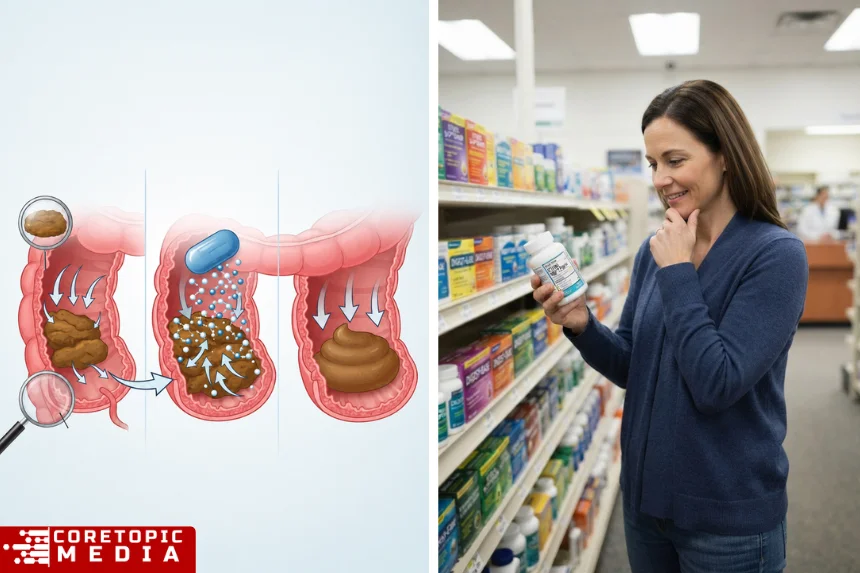
How Do Other Laxatives Work?
Other laxatives use different methods to relieve constipation. Therefore, knowing the active ingredient matters more than choosing a product simply because its packaging promises relief.
Bulk-forming laxatives
Bulk-forming laxatives absorb liquid and increase the size of the stool. The larger, softer stool can then encourage normal intestinal movement.
Psyllium and methylcellulose are common examples. In addition, these products may support regularity when a person does not consume enough dietary fiber.
Bulk-forming laxatives generally work gradually. However, they can cause gas or bloating, especially when someone increases fiber intake too quickly.
Adequate fluid intake also matters. Without enough liquid, fiber may worsen discomfort or create problems for someone who has difficulty swallowing or a possible intestinal blockage.
Osmotic laxatives
Osmotic laxatives retain water in the bowel. Consequently, they soften the stool and may increase bowel movement frequency.
Polyethylene glycol 3350, often called PEG, is a widely used osmotic laxative. It usually takes two to four days to produce a bowel movement. Possible side effects include nausea, gas, bloating, cramping and diarrhea.
For adults with chronic idiopathic constipation, the 2023 AGA-ACG guideline gave PEG a strong recommendation based on moderate-certainty evidence. Still, that recommendation does not mean PEG suits every person or every cause of constipation.
Stimulant laxatives
Stimulant laxatives increase activity in the intestines. Therefore, they usually work faster than docusate stool softeners.
Senna and bisacodyl are common examples. Senna normally produces a bowel movement within six to 12 hours, so some people take it at bedtime for relief the following morning.
Although stimulant laxatives can provide short-term relief, they may cause cramps, urgency or diarrhea. Moreover, you should not repeatedly take extra doses when the first dose does not work immediately.
The NIDDK advises people to reserve stimulants for severe constipation or situations in which other treatments have not worked.
Saline laxatives
Saline laxatives use mineral salts to retain water in the bowel. Common ingredients include magnesium citrate and magnesium hydroxide.
These products may act more quickly than docusate or polyethylene glycol. However, they can also cause watery stool, cramping and dehydration.
People with kidney disease need particular caution because their kidneys may struggle to remove excess magnesium. Therefore, they should consult a healthcare professional before using a magnesium-based laxative.
Lubricant laxatives
Lubricant laxatives coat the stool and the inside of the bowel. As a result, stool may pass with less friction.
Mineral oil is one example. Nevertheless, lubricant laxatives can interact with other products and may not suit long-term use.
In particular, MedlinePlus warns that mineral oil may interact with stool softeners. Ask a doctor or pharmacist before combining the two.

Which Works Faster: A Stool Softener or a Laxative?
Some laxatives work faster than stool softeners. However, the exact timing depends on the active ingredient, dose, formulation and individual response.
| Active ingredient | Type | Approximate time to work |
| Docusate | Stool softener | 1–3 days |
| Polyethylene glycol 3350 | Osmotic laxative | 2–4 days |
| Senna | Stimulant laxative | 6–12 hours |
| Bisacodyl | Stimulant laxative | Often taken for overnight relief; check the product label |
| Psyllium | Bulk-forming laxative | Usually gradual rather than immediate |
Docusate timing comes from MedlinePlus guidance, while PEG and senna timing varies according to their individual drug information.
A faster product does not automatically provide a better solution. For instance, a stimulant may work overnight but cause more cramping or urgency. Meanwhile, a slower osmotic product may offer a more gradual effect.
Should You Use a Stool Softener or Another Laxative?
Your main symptom can help guide the discussion with a pharmacist or doctor.
A stool softener may suit you when:
- Hard or dry stool causes the main problem.
- You need to avoid straining.
- Constipation is mild and temporary.
- You can wait one to three days for relief.
An osmotic laxative may suit you when:
- Bowel movements occur infrequently.
- Dietary and lifestyle changes have not helped enough.
- You prefer gradual relief.
- A clinician recommends it for recurring constipation.
A stimulant laxative may suit you when:
- You need short-term relief.
- Another approach has not worked.
- A doctor or pharmacist recommends a rescue treatment.
- You understand that urgency or cramping may occur.
A bulk-forming laxative may suit you when:
- Your regular diet lacks fiber.
- You want gradual support for bowel regularity.
- You can drink enough fluid.
- You do not have swallowing problems or symptoms of a bowel blockage.
Even so, symptoms alone cannot identify every cause of constipation. Frequent constipation may result from medicines, dehydration, irritable bowel syndrome, pelvic floor problems, diabetes, hypothyroidism or other conditions.
Can You Take a Stool Softener and a Laxative Together?
Some combination products contain both a stool softener and a stimulant laxative. In other cases, a clinician may recommend two separate products for a specific reason.
However, combining constipation treatments without guidance can increase the risk of diarrhea, abdominal cramps, dehydration and electrolyte problems. It may also make it difficult to identify which product caused a side effect.
Therefore, speak with a pharmacist or doctor before combining products. This precaution becomes especially important when you take prescription medicines or manage a long-term medical condition.
Do not exceed the recommended dose. Similarly, avoid taking another laxative simply because the first product has not worked as quickly as expected.

Side Effects of Stool Softeners and Laxatives
Every constipation medicine can cause side effects. Nevertheless, the type and severity vary according to the active ingredient.
Possible stool-softener side effects
Docusate may cause:
- Stomach or intestinal cramps
- Nausea
- Throat irritation from some liquid products
Contact a healthcare professional if your stool remains hard after one week of use. In addition, seek advice when a sudden change in bowel habits lasts longer than two weeks.
Possible osmotic-laxative side effects
Polyethylene glycol may cause:
- Bloating
- Gas
- Nausea
- Abdominal cramps
- Diarrhea
Although mild digestive symptoms can occur, severe or persistent diarrhea needs medical attention because it can lead to dehydration.
Possible stimulant-laxative side effects
Stimulant products may cause:
- Abdominal cramps
- Sudden urgency
- Loose stool
- Nausea
- Diarrhea
Moreover, frequent use without medical supervision may lead someone to rely on the product rather than addressing the underlying cause of constipation.
Lifestyle Changes That May Relieve Constipation
Mild constipation sometimes improves through changes in food, fluids, activity and toilet habits. Therefore, consider these measures unless a medical condition requires different advice.
Increase fiber gradually
Adults generally need 22 to 34 grams of fiber each day, depending on age and sex. Useful sources include whole grains, beans, lentils, fruits, vegetables and nuts.
However, a sudden large increase can cause gas and bloating. Add fiber gradually so your digestive system has time to adjust.
Drink enough fluid
Water and other liquids help fiber work effectively. As a result, adequate fluid intake can make stool softer and easier to pass.
People with heart, kidney or liver conditions may need fluid restrictions. Therefore, they should follow the amount their healthcare professional recommends.
Stay physically active
Regular movement can support normal bowel function. Even a gentle walk may help when a person can exercise safely.
Still, activity alone may not resolve constipation caused by a medicine, medical condition or pelvic floor problem.
Respond to the urge to go
Repeatedly ignoring the urge to have a bowel movement can contribute to constipation. Instead, allow enough unhurried time to use the bathroom.
Some people find it helpful to try after a meal, when the digestive system naturally becomes more active.
Review your medicines
Iron supplements, some pain medicines, certain antidepressants and several other medications can contribute to constipation.
Nevertheless, do not stop a prescribed medicine on your own. Ask the prescriber whether a dose adjustment, alternative treatment or constipation plan would help.
Who Should Ask a Doctor Before Using a Laxative?
Consult a healthcare professional before self-treating when:
- You are pregnant or breastfeeding.
- The medicine is for a baby or child.
- You have kidney, heart or liver disease.
- You have difficulty swallowing.
- You have inflammatory bowel disease.
- You have undergone bowel surgery.
- You may have an intestinal blockage.
- You take several prescription medicines.
- Constipation frequently returns.
- You need laxatives to have most bowel movements.
Children require age-appropriate assessment and dosing. Therefore, do not give a child a laxative merely by reducing an adult dose.
Older adults should also take care because diarrhea and dehydration can affect them more quickly. Additionally, other medicines may increase the risk of fluid or electrolyte problems.
When Does Constipation Need Medical Attention?
Contact a healthcare professional when self-care does not improve your symptoms or constipation keeps returning.
Seek prompt medical attention if constipation occurs with:
- Rectal bleeding
- Blood in the stool
- Constant abdominal pain
- Inability to pass gas
- Vomiting
- Fever
- Unexplained weight loss
- Severe abdominal swelling
The NIDDK advises immediate medical assessment when constipation occurs with symptoms such as constant abdominal pain, vomiting, fever, blood in the stool or an inability to pass gas.
These warning signs may indicate a condition that requires diagnosis rather than repeated laxative use.
Common Mistakes to Avoid
Taking more than the recommended dose
A larger dose may increase cramps, diarrhea and dehydration without treating constipation more effectively. Therefore, follow the package directions carefully.
Choosing a product only because it works quickly
Fast relief can sound appealing. However, stimulant products may cause urgency and may not address the reason constipation keeps returning.
Ignoring the active ingredient
Brand names can vary between countries and manufacturers. Instead, check whether the product contains docusate, PEG, psyllium, senna, bisacodyl or another ingredient.
Combining products without advice
Two different brands may contain similar ingredients. As a result, taking both can accidentally increase the total dose.
Treating persistent symptoms indefinitely
Recurring constipation may signal a medicine side effect, dietary issue, pelvic floor problem or health condition. Consequently, ongoing symptoms deserve a professional assessment.
Frequently Asked Questions
Is a stool softener safer than a laxative?
A stool softener is already a type of laxative. Safety depends on the ingredient, dose, duration of use and your medical history. Docusate may cause less urgency than a stimulant, but it may not work well enough for every type of constipation.
What is the gentlest laxative?
No single product qualifies as the gentlest option for everyone. Bulk-forming and osmotic laxatives often work gradually, although they can cause gas, bloating or diarrhea. A pharmacist can help you choose based on your symptoms and medical conditions.
Can I take a stool softener every day?
MedlinePlus advises against taking docusate for longer than one week unless a doctor directs you to continue. Therefore, speak with a healthcare professional when you need it regularly.
Is polyethylene glycol a stool softener?
No. Polyethylene glycol is an osmotic laxative. It retains water with the stool, which softens the stool and increases bowel movement frequency.
What laxative works the fastest?
Stimulant laxatives often work faster than docusate or PEG. For example, senna normally works within six to 12 hours. However, faster products may also cause more cramping and urgency.
Can laxatives help with weight loss?
Laxatives do not reduce body fat. Instead, misuse can cause diarrhea, dehydration and dangerous electrolyte disturbances.
How long should constipation last before I see a doctor?
Seek advice when constipation does not improve with self-care, keeps returning or represents a significant change in your normal bowel pattern. Contact a doctor sooner when you also have pain, bleeding, vomiting, fever, weight loss or an inability to pass gas.
Conclusion
A stool softener is one type of laxative. It mainly helps when hard stool or straining causes the problem, while osmotic, bulk-forming and stimulant laxatives use different methods to encourage a bowel movement.
Although speed matters, it should not determine your choice by itself. Instead, consider your symptoms, health conditions, other medicines and how often constipation occurs.
Follow the product directions and avoid combining treatments without professional guidance. Most importantly, seek medical care when constipation persists or occurs with pain, bleeding, vomiting, fever, weight loss or an inability to pass gas.
Discover more on our website about solica casuto