


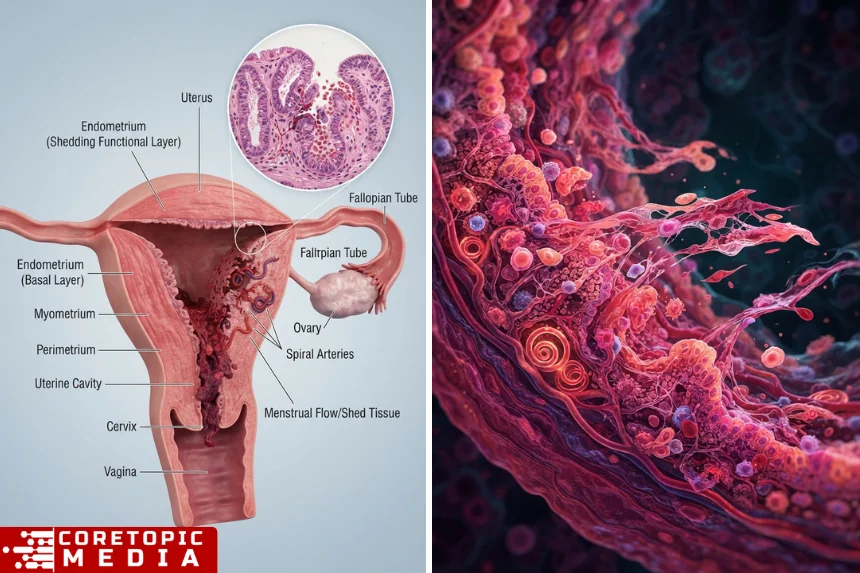
Uterine lining shedding is a normal part of the menstrual cycle. Each month, the lining of the uterus, called the endometrium, thickens to prepare for a possible pregnancy. If pregnancy does not happen, hormone levels fall and the lining breaks down. Blood and tissue then leave the body through the vagina as a period.
For many people, this shedding looks like ordinary menstrual bleeding. Sometimes, it can include small clots, stringy tissue, stronger cramps, or heavier flow. In rare cases, the lining may pass as a larger piece of tissue, called a decidual cast. Understanding the difference between normal period changes and warning signs can help you decide when to monitor symptoms, take a pregnancy test, or contact a healthcare professional.
This guide is for education only and cannot diagnose the cause of bleeding, pain, or passed tissue. Seek medical care for severe symptoms, pregnancy concerns, or bleeding that feels unusual for your body.
What Is the Uterine Lining?
The uterine lining is the endometrium, the tissue that lines the inside of the uterus. During the menstrual cycle, hormones help the endometrium build up. This creates a thicker lining that could support implantation if an egg is fertilized.
If pregnancy does not occur, estrogen and progesterone levels fall. The lining then comes away and leaves the body as menstrual flow. A period is made of blood and womb lining, not blood alone. The NHS notes that regular cycles can vary, often falling between 21 and 35 days, and periods commonly last around 2 to 7 days.
Why Does the Uterine Lining Shed?
Uterine lining shedding happens because the body no longer needs the thickened endometrium when there is no pregnancy. The cycle usually works like this:
- The lining builds up. Estrogen rises and helps the endometrium thicken.
- The body prepares for implantation. After ovulation, progesterone supports the lining.
- Hormones drop if pregnancy does not happen. This hormone change signals the lining to break down.
- The lining leaves the body. Blood, mucus, and endometrial tissue pass through the cervix and vagina as a period.
This process can cause cramps because the uterus contracts to help move blood and tissue out. Mild to moderate cramping can be common, but severe pain that disrupts daily life should not be ignored.
What Does Normal Uterine Lining Shedding Look Like?
Normal shedding can look different from person to person. It may also change from one cycle to another because of stress, illness, age, birth control, recent pregnancy, breastfeeding, weight changes, or perimenopause.
Common period features can include:
| What you may notice | What it can mean |
|---|---|
| Red, dark red, or brown blood | Blood color can change depending on flow speed and how long blood has been exposed to air. |
| Small clots | Small clots can happen when flow is heavier. |
| Stringy or fleshy-looking tissue | This may be endometrial tissue mixed with blood and mucus. |
| Cramps | The uterus contracts to shed the lining. |
| Flow that changes by day | Many periods are heavier at the start and lighter near the end. |
A change is more concerning when it is sudden, severe, persistent, or very different from your usual pattern.
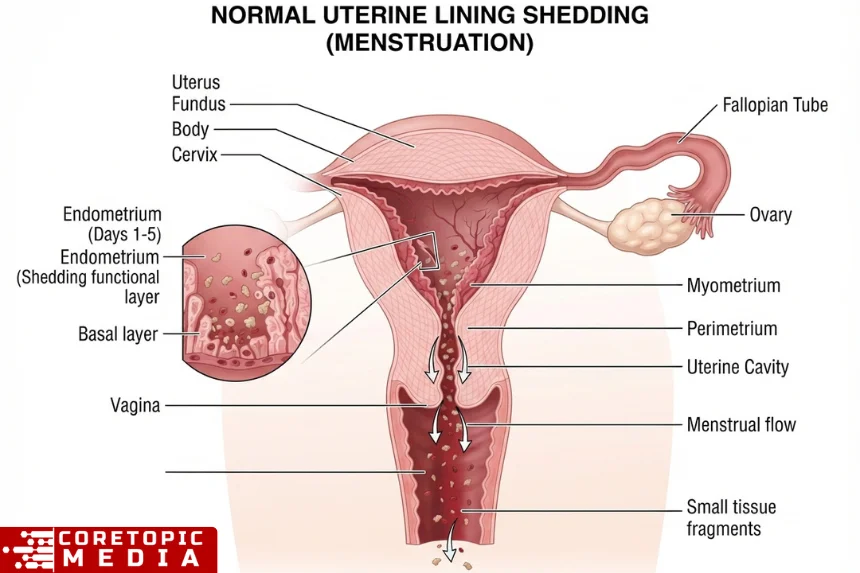
Uterine Lining Shedding vs. Blood Clots vs. Decidual Cast
Not every piece of tissue passed during a period is the same. The table below explains the main differences.
| Feature | Usual period shedding | Blood clot | Decidual cast |
|---|---|---|---|
| What it is | Blood, mucus, and small pieces of endometrial tissue | Gel-like collection of blood | Larger piece of uterine lining passed at once |
| Size | Usually small or broken up | Often small, but can vary | May be larger and shaped like the uterine cavity |
| Texture | Stringy, soft, or tissue-like | Jelly-like or thick | Fleshy, firm, or membrane-like |
| Pain level | Mild to moderate cramps are common | May happen with heavier cramps | Can cause severe cramping or pelvic pain |
| How common | Common | Common with heavier flow | Rare |
Cleveland Clinic describes a decidual cast as the uterine lining shedding in one large piece rather than gradually during a period. It can be painful, is considered rare, and usually does not cause long-term complications.
What Is a Decidual Cast?
A decidual cast happens when the endometrium comes out in one piece or a few larger pieces. It may look like a fleshy mass, sometimes with a shape similar to the inside of the uterus. The medical term is membranous dysmenorrhea.
Possible symptoms include:
- Sudden severe cramps
- Pelvic pain
- Vaginal bleeding or spotting
- Nausea
- Dizziness or feeling faint
- Passing a larger piece of tissue
Healthcare providers are not always sure why decidual casts happen. Cleveland Clinic notes that they may be linked with progesterone-containing hormonal contraception or ectopic pregnancy, but there are not enough studies to say hormonal birth control directly causes them.
A decidual cast is not the same as a miscarriage. However, the symptoms can overlap, especially if someone is pregnant or could be pregnant. If you pass tissue and pregnancy is possible, take a pregnancy test and contact a healthcare professional.
When Uterine Lining Shedding May Not Be Normal
Changes in bleeding or tissue can happen for many reasons. Some are temporary, while others need medical evaluation.
Heavy Periods
Heavy periods can be normal for some people, but treatment may help if they affect daily life. The NHS advises seeking care if you need to change a pad or tampon every 1 to 2 hours, need to use two types of period products together, bleed for more than 7 days, pass clots larger than about 2.5 cm, bleed through clothes or bedding, or feel tired or short of breath often.
Heavy bleeding can sometimes be linked with fibroids, endometriosis, adenomyosis, pelvic inflammatory disease, bleeding disorders, medicines such as anticoagulants, or, rarely, womb cancer.
Bleeding Between Periods or After Sex
Bleeding outside your usual period can have many causes, including hormone changes, contraception, infection, pregnancy-related problems, cervical changes, polyps, fibroids, or other conditions. MedlinePlus lists abnormal bleeding patterns as bleeding between periods, after sex, after menopause, while pregnant, or with cycles shorter than 21 days or longer than 35 days.
Severe Pain
Pain that is far worse than your usual cramps, gets worse over time, causes vomiting or fainting, or stops you from working, studying, sleeping, or doing normal activities should be checked.
Endometriosis is one possible cause of severe period-related pain. It happens when tissue similar to the uterine lining grows outside the uterus. That tissue can thicken and bleed during the menstrual cycle, but because it is outside the uterus, it cannot leave the body normally. This can lead to irritation, scar tissue, adhesions, and pain.
Tissue Passing During Possible Pregnancy
Passing tissue during pregnancy, or when pregnancy is possible, needs prompt medical advice. A decidual cast is not a miscarriage, but cramping, bleeding, and passing tissue can also happen with miscarriage or ectopic pregnancy. Cleveland Clinic recommends contacting a provider if you pass tissue and are pregnant, and notes that a provider may order a pregnancy test, pelvic exam, or ultrasound.
Ectopic pregnancy can be serious. Seek urgent care if pregnancy is possible and you have severe one-sided abdominal or pelvic pain, shoulder tip pain, dizziness, fainting, or heavy bleeding. NHS guidance describes shoulder tip pain, dizziness, fainting, and sudden intense abdominal pain as warning signs that need urgent medical attention.
Conditions That Can Affect Uterine Lining Shedding
Several conditions can change how the uterine lining builds, breaks down, or leaves the body.
Hormonal Imbalance
Hormones control the growth and shedding of the endometrium. Irregular ovulation, thyroid problems, polycystic ovary syndrome, perimenopause, stress, weight changes, and some medications can affect bleeding patterns. MedlinePlus notes that abnormal bleeding is often linked with failure of regular ovulation, especially in teenagers and people approaching menopause.
Fibroids and Polyps
Fibroids are noncancerous growths in or around the uterus. Polyps are growths in the lining of the uterus or cervix. Either can contribute to heavy bleeding, spotting, or bleeding between periods. A clinician may use ultrasound or hysteroscopy to look for structural causes.
Endometriosis
Endometriosis does not mean the normal uterine lining is shedding outside the body. It means tissue similar to the endometrium is growing outside the uterus. Mayo Clinic explains that this tissue can thicken, break down, and bleed with the menstrual cycle, but it has no easy way to exit the body.
Common symptoms can include painful periods, pelvic pain, pain during or after sex, pain with bowel movements or urination around periods, heavy bleeding, bleeding between periods, bloating, fatigue, and infertility.
Adenomyosis
Adenomyosis happens when tissue similar to the uterine lining grows into the muscular wall of the uterus. It can cause heavy periods, painful cramps, pelvic pressure, and an enlarged or tender uterus. It is different from endometriosis, although the two can occur together.
Endometrial Hyperplasia
Endometrial hyperplasia means the uterine lining becomes unusually thick. It is often related to an imbalance between estrogen and progesterone. Some types can increase the risk of endometrial cancer, so abnormal bleeding, especially after menopause, should be assessed by a healthcare professional.
When to Contact a Healthcare Professional
Contact a healthcare professional if you notice:
- Bleeding that is much heavier than usual
- Bleeding between periods
- Bleeding after sex
- Bleeding after menopause
- Periods lasting longer than 7 days
- Severe pelvic pain or cramps that are different from your usual pattern
- Repeated large clots
- Foul-smelling discharge, fever, or pelvic tenderness
- Dizziness, fainting, shortness of breath, or unusual fatigue
- Passing tissue when pregnant or when pregnancy is possible
Get urgent medical help if you are soaking through pads or tampons very quickly, feel faint, have severe one-sided pelvic pain, have shoulder tip pain with possible pregnancy, or have symptoms that feel sudden and severe.
What a Doctor May Check
A healthcare professional may ask about your cycle, symptoms, pregnancy possibility, contraception, medications, sexual health, pain pattern, and family history. Depending on your symptoms, they may recommend:
- Pregnancy test
- Pelvic exam
- Blood tests to check anemia, thyroid function, or hormone-related issues
- STI or infection testing
- Pelvic ultrasound
- Cervical screening if due or relevant
- Endometrial biopsy in selected cases
- Hysteroscopy to look inside the uterus
NICE guidance on heavy menstrual bleeding focuses on investigating causes and choosing treatment based on the person’s symptoms, preferences, and quality of life.
What You Can Do at Home
If symptoms are mild and feel like your usual period, supportive care may help:
- Track bleeding, clot size, pain, and cycle dates.
- Use heat for cramps.
- Stay hydrated.
- Consider over-the-counter pain relief if it is safe for you.
- Take a photo of unusual tissue if you feel comfortable doing so; it may help your clinician.
- Take a pregnancy test if pregnancy is possible.
- Do not stop prescribed hormonal contraception suddenly unless a healthcare professional advises it.
If you pass what looks like a decidual cast, Cleveland Clinic suggests taking a pregnancy test, using over-the-counter pain relief if appropriate, applying heat for cramps, and contacting a healthcare provider to discuss symptoms.
FAQs
Is uterine lining shedding the same as a period?
Yes, in most cases. A period is the shedding of the uterine lining when pregnancy does not happen. The flow contains blood and tissue from the womb lining.
Is it normal to see tissue during my period?
Small pieces of tissue, stringy material, or small clots can happen during a period, especially on heavier days. Larger pieces of tissue, severe pain, pregnancy possibility, or bleeding that is unusual for you should be checked.
Can the uterine lining come out in one piece?
Rarely, yes. This is called a decidual cast. It can be painful and alarming, but it usually does not cause long-term complications. Because it can resemble other pregnancy-related problems, it is sensible to contact a healthcare professional, especially if pregnancy is possible.
Does passing uterine lining mean I had a miscarriage?
Not always. Normal periods involve uterine lining shedding, and a decidual cast is not the same as a miscarriage. However, if you are pregnant, could be pregnant, or have a positive pregnancy test, bleeding or passing tissue should be discussed with a healthcare professional.
Can birth control affect uterine lining shedding?
Yes. Hormonal contraception can change how the uterine lining builds and sheds. It may make periods lighter, irregular, or absent, depending on the method. Some reports link decidual casts with progesterone-containing contraception, but evidence is limited and a decidual cast is not usually a reason to stop birth control without medical advice.
When is heavy bleeding too heavy?
Bleeding may be too heavy if you need to change a pad or tampon every 1 to 2 hours, bleed through clothes or bedding, pass clots larger than about 2.5 cm, have periods lasting more than 7 days, or feel tired or short of breath often.
Conclusion
Uterine lining shedding is usually the normal process behind a period. Small clots, stringy tissue, and changing flow can be part of menstruation. Larger tissue, severe pain, very heavy bleeding, bleeding outside your usual pattern, or any chance of pregnancy should be taken seriously. Tracking your symptoms and getting timely medical advice can help identify whether the change is harmless, hormonal, pregnancy-related, or linked to a condition that needs treatment.
Discover more on our website about is savannah guthrie going back to work