


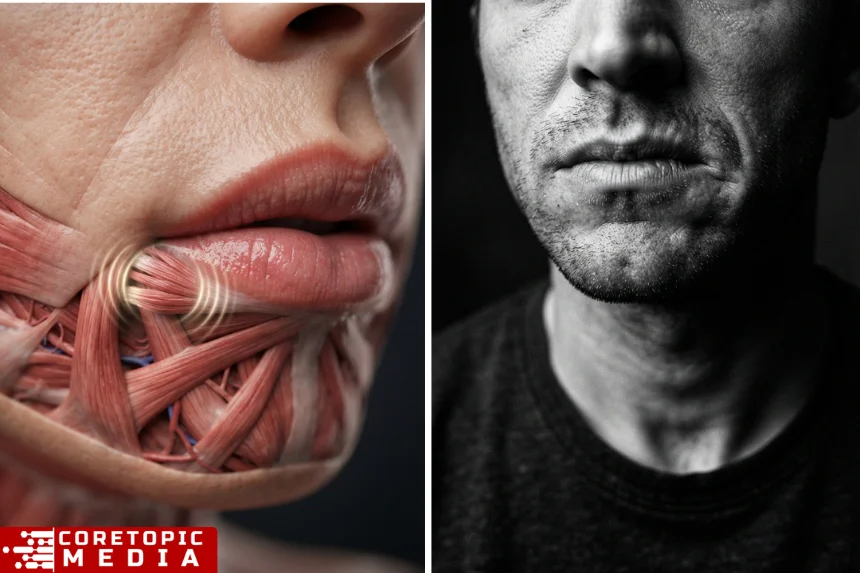
A twitching lip usually comes from a brief, involuntary contraction in one of the small muscles around your mouth. Stress, poor sleep, too much caffeine, alcohol or a medicine side effect can trigger the movement. In most cases, the twitch stops on its own within several days or weeks.
However, the pattern matters. A twitch that continues for more than two weeks, spreads to other parts of your face or body, or occurs alongside weakness deserves medical attention. Sudden facial drooping, arm weakness or speech difficulty requires emergency help because these symptoms can signal a stroke.
If you are wondering, “Why is my lip twitching?”, consider how long it has lasted, whether it affects one or both sides and whether you have any other symptoms. Those details often provide more useful information than whether the twitch affects your upper or lower lip.
What does lip twitching feel like?
Lip twitching can feel like a small pulse, flutter, quiver or repeated movement under the skin. You may notice it in your upper lip, lower lip, one corner of your mouth or the area between your lip and nose.
The movement may last only a few seconds. Alternatively, it may return throughout the day. Some twitches remain subtle enough that only you can feel them, while others become visible in a mirror.
A twitch differs from facial weakness. With a twitch, the muscle moves without your control. With weakness or paralysis, you may struggle to smile, close an eye or move one side of your face.
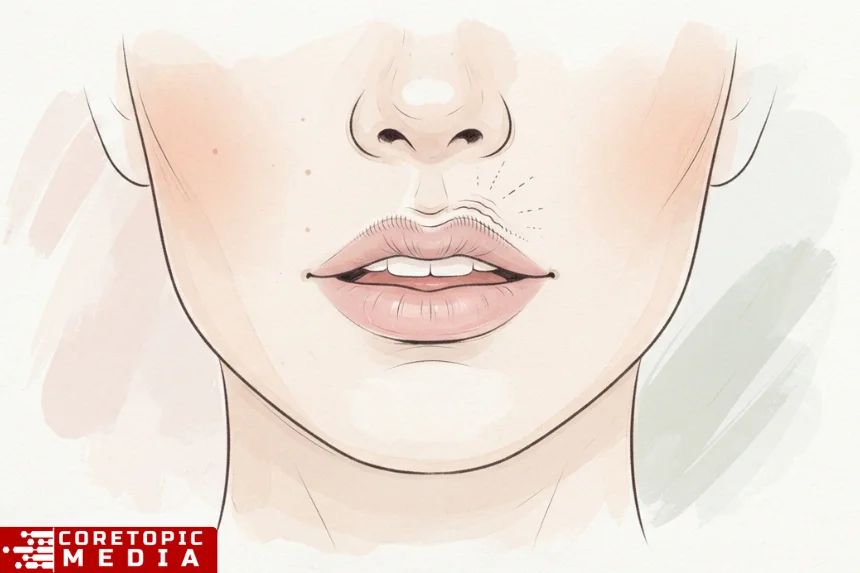
Why is my lip twitching?
Most temporary muscle twitches do not indicate a serious medical problem. The NHS links common twitches with stress, tiredness, caffeine, alcohol and certain medicines. Nevertheless, persistent or widespread twitching may require an examination.
Stress and anxiety
Stress can make your nervous system more active and may increase small muscle movements. In addition, worrying about the twitch can make you notice it more often.
Anxiety may also affect sleep, caffeine intake and muscle tension. Therefore, several triggers can occur at the same time.
If the twitch appears during stressful periods and improves when you relax, stress may play a role. However, do not assume anxiety explains the symptom when you also have weakness, numbness or other neurological changes.
Tiredness and poor sleep
Fatigue commonly contributes to muscle twitching. Your muscles and nervous system may react more strongly when you sleep poorly or work for long periods without enough rest.
Therefore, a twitch that starts after several late nights may improve once you restore a regular sleep routine. The NHS recommends getting plenty of rest when dealing with a temporary twitch.
Too much caffeine
Coffee, energy drinks, strong tea, pre-workout products and some soft drinks contain caffeine. Because caffeine stimulates the nervous system, a high intake can make shaking, restlessness and muscle twitching more noticeable.
Try reducing your intake for several days and observe whether the twitch improves. However, reduce large amounts gradually if sudden withdrawal usually gives you headaches.
The amount that causes symptoms varies from person to person. Therefore, focus on whether your own intake recently increased rather than relying on a fixed number of cups.
Alcohol
Alcohol can contribute to twitching, especially after heavy drinking or poor-quality sleep. It may also worsen dehydration and disrupt normal sleep patterns.
Consequently, reducing alcohol for a short period may help you identify whether it contributes to the movement. The NHS advises avoiding large amounts of alcohol while a twitch continues.
A medicine side effect
Some prescription and non-prescription medicines can trigger tremors, spasms or other involuntary movements.
For example, certain antidepressants, antipsychotic medicines, anti-sickness medicines and other drugs can affect movement. However, the risk depends on the specific medicine, dose and individual response.
Check the information leaflet and speak with a doctor or pharmacist if the twitch started after you began a medicine or changed the dose. Most importantly, do not stop a prescribed medicine without medical advice.
Dehydration or an electrolyte imbalance
Your nerves and muscles need fluids and minerals such as potassium, calcium and magnesium to work normally. Therefore, vomiting, diarrhoea, heavy sweating, poor nutrition or certain medical conditions can sometimes contribute to spasms or twitching.
However, an isolated lip twitch does not prove that you lack potassium or magnesium. Other causes occur more often, and unnecessary supplements can create new health problems.
A clinician may order blood tests when your history suggests dehydration, an electrolyte problem, thyroid disease or another underlying condition.
Benign fasciculation syndrome
Benign fasciculation syndrome causes recurring muscle twitches without a progressive neurological disease. The twitches may affect different muscles and can continue for a long time.
Nevertheless, a doctor should assess persistent twitching before applying this label. The NHS lists benign fasciculation syndrome among the possible explanations for long-lasting twitches and cramps.
Hemifacial spasm
Hemifacial spasm causes painless, involuntary contractions on one side of the face. It often starts near the eye and may gradually spread to the cheek and mouth.
A blood vessel commonly presses against the facial nerve near the brainstem and triggers the spasms. Doctors may use an examination and MRI scan to confirm the diagnosis. Treatment can include botulinum toxin injections, while some patients consider microvascular decompression surgery.
A small lip twitch does not automatically mean you have hemifacial spasm. However, arrange an appointment if the movement repeatedly affects the same side of your face, involves your eyelid or gradually spreads.
Facial dystonia
Dystonia causes uncontrolled muscle contractions, tremors or unusual movements. Oromandibular dystonia affects the lower face, mouth, tongue or jaw.
Unlike a brief flutter, dystonia may cause repeated pulling, twisting, jaw movements or difficulty speaking and eating. Stress, tiredness, talking or chewing can sometimes trigger the symptoms.
Because dystonia requires specialist assessment, see a doctor if you notice frequent facial spasms, abnormal mouth movements or movements that interfere with daily activities.
Facial tics
A facial tic can cause repeated movements such as blinking, grimacing or mouth twitching. Tics often begin during childhood, although some continue into adulthood.
Stress may make them more noticeable. In addition, some people experience an urge before the movement and temporary relief afterwards.
A clinician can usually identify a tic from the movement pattern and symptom history.
Is a twitching lip a sign of a stroke?
A small lip twitch by itself does not match the typical stroke pattern. Stroke more often causes sudden weakness or drooping rather than a repetitive flutter.
However, call emergency services immediately if the lip movement occurs with any of the following:
- One side of the face suddenly droops
- One arm feels weak or numb
- Speech becomes slurred, confused or difficult
- You develop sudden vision loss
- You feel severely dizzy or lose your balance
- You develop a sudden, severe headache
- One side of your body becomes weak or numb
Remember FAST: Face, Arms, Speech and Time to call emergency services. In the UK, call 999. Elsewhere, call your local emergency number. Even if the symptoms disappear, seek emergency care because a transient ischaemic attack can cause temporary stroke-like symptoms.
Could it be Bell’s palsy?
Bell’s palsy causes sudden weakness or loss of movement on one side of the face. It may cause a drooping mouth or eyelid, drooling, altered taste and difficulty closing one eye.
Therefore, Bell’s palsy usually causes more than a tiny twitch. Because stroke can produce similar facial symptoms, seek urgent medical assessment for new one-sided facial weakness.
In the UK, the NHS advises urgent help for Bell’s palsy symptoms because steroid treatment works best when it starts within 72 hours.
Does the location of the twitch matter?
An upper-lip twitch and a lower-lip twitch can share the same common triggers. Therefore, the location alone rarely identifies the cause.
Instead, pay attention to these details:
| Feature | Why it matters |
|---|---|
| Duration | A twitch lasting more than two weeks needs assessment |
| Frequency | Increasing or nearly constant movements deserve attention |
| One side or both | Repeated one-sided facial spasms may suggest a facial nerve problem |
| Other body areas | Widespread twitching may require further investigation |
| Weakness or stiffness | These symptoms need medical review |
| Eyelid involvement | Twitching that spreads from the eye to the mouth may fit hemifacial spasm |
| Medication timing | A new medicine or dose change may explain the symptom |
| Speech or swallowing problems | These symptoms require prompt medical advice |
How can I stop my lip from twitching?
A temporary twitch often settles without specific treatment. Meanwhile, a few practical changes may reduce common triggers.
Get enough sleep
Aim for a consistent sleep schedule for several nights. In addition, reduce late-night screen use and avoid caffeine close to bedtime.
Reduce caffeine
Cut back on coffee, energy drinks and other stimulants. Then, monitor whether the twitch becomes less frequent over the next few days.
Limit alcohol
Avoid heavy drinking while the twitch continues. Alcohol can disturb sleep and may worsen dehydration.
Manage stress
Try slow breathing, a walk, gentle exercise or another activity that helps you unwind. Although relaxation cannot treat every medical cause, it may reduce stress-related twitching.
Stay normally hydrated
Drink enough fluid, especially after exercise, hot weather, vomiting or diarrhoea. However, do not force excessive amounts of water.
Review your medicines
Check whether the twitch started after a new medicine or dose adjustment. Then, contact a pharmacist or prescriber for advice. Do not stop medication on your own.
Record the movement
Take a short video if the twitch comes and goes. In addition, note the time, duration, caffeine intake, sleep and other symptoms.
This record can help a clinician understand a movement that does not occur during your appointment.
Avoid untested supplements
Do not assume you need potassium, calcium or magnesium. Instead, ask a clinician whether your symptoms or medical history justify blood tests.
High-dose supplements can interact with medicines and may harm people with kidney, heart or other medical conditions.
When should I see a doctor?
Arrange a routine medical appointment if:
- The twitch lasts longer than two weeks
- It keeps returning or becomes more frequent
- It affects more than one part of your body
- The affected area feels weak or stiff
- The movement spreads across one side of your face
- It interferes with speaking, eating, drinking or sleeping
- You notice numbness, pain or other new symptoms
- You think a medicine may have triggered it
- The twitch causes significant worry
The NHS specifically recommends seeing a GP when a twitch lasts more than two weeks, affects multiple areas, occurs with weakness or stiffness, or may relate to medication.
Seek urgent help for new facial weakness, difficulty closing one eye or a drooping mouth. Meanwhile, call emergency services for sudden facial drooping, arm weakness, speech problems or other stroke symptoms.
How will a doctor investigate lip twitching?
First, the clinician will ask when the twitch started and how often it occurs. They may also ask about sleep, stress, caffeine, alcohol, medicines and recent illnesses.
Next, they may examine your face, strength, reflexes, sensation and coordination. A video can help if the twitch does not appear during the examination.
Depending on your symptoms, the clinician may consider:
- Blood tests for electrolytes, thyroid function or kidney health
- A medication review
- Referral to a neurologist
- Nerve or muscle tests
- Brain imaging when the pattern suggests a facial nerve or neurological condition
Most people do not need every test. Instead, the clinician chooses investigations based on the movement pattern and any accompanying symptoms.
How do doctors treat persistent lip twitching?
Treatment depends on the cause.
If stress, fatigue or caffeine triggers the twitch, lifestyle changes may resolve it. If a medicine contributes, the prescriber may adjust the dose or select an alternative.
Meanwhile, doctors may use botulinum toxin injections for conditions such as hemifacial spasm or some forms of dystonia. In selected cases of hemifacial spasm, surgeons may offer microvascular decompression.
A doctor should guide treatment for persistent or complex symptoms. Self-treatment with supplements or unprescribed medicines may delay the correct diagnosis.
Frequently asked questions
Can anxiety make your lip twitch?
Yes. Stress and anxiety commonly accompany temporary muscle twitching. In addition, anxiety can disrupt sleep and increase caffeine use, which may make the twitch more noticeable.
Can caffeine cause lip twitching?
Caffeine can trigger or worsen muscle twitching in some people because it stimulates the nervous system. Therefore, reducing coffee, energy drinks and other caffeinated products may help.
Does a lip twitch mean I have low potassium?
Not necessarily. Electrolyte imbalances can affect muscle function, but an isolated twitch does not confirm a potassium deficiency. A clinician may use blood tests when your symptoms or medical history suggest an imbalance.
How long should a lip twitch last?
A harmless twitch may come and go for several days or weeks. However, the NHS recommends seeing a GP if it continues for more than two weeks.
Why does my lip twitch when I am tired?
Fatigue can increase temporary muscle twitching. Therefore, the movement may appear after poor sleep, long working hours or physical exhaustion.
Is upper-lip twitching different from lower-lip twitching?
Usually, the exact location does not reveal the cause. Duration, frequency, one-sided facial involvement and accompanying symptoms provide more useful clues.
Can dehydration cause a twitching lip?
Dehydration can contribute to muscle spasms, particularly after heavy sweating, vomiting or diarrhoea. However, many lip twitches come from other triggers such as stress, tiredness or caffeine.
Should I take magnesium for a twitching lip?
Do not take high-dose magnesium solely because your lip twitches. A deficiency represents only one possible explanation, and excess magnesium can cause problems, particularly in people with reduced kidney function. Ask a healthcare professional whether you need testing.
Is lip twitching a sign of Parkinson’s disease or motor neurone disease?
An isolated lip twitch rarely provides enough evidence for either condition. Serious neurological disorders usually cause additional symptoms, such as progressive weakness, stiffness, balance problems or changes in movement. Arrange an examination if the twitch persists or occurs with other neurological symptoms.
Conclusion
Lip twitching usually comes from a temporary trigger such as stress, poor sleep, caffeine, alcohol or medication. Rest, reducing stimulants and monitoring the symptom may help it settle.
However, see a healthcare professional if the twitch lasts longer than two weeks, keeps returning, spreads or occurs with weakness or stiffness. Call emergency services immediately if you develop sudden facial drooping, arm weakness or speech difficulty.
This article provides general health information and does not replace an examination, diagnosis or treatment from a qualified healthcare professional.
Discover more on our website about crown lengthening