


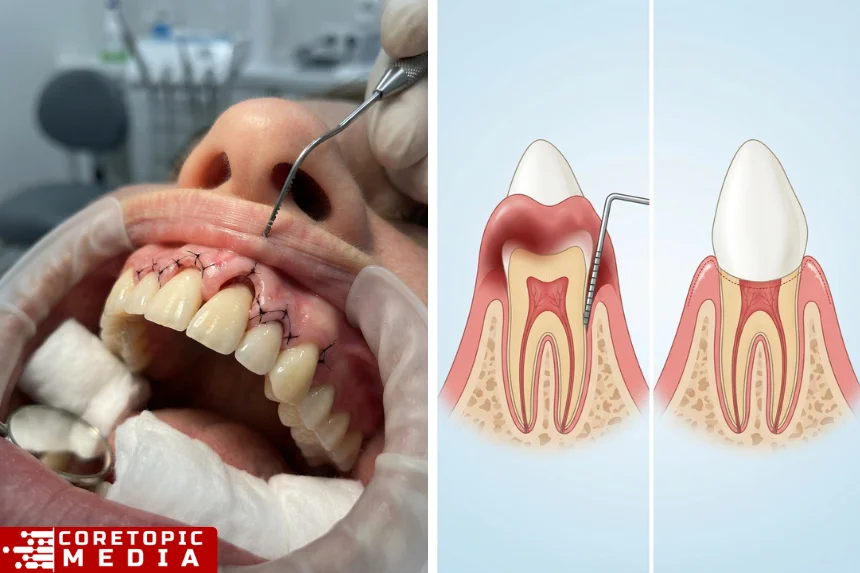
Crown lengthening is a minor dental operation that exposes more of a tooth by reshaping the surrounding gum, underlying bone or both. Despite its name, the treatment does not physically make the tooth longer. Instead, it reveals part of the tooth that was previously hidden beneath the gumline.
A dentist may recommend crown lengthening when there is not enough visible tooth structure to support a filling, dental crown or bridge. It can also be used to improve an uneven gumline or reduce the appearance of a “gummy” smile.
The procedure is usually carried out under local anaesthetic. Although the treated area may feel sore afterwards, most patients can return home on the same day. Your recovery time and final result will depend on how many teeth are treated, whether bone needs to be reshaped and the type of restoration planned afterwards.
What is crown lengthening?
Crown lengthening is a periodontal surgical procedure used to expose more of the natural tooth above the gumline.
During treatment, the clinician gently moves the gum away from the tooth. A small amount of gum tissue, supporting bone or both may then be removed or reshaped. The gum is repositioned and usually secured with stitches.
Cambridge University Hospitals describes crown lengthening as a procedure that exposes more of a tooth beneath the gum, commonly to make placing a filling or crown easier.
Treatment may involve one tooth or several neighbouring teeth. When crown lengthening is performed for appearance, multiple teeth may be treated to create a more even gumline.
Why might crown lengthening be needed?
There are two broad reasons for having crown lengthening: to make another dental treatment possible or to change the appearance of the smile.
To restore a damaged or decayed tooth
A filling or crown must attach to enough strong, healthy tooth structure. If decay, a crack or an old restoration extends below the gumline, the dentist may not have sufficient access to repair the tooth properly.
Crown lengthening can expose the damaged area and provide more accessible tooth structure. This may allow the dentist to place a restoration with a secure edge that can be cleaned more effectively.
The procedure may be considered when:
- A tooth has broken close to the gumline.
- Decay extends beneath the gum.
- An existing filling or crown reaches too far below the gum.
- There is not enough visible tooth to retain a new crown.
- Better access is needed to examine or restore the tooth.
In some cases, exposing more tooth structure may help prevent the tooth from needing to be removed. However, crown lengthening cannot save every damaged tooth. The amount of remaining tooth, root shape, bone support and position of nearby teeth must all be assessed.
To improve the gumline
Some teeth look unusually short because they are partly covered by gum tissue. Crown lengthening can reshape this tissue to reveal more of the natural teeth.
The American Academy of Periodontology notes that excess gum and bone tissue may be reshaped around one or several teeth to create a more balanced gumline or make restorative treatment possible.
Not every gummy smile is caused by excess gum tissue. The appearance can also relate to the position of the upper jaw, tooth wear, lip movement or the way the teeth erupted. A proper assessment is therefore important before cosmetic treatment is planned.
Who performs crown lengthening?
The procedure may be carried out by a dentist with appropriate surgical experience or by a periodontist, a dentist who specialises in the gums and structures supporting the teeth.
More complex cases are more likely to be referred to a specialist. This may include treatment involving several front teeth, significant bone reshaping or a tooth close to important anatomical structures.
Your clinician will usually examine your teeth and gums and may take X-rays before deciding whether crown lengthening is suitable.
What happens before the procedure?
Before treatment, your dentist or specialist will review the tooth, surrounding gums, bone levels and planned restoration.
Tell the clinical team about:
- Medicines you currently take.
- Blood-thinning medication.
- Allergies.
- Previous problems with local anaesthetic.
- Medical conditions that could affect healing.
- Pregnancy or possible pregnancy.
- Smoking or vaping.
Do not stop prescribed medicine unless the dentist or prescribing clinician specifically advises you to do so.
If the tooth already has a crown or temporary restoration, it may need to be adjusted or removed. In some cases, a temporary crown is fitted before or after surgery to protect the tooth while the tissues heal.
Your clinician should also explain the alternatives. Depending on the tooth, these might include orthodontically moving the tooth, choosing a different restoration or removing and replacing a tooth that cannot be restored predictably.
How is crown lengthening performed?
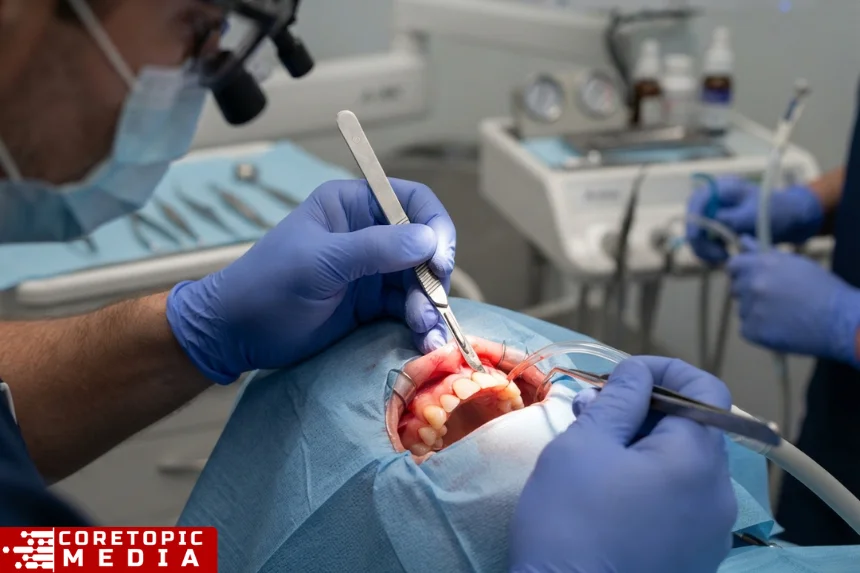
Crown lengthening is generally completed as an outpatient procedure under local anaesthetic.
A typical appointment involves the following stages:
- Numbing the area: Local anaesthetic is given around the tooth so that you should not feel sharp pain during treatment.
- Moving the gum tissue: Small incisions allow the clinician to gently lift the gum away from the tooth.
- Exposing more tooth: Gum tissue, bone or both are reshaped to uncover the required amount of tooth.
- Cleaning the area: The surgical site is rinsed and checked.
- Repositioning the gum: The gum is placed at its new level and secured with stitches.
- Protecting the site: A periodontal dressing may sometimes be placed over the area.
Cambridge University Hospitals states that stitches may need to be removed approximately seven to ten days after the procedure.
The length of the appointment varies. Treating one tooth may be relatively quick, while reshaping the gumline around several teeth can take longer.
Is crown lengthening painful?
You should not normally experience sharp pain during the operation because the area is numbed with local anaesthetic. You may feel pressure, movement or vibration.
Once the anaesthetic wears off, some tenderness is expected. Mild swelling, bruising or bleeding can also occur. Your clinician will explain which pain relief is suitable based on your medical history and other medicines.
Discomfort is often most noticeable during the first few days and should gradually improve. Pain that becomes more severe rather than settling should be assessed by the dental team.
Crown lengthening recovery
The gum begins healing soon after surgery, but complete tissue stabilisation takes longer than the initial period of soreness.
The first 24 hours
Rest after your appointment and avoid strenuous activity. A small amount of bleeding or blood-stained saliva may be normal.
Follow the instructions provided by your clinician. These may include:
- Keeping the surgical area undisturbed.
- Using prescribed or recommended pain relief.
- Avoiding vigorous rinsing.
- Applying a cold pack to the outside of the face for short intervals.
- Eating soft, cool or lukewarm foods.
- Avoiding alcohol and smoking.
Do not test the wound repeatedly with your tongue or fingers.
The first week
Swelling and tenderness should begin to reduce. Continue cleaning the rest of your mouth normally, but be gentle around the operation site.
Your dentist may recommend a specific mouthwash while brushing near the stitches is restricted. Use it only as directed.
Suitable foods may include scrambled eggs, yoghurt, pasta, soup that has cooled, mashed vegetables and soft fish. Avoid hard, sharp or sticky foods that could disturb the wound.
Follow-up and stitch removal
A review is often arranged within one or two weeks. At this appointment, the clinician can check healing, clean the area if necessary and remove non-dissolving stitches.
Do not miss the review simply because the area feels comfortable. Early healing does not mean the tissues have fully stabilised.
When can a permanent crown be fitted?
A permanent crown or other final restoration is not always fitted immediately after crown lengthening. The gumline can continue to change as the tissues mature.
Cambridge University Hospitals advises that the final filling or crown may be delayed for several months because the gum can shrink further during healing.
The appropriate waiting period depends on the tooth, the amount of surgery and whether the treated area is visible when you smile. Your restorative dentist and surgeon should coordinate the timing.
What are the possible risks?
Crown lengthening is a well-established procedure, but every operation has limitations and potential complications.
Possible risks include:
- Postoperative pain and swelling.
- Bleeding or bruising.
- Infection.
- Temporary sensitivity to hot, cold or sweet foods.
- Gum recession.
- An exposed edge of an existing filling or crown.
- Changes in the appearance of the treated tooth.
- Uneven healing.
- Gum tissue partially growing back.
- Damage to a nearby tooth or structure.
- Rare changes in sensation caused by nerve irritation or damage.
Removing supporting bone can also affect the proportions of the tooth and, in some situations, the neighbouring teeth. Careful planning is especially important around front teeth, where small gumline differences can be noticeable.
Cambridge University Hospitals notes that sensitivity is common after surgery and often settles within weeks, although exposing more of the root can make the tooth sensitive to temperature or sweet foods. The hospital also states that smoking negatively affects treatment outcomes.
Your personal risk may differ according to your gum health, oral hygiene, smoking status, medical history and the extent of surgery required.
When should you contact the dentist?
Contact the dental practice or surgical team if you experience:
- Bleeding that does not stop with the recommended pressure.
- Pain that is severe, worsening or not controlled by advised medication.
- Swelling that continues to increase after the first few days.
- A high temperature or feeling generally unwell.
- Pus, an unpleasant taste or a strong smell from the wound.
- Persistent numbness after the local anaesthetic should have worn off.
- Loose or disrupted stitches.
- A dressing that falls off when you were told it needed to remain in place.
- Signs of an allergic reaction.
Severe facial swelling, difficulty breathing or difficulty swallowing requires urgent medical attention.
How successful is crown lengthening?
Crown lengthening is generally a predictable method of exposing more tooth structure, but a successful result cannot be guaranteed.
Occasionally, the clinician may discover after lifting the gum that the tooth cannot be restored as planned. This could happen when damage extends too far down the root, there is insufficient bone support or reshaping the area would compromise a nearby tooth.
Further treatment may also be required after the initial procedure. Cambridge University Hospitals advises that the treatment plan sometimes has to change if surgery reveals previously unseen limitations.
A successful result depends not only on the operation but also on good plaque control, follow-up care and a well-designed final restoration.
Crown lengthening alternatives
The right alternative depends on why treatment has been recommended.
Possible options include:
Orthodontic extrusion
A dentist or orthodontist may gradually move the tooth further out of the gum and bone. This can expose damaged tooth structure without removing as much supporting bone.
Treatment takes longer than surgery and is not appropriate in every case.
A different restoration
A smaller filling, onlay or adjusted crown design may occasionally be possible. The dentist must still be able to create a durable restoration that does not trap plaque or irritate the gum.
Tooth extraction and replacement
If a tooth is too damaged to restore predictably, removal may be considered. Replacement options can include a bridge, denture or dental implant, depending on clinical suitability.
Extraction is not automatically a simpler choice. Tooth replacement may involve additional procedures, time and expense, so the advantages and disadvantages should be discussed carefully.
No treatment
When crown lengthening is proposed only for cosmetic reasons, choosing not to proceed may be reasonable. If the procedure is needed to treat decay or restore a broken tooth, delaying care could allow the problem to worsen.
Questions to ask before treatment
Before agreeing to crown lengthening, consider asking:
- Why is this procedure recommended for my tooth?
- Will gum, bone or both need to be removed?
- Could the surgery affect neighbouring teeth?
- What alternatives are available?
- Who will perform the operation?
- How long should I wait before receiving my final crown?
- Is the tooth likely to become sensitive?
- How might the gumline look after healing?
- What costs are included in the treatment plan?
- What happens if the tooth cannot be restored?
You should receive enough information to understand the expected benefits, limitations and alternatives before giving consent.
Frequently asked questions
Does crown lengthening make the tooth longer?
No. The tooth itself is not lengthened. The clinician exposes more of its natural surface by repositioning or removing some of the gum and, when necessary, reshaping the supporting bone.
Is crown lengthening always needed before a dental crown?
No. Most crowns can be fitted without gum surgery. Crown lengthening is considered when there is not enough accessible, healthy tooth structure to support the restoration or place its edge appropriately.
How long does crown lengthening take to heal?
Initial soreness and swelling usually improve during the first several days, while stitches may be removed after approximately seven to ten days. The gum and underlying tissues take longer to mature, and the final restoration may be delayed for several weeks or months.
Can the gum grow back?
Some tissue rebound can occur as the area heals. The likelihood depends partly on how the procedure was performed and whether bone was reshaped. Your clinician will allow for expected healing changes when planning the final gum level.
Will the tooth look different afterwards?
Yes. More of the tooth will be visible, and it may appear longer than nearby teeth. When crown lengthening is performed in a visible area, several teeth may be treated to create a balanced gumline.
Can I go to work after crown lengthening?
Some people return to light work the following day, while others prefer more recovery time. This depends on the extent of the procedure, your job and how you feel. Avoid strenuous physical activity for the period advised by your clinician.
Can I brush my teeth after surgery?
You can usually clean the rest of your mouth, but the surgical area may require modified care. Follow the instructions given by your dentist, as brushing directly over the wound too early could disturb the stitches.
Is crown lengthening available on the NHS?
NHS availability depends on clinical need, local services and eligibility. Surgery that is necessary to restore a tooth may be considered differently from treatment requested primarily to change appearance. Ask your dentist what applies to your case and whether referral is required.
Conclusion
Crown lengthening exposes more of a natural tooth by reshaping the surrounding gum, bone or both. It can make a filling or crown possible, improve access for cleaning or create a more even gumline.
Although early discomfort usually settles relatively quickly, the gum may need considerably longer to stabilise before a permanent restoration is fitted. A detailed assessment is essential because the procedure is not suitable for every damaged tooth.
This information is general and does not replace an examination or personalised advice from a dentist or periodontist.
Discover more on our website about hilary blackmore